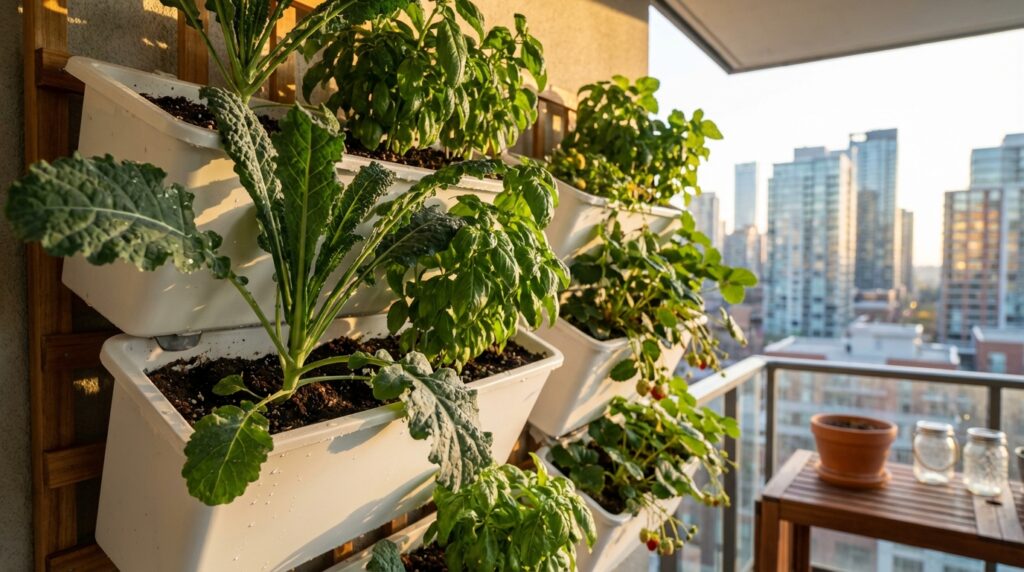
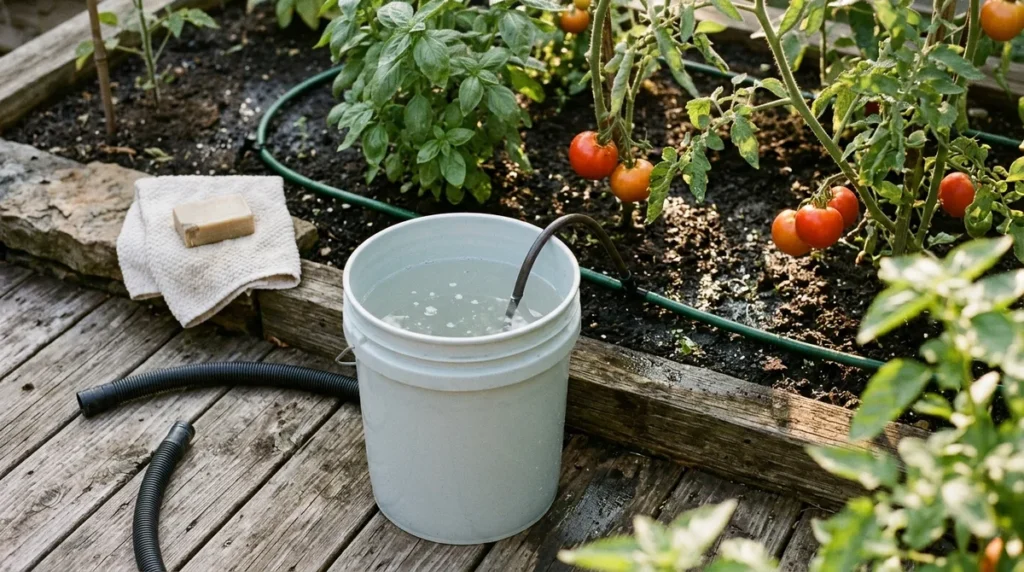
Greywater reuse means catching the used water from your showers, bathtubs, bathroom sinks, and clothes washer and routing it to your yard instead of the sewer. That’s the basic idea. Toilet waste is never part of it, and kitchen sink water usually gets its own, stricter rules. Mix those up and you’re asking for trouble, so pay attention to where each drain goes.
The rules change the moment you cross a state line. Ohio caps a basic Type 1 system at 60 gallons per day and says you can’t hold that water for more than 24 hours. Colorado sets design flow limits that depend on the system category. And the price tag swings wildly. A contractor-installed laundry-to-landscape setup runs roughly $1,500 to $3,000, while a whole-house system can top $15,000 before you pay for permits or backflow protection. That gap is where most people get burned, so read the fine print before you grab a shovel.
Key Takeaways
- Greywater reuse covers only shower, bathtub, bathroom sink, and clothes washer water, so you should never route toilet waste into your yard and should usually leave kitchen sink and dishwasher water out.
- Greywater rules are written by states, counties, and cities, so you need to check your local limits, since Colorado caps Category A and C systems at 400 gallons per day while Ohio caps Type 1 systems at 60 gallons per day and limits holding to 24 hours.
- You should expect a contractor-installed laundry-to-landscape setup to cost roughly $1,500 to $3,000, while a whole-house system can top $15,000 before you pay for permits or backflow protection.
- You should choose detergents that are biodegradable, low in phosphorus and salt, and free of chlorine bleach and boron, because bleach, boron, and salt can build up in your soil season after season.
What Is Greywater Reuse, and What Doesn’t Count?
Greywater is household wastewater from bathroom sinks, showers, bathtubs, and clothes washers. Toilet waste never counts, and kitchen sink and dishwasher water is usually excluded or handled under separate rules. That’s the core answer, but the details are where people get tripped up.
The U.S. Environmental Protection Agency uses that core list, and it also warns that state and local policies differ. So treat the list as a starting point, not a final ruling on your backyard.
Toilet water is the easy one. It’s blackwater, and no one reuses it under a greywater label. Kitchen water is trickier. It carries food scraps and grease, which feed bacteria and build up organic matter. That’s why Virginia Cooperative Extension notes that kitchen sink and dishwasher wastewater is often excluded from greywater definitions.
Here’s the catch that surprises most people. The same bucket of shower water can be legal to reuse in one place and restricted in another, because state and local agencies write the rules, not a single national standard. Some places care about the water source. Others care about the system category, the volume, or how long the water sits.
Take Colorado. Its rules cap design flows at 400 gallons per day for Category A and C systems and 2,000 gallons per day for Category B. Category C and D treatment works must also be certified to NSF/ANSI 350, the national standard for onsite water-reuse treatment. Notice what’s happening there. The label on the system decides how big it can be, not just what’s flowing through it.
California plays by its own book too. The state allows a narrow permit exemption for certain washing-machine systems, and its State Water Resources Control Board says its onsite treatment and reuse regulations for nonpotable water took effect on April 22, 2026. If you live in California, a setup that worked for your cousin in another state may need a permit you didn’t expect.
Ohio adds its own twist. Type 1 systems can’t hold greywater for more than 24 hours, and Type 4 systems must include pretreatment that meets NSF/ANSI 350 requirements. Those two rules alone show why you can’t copy a neighbor’s setup and call it done.
So what’s the everyday reuse? Most homeowners irrigate their landscapes. That means trees, shrubs, and lawns, usually through simple setups that avoid spraying water into the air. Some rules require the water to go below the surface rather than sit on top of the soil. Treated systems go further. Where local rules allow, they can supply toilet flushing or laundry. Untreated water doesn’t get that kind of freedom, and it shouldn’t be treated like it does.
Storage is where people make costly mistakes. University of Delaware Cooperative Extension advises against storing captured greywater without an onsite treatment system. It also warns against using water contaminated by bleach or cleaning chemicals. A bucket in the garage for a few days might sound harmless, but it’s exactly the kind of setup regulators tell you to avoid.
Laundry is the big prize, and it’s easy to see why. Across the contexts measured, the washer often accounts for 15 to 40 percent of total household water use, which makes it the most tempting source to divert. Still, it’s also the source most likely to carry detergent and soil into your yard, so it deserves the closest look.
The bottom line on definitions: start with the four usual sources, confirm your local rules for each one, and assume the answer changes at the county line.
Is Kitchen Sink Water Safe to Reuse?
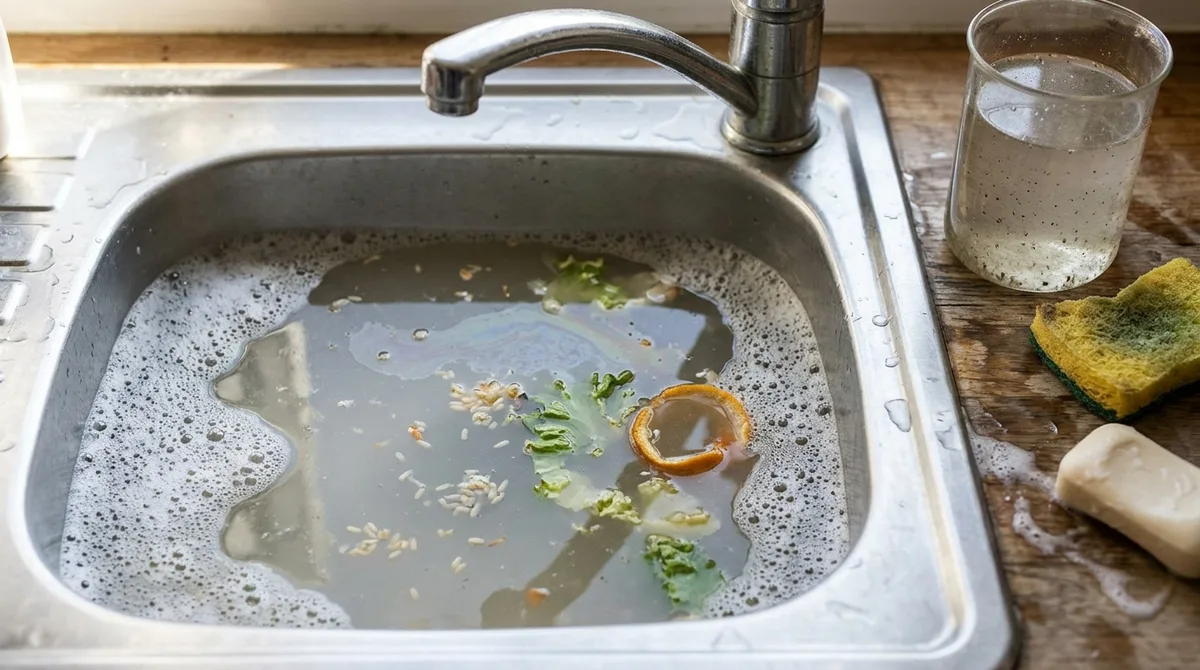
No. Kitchen sink water is the riskiest greywater source, and most home setups should leave it out. Food, grease, and cleaning chemicals can turn a drain that looks fine into a problem you can’t see from the surface.
Why does kitchen water get such a bad reputation? Because of what goes down the drain. Food scraps, grease, and oils feed bacteria and build up organic matter. Once that load sits in a bucket or a holding tank, microbes get busy, the water starts to smell, and it can clog soil. Shower water carries soap and a bit of body oil. Kitchen water carries a whole buffet.
Dishwasher water deserves its own warning. It carries detergent residue and tiny food particles, and that combination is exactly why many local rules leave it out of the greywater category. Your dishwasher rinse might look clean to you, but regulators write rules around what they know is in the pipe, not what you hope is in it.
Then there’s the stuff you can’t see. Household chemicals, drain openers, and bleach can make water look perfectly clear while it carries enough chemistry to hurt plants and stress soil. Bleach and cleaning chemicals don’t belong in any reuse line, and that’s a rule worth remembering. Clear water is not the same as safe water. Ask any gardener who lost a tomato bed after a splash of drain cleaner.
Human waste is the other hazard, and it’s the one that makes regulators nervous. Toilet waste is excluded from greywater by definition, but contamination can still reach a line that carries mixed water. Old houses are where the surprises hide, since the drain lines often don’t match the floor plan you have in your head. That’s why reuse should stay limited to the sources your local rules allow, and nothing more.
Even when the water looks harmless, the rules may still say no. Some jurisdictions require the water to go below the surface instead of sitting on top of the soil. Others keep greywater away from food crops, so your vegetable patch could be off limits even if the source is technically allowed. Those conditions shape where the water can go, not just what’s in it.
If you want kitchen water in the mix, you’re no longer talking about a simple diversion. Ohio’s Type 4 systems, for example, must include pretreatment that meets NSF/ANSI 350 requirements. That means a treated system, a different price tag, and a different permit path. It’s a bigger project, and it isn’t a weekend job with a bucket and a garden hose.
So here’s the rule to live by. If you are unsure what’s in the drain, don’t divert it. Trace the pipes, check what each fixture feeds, and ask your local agency before you cut into anything. A few minutes of tracing beats a yard full of problems you didn’t see coming.
Which Soaps and Ingredients Keep Plants Happy?
Plants stay happiest on greywater from detergents that are biodegradable, low in phosphorus and salt, and free of chlorine bleach and boron. That’s the short answer. The longer answer is where the marketing gets sneaky, so let’s dissect the label.
Start with three words you should hunt for: biodegradable, low-phosphorus, and low-salt. Those are the ones that matter when the water ends up in your yard. Bottle color, pretty leaf logos, and the word “eco” in big letters don’t tell you much about what’s inside.
Here’s the part people miss. Liquid and powder detergents both send laundry greywater down the drain. A 2024 study put average machine-washing laundry greywater at about 21.9 liters per person per day, and that figure held for both liquid and powder detergents. So switching forms won’t save your garden. The ingredient list does the heavy lifting.
Chlorine bleach is a hard no for any water you plan to reuse. The same goes for cleaning chemicals of any kind. A splash of bleach from a rinse cycle or a stray drop of floor cleaner can make water look clean while it carries chemistry that stresses plants and soil. If your household uses heavy disinfectants, keep those loads out of the reuse line.
Boron is the sneaky one. Some detergents use borax or sodium perborate, and both are boron sources. Plants need a little boron to grow, but too much is toxic, and it doesn’t vanish after one wash. It builds up in soil season after season, and by the time leaves start yellowing or edges burn, you’ve already stacked years of exposure into the root zone.
Salts work the same way, just more quietly. Sodium that piles up in the soil makes it harder for roots to pull in water, so plants can look thirsty even when the bed is soggy. Over time the soil structure tightens, drainage slows, and your once-thriving shrubs start to sulk. Nobody sees it happening in a single week, which is exactly why it’s dangerous.
So how do you read a label without falling for the hype? Ignore the front of the bottle and flip it over. Check the ingredient list and any sodium or salt content information the manufacturer provides. Look for these red flags:
- Borax or any boron compound
- Sodium perborate or other sodium-heavy builders
- Chlorine bleach or bleach-based additives
- Heavy fragrance and fabric softener add-ons
- Optical brighteners, which add chemistry you don’t need in your soil
Now the marketing traps. “Natural” and “eco” sound like promises, but on a detergent bottle they don’t tell you anything about salt, sodium, or boron. A product can carry both words and still load your water with the stuff plants hate. Treat those words as decoration, not data. If the company won’t show you the ingredients, or hides them behind a vague “plant-derived” line, walk away and buy something you can actually read.
Dosing matters too, and it’s the easiest fix on the list. Using more detergent than your load needs pushes more salt and chemistry into the water, and that extra usually doesn’t clean any better. Measure the amount, use the lowest dose that gets your clothes clean, and skip the extra scoop when the load is light. Your plants will notice the difference long before your laundry does.
Which Plants Can You Water With Greywater?
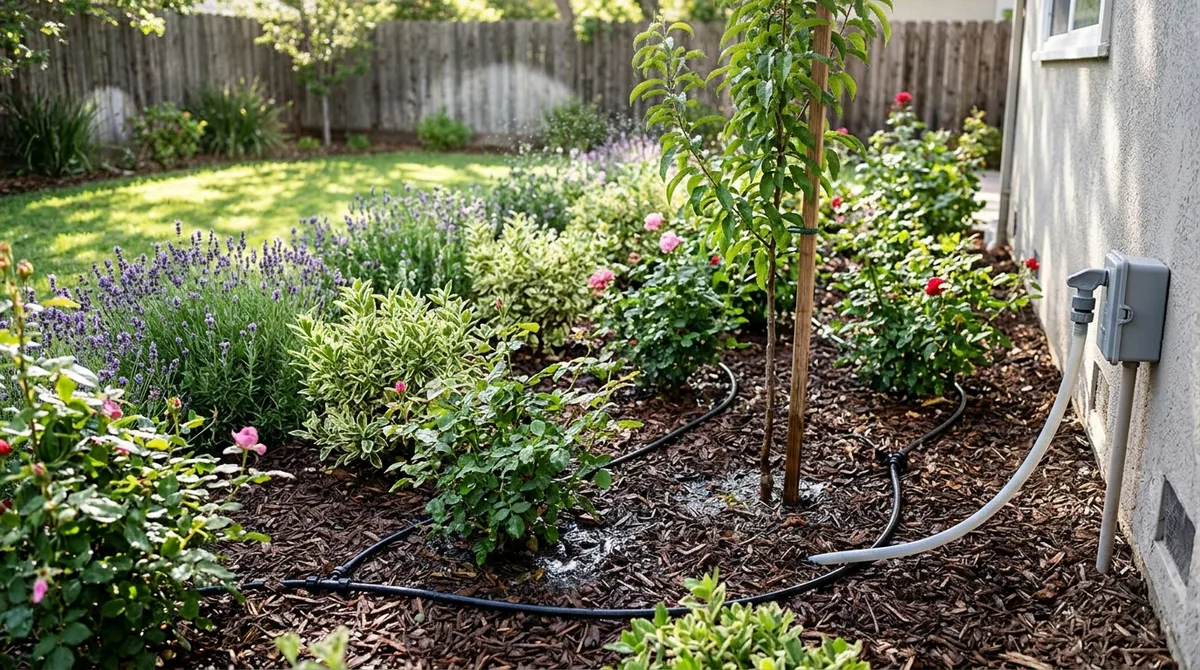
Ornamental plants, shrubs, trees, and lawns are the most common greywater targets, and for good reason. Flower beds, hedges, shade trees, and turf handle a steady trickle of shower and laundry water far better than a vegetable patch does. That doesn’t mean you can soak them without a plan, though.
Start by splitting your yard into two piles. The first pile holds the landscape you’re not going to eat: ornamentals, shrubs, trees, and grass. The second pile holds anything you harvest. Food crops are where the rules get strict. Some jurisdictions restrict irrigating food crops with greywater at all, and produce you eat raw is the biggest worry. Nobody rinses a lettuce leaf or a strawberry the way they’d scrub a cooked carrot, so whatever residue lands on the plant ends up in your mouth.
Here’s a quick way to sort what you’ve got:
- Usually the safest bets: ornamental flowers, shrubs, shade trees, and lawn areas that nobody eats from
- Check local rules first: fruit trees and berry bushes, since the fruit sits close to the soil and gets picked by hand
- Often restricted: leafy greens, herbs, and any produce eaten raw
- Usually off limits: vegetables grown for the table, especially where the local agency bans food crops outright
Notice that the list runs on how you use the plant, not just what kind of plant it is. A tomato and a rosebush both count as “plants” to the water, but only one of them ends up on your dinner plate.
Where the water goes matters as much as which plant gets it. Some areas require subsurface application, which means the water goes below mulch or soil instead of being sprayed or left pooling on top. Other areas recommend it even when they don’t require it. Surface application puts greywater in contact with kids, pets, and anyone walking through the yard. Buried drip lines or emitters keep the water in the root zone, where the plant can actually use it. A layer of mulch over the line helps too, because it keeps the water from splashing back up.
Plan your watering spots like a rotation, not a faucet. Rotate your water sources so you aren’t sending the same mix to the same place every day. A shower-only week followed by a laundry week gives the soil a break from any one load. Move the discharge area around the yard so no single spot gets soaked over and over. Repeated wetting is how salt and boron build up in one corner until the plants there start to struggle while the rest of the yard looks fine. That’s the sneaky damage most people miss.
Finally, test before you commit. Don’t convert the whole garden on day one. Pick one shrub or one small tree, route a single source to it, and watch it closely. Look for yellowing leaves, brown or burned leaf edges, wilting during cool weather, or soil that stays soggy and smells off. Give the test enough time to show a pattern, and keep watching after the weather changes, since some stress only shows up when the heat arrives. If the plant thrives, you can expand slowly. If it sulks, you’ve saved yourself from losing a whole bed.
How Do Diversion Valves and Gravity Systems Work?
A diversion valve sends your household drain water either to the greywater line or back to the sewer, and a gravity system moves that water to your landscape using nothing but slope. Simple on paper, but the details decide whether it works or turns your yard into a swamp.
The diversion valve is the gatekeeper. It’s usually a three-way valve installed on the drain line, with one outlet heading to the sewer and another heading toward your yard. When the valve points to the greywater side, shower and laundry water goes to the landscape. Flip it back, and everything goes to the sewer like it always did. That switch is your safety net. Run a load with heavy bleach or a cleaning product, and you can send it straight to the sewer where it belongs.
A basic setup has a few core parts, and you should know each one before you cut a single pipe:
- The drain split: the point where the shower or washer line branches off
- The diversion valve: the switch that picks the sewer or the yard
- A filter or screen: catches lint, hair, and soap clumps before they clog the line
- The outlet line: the pipe that carries water out to the landscape
- The distribution zone: buried drip lines or emitters under mulch, feeding the root zone
Gravity systems are the simplest version of this. Water moves downhill, so the outlet has to sit lower than the drain, and the line has to keep a steady slope all the way to the plants. No pump means no electricity, no motor to fail, and no control box to babysit. That’s why gravity setups are usually the cheaper and less fussy option, as long as your yard cooperates. Check the slope before you commit. A line that flattens out or dips into a low spot will stall, and stalled water is exactly what you’re trying to avoid.
Pumped systems earn their keep when gravity can’t do the job. If your landscape sits uphill from the drain, or the area you want to water is far away, a pump pushes the water where slope can’t. The catch is that pumps add equipment, wiring, and maintenance. Someone has to check the pump, the controls, and the electrical connections. A pump also tempts people to hold water in a tank while they wait for the next irrigation cycle, and that’s where the storage rules bite. Ohio, for example, caps Type 1 systems at 24 hours of holding, so a pump that lets water sit for days can break the rules without you noticing.
Now the part people underestimate: standing water. Puddles on the surface are a problem for three reasons. They attract mosquitoes, which lay eggs in still water. They spread odors, especially once the water picks up soap and organic matter. And they put untreated water where kids, pets, and passersby can touch it. A good layout keeps water moving below the surface and away from low spots where it can collect. If you see water pooling on top of the soil after a run, the system is delivering more than the ground can take, so cut the flow or spread the discharge across a bigger area.
Storage is the other trap. Untreated greywater should not sit around for long periods, because it starts to smell, and bacteria multiply fast in a warm bucket or tank. The safest design sends water straight from the drain to the soil with no holding step at all. If you add a tank, you’ve changed the project. Once water is stored, you need to check the local rules on how long it can stay there, and in many places a holding tank pushes you into treatment requirements that a simple diversion never triggers.
So before you dig, walk your yard with a level and a notepad. Mark where the drain sits, where the lowest spot in the yard is, and where water would pool after a heavy laundry day. If the path only works when you ignore the low spots, the design is wrong, not the rules.
Can Greywater Go Inside? Indoor Reuse and Treatment
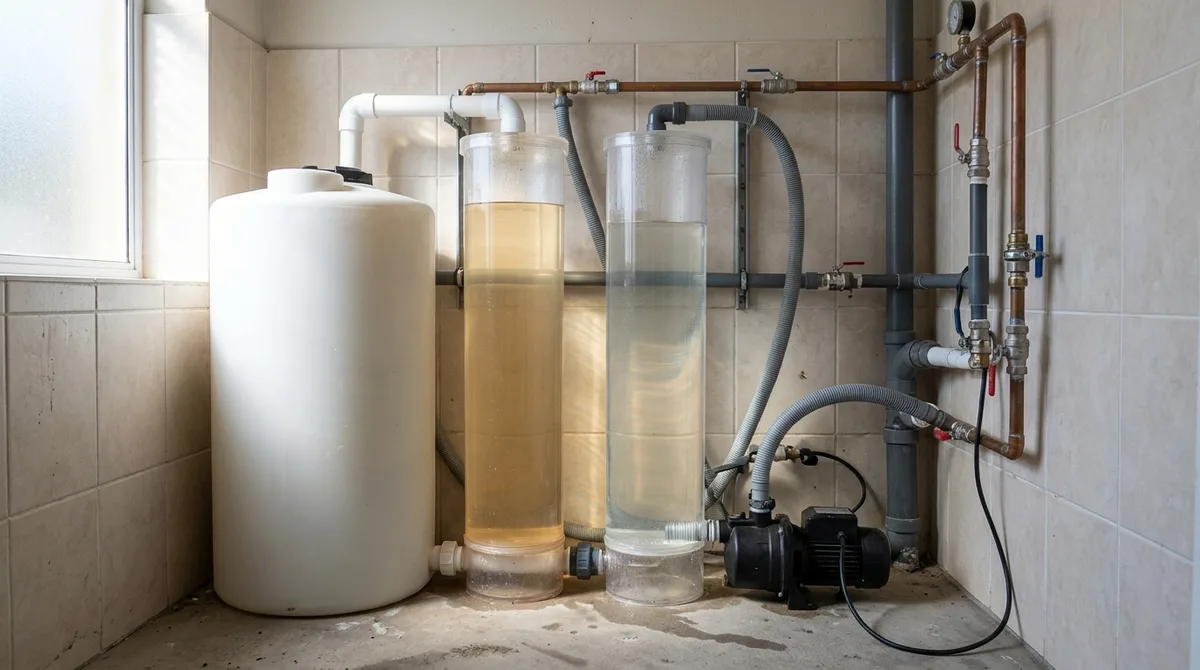
Indoor reuse is where greywater gets serious. Flushing toilets or running a washer with recycled water sounds clever, but the water now moves through your walls and touches your family every day. The bar goes way up.
Start with the first rule. You usually can’t go indoors with a diverter alone. A diverter is a switch that sends shower water to the yard or the sewer. It doesn’t clean anything. Indoor use requires an onsite treatment system that cleans the water before it gets stored or pumped back to a toilet tank or washer.
So what does “treatment” actually mean? Think of it as a chain of steps, and every link has to hold. Screens and filters catch hair, lint, and soap clumps. A biological or chemical stage knocks down bacteria and other germs. A disinfection step, often chlorine or ultraviolet light, keeps the stored water from growing new trouble in the tank. Some units add sensors that watch the output. Skip one link and the whole chain gets weaker.
That’s why certification matters. The national benchmark is NSF/ANSI 350-2023, which sets minimum requirements for onsite residential and commercial water-reuse treatment systems, and greywater treatment systems fall under it. When a sales page calls a unit “eco-friendly” or “powerful,” that’s marketing. When a unit is certified to the standard, someone tested it against published requirements. Don’t stop at a logo on the box, though. Confirm the certification covers the exact model number you plan to buy, because sister models can differ.
Certification also ties into the rules. Earlier, you saw that Colorado ties certified treatment to system category, and that Ohio requires NSF/ANSI 350 pretreatment for Type 4 systems. A small setup might pass with basic parts. Add capacity or a bigger tank, and the category and equipment requirements can change fast. Don’t assume a bigger system is the same system with more pipe. Ask your local agency what changes the moment you add volume.
Now the part that sales pitches skip: treated water still needs upkeep. Filters clog. A clogged filter stops cleaning and can push gunk further down the line. Plan on regular filter changes, screen cleanings, and checks on the disinfectant level if your unit uses one. Write every service date in a log. Future you will need that record when an inspector asks what was done and when.
Monitoring deserves the same attention. Sensors can drift or fail quietly, and a unit can keep humming while its output goes bad. If the treated water looks cloudy, smells off, or the indicator flags a problem, shut the system down and fix it before anyone uses that water. Many owners buy a unit, plug it in, and forget it for a year. That’s how a treatment system quietly turns into a hazard.
Cross-connection is the other big danger. Treated greywater must never connect to your drinking water lines, and a mistake here can be serious. Good installers use separate, clearly marked pipes for treated water, often in a distinct color, and they label every outlet so nobody mistakes a toilet supply for tap water. If a plumber shrugs at labeling, find a different plumber.
Then there’s the money. Indoor systems cost far more than a basic laundry-to-landscape hookup. A laundry hookup is mostly a diverter, some pipe, and a run of buried drip line outside. An indoor system adds the treatment unit, a storage tank, pumps, controls, a second plumbing network for treated water, permits, inspections, and service visits. Each piece has its own price, and the filters and service visits keep charging you long after installation day. Ask for a written quote that lists every part, including the tank, the pump, the first set of filters, and the maintenance plan. A low headline number often leaves out the parts that do the real work.
One last test before you sign. Ask the installer who will service the system, how often the filters need changing, what the replacement parts cost, and what happens when a sensor fails at 2 a.m. Vague answers are a red flag, and a company that can’t explain its own maintenance plan probably hasn’t thought it through.
What Will Greywater Reuse Really Cost You?
Greywater reuse sounds like an easy win: you send shower and laundry water to your garden instead of the drain. The sticker price is where the trouble starts. A basic diverter costs less than a treated system, but a full system that treats water for reuse often costs several thousand dollars once you add the tank, pump, filter, and installation. Before you buy anything, get a written quote that lists every part and labor charge, because the cheap kit on the sales page is rarely the whole bill.
The real money is hiding in the rules and the upkeep. Local rules decide whether a permit or a licensed plumber is required for anything beyond a simple diverter, and inspection fees can add up fast. California’s 2026 nonpotable-water regulations are a reminder that requirements can change, and local building departments can be stricter than the state. Then there’s maintenance: filters clog, pumps wear out, and treated systems may need disinfectant and periodic testing. Plenty of people also find that their water bill savings are smaller than the vendor promised, especially if they only run a system during the dry season.
So here’s the verdict. If you have a laundry machine near your yard and you’re willing to handle a little plumbing, a basic diverter is a reasonable buy, as long as your local code allows it. Skip the expensive treated systems unless you have a clear plan, a permit in hand, and a plumber who will maintain it for you. And run away from any seller who promises “no permit needed” or “zero maintenance” without putting that in writing. Check your state and local rules first, then compare the total cost, not just the price on the box.
Are Local Permits and Rules Going to Trip You Up?

Yes, local permits and rules can absolutely trip you up, because greywater is governed by states, counties, and cities rather than one national standard. A system that’s fine across the county line can be restricted on your side of it. Before you buy anything, you need to know which agency regulates your address.
Think of it as layers. Your state may set the core rules for system types, volume, and treatment. Your county or city may add its own permit requirements, inspection steps, or plan review. Some water agencies also weigh in on backflow protection and reuse. Any one of those layers can change what you’re allowed to build.
Colorado shows how a state can tie your rules to the type of system you install. Its limits run on category: Category A and C systems are capped at 400 gallons per day or less, and Category B systems at 2,000 gallons per day or less. Category C and D treatment works must also be certified to NSF/ANSI 350. Check the EPA’s summary of Colorado’s rules to see how the categories are defined before you pick a design.
Ohio takes a tighter approach to storage. A Type 1 system is limited to 60 gallons per day, and the water can’t sit for more than 24 hours. The clock changes once you add pretreatment, because the 24-hour cap eases for systems that include it. That one difference can decide whether a simple tank works or whether you need a bigger, treated setup. The EPA’s Ohio summary lays out the categories side by side.
California has the most twists. The state allows only a narrow permit exemption for certain washing-machine systems, which means a simple laundry hookup doesn’t automatically skip the permit process. Its onsite nonpotable water regulations also took effect on April 22, 2026, so any rules you read in older blog posts may be out of date. If you live in California, don’t assume a laundry setup is exempt. Confirm it.
Local agencies can add another layer. The Los Angeles County Department of Public Health and the San Francisco Public Utilities Commission both publish their own greywater guidance. If you live in one of those areas, their pages can matter as much as the state rule, because they tell you how the rules apply in practice. Your city building department or local water utility may also have forms, inspection steps, or plan review that you won’t find in a national article.
So what should you be checking? The rules tend to hinge on a handful of details:
- System category: Some states put the design on a category list, and each category has its own limits.
- Daily volume: Flow caps can turn a small expansion into a new permit.
- Storage time: Holding water in a tank or bucket can trigger treatment rules.
- Application method: Some areas require water to go below the surface rather than sit on top.
- Plant use: Food crops are restricted in some jurisdictions, even when the source is allowed.
Here’s where people get burned. A system built to the letter of a neighbor’s state rules can still get flagged by your local inspector. A permit you assumed wasn’t needed can show up as a stop-work order halfway through the job. And a system that doesn’t match your local rules can get you in trouble with the agency that oversees it, which costs far more to fix after the yard is torn up than it costs to check beforehand.
Rules also change. California’s 2026 regulations are a reminder that today’s answer may not hold next year. Ask the agency directly for the current rule, and get the answer in writing when you can. A phone call you never document won’t help you when an inspector shows up.
Here’s how to find which rules apply to your address.
Your Next Step: Check Local Rules Before You Dig
Start with one call. Ask your city building department or county health office whether they regulate greywater, and which permit applies to a laundry-to-landscape setup. Get the rule number, not just a yes or no.
Next, gather your own numbers. Write down your washer loads per week, your daily shower count, and where each drain sits. Local agencies will ask for those figures first, and they decide whether you fall under a flow cap or a storage limit.
Then check your state’s category rules. In Colorado, compare your planned design flow against the limit for your system category. In Ohio, make sure a tank wouldn’t hold water past 24 hours. In California, confirm which rules that took effect on April 22, 2026 apply to your address before you buy a single fitting.
Finally, get everything in writing. Ask for a quote that lists permits, backflow protection, and replacement filters as separate lines. Save the agency’s answer in an email. If an inspector disagrees months later, that paper trail is the difference between a quick fix and a torn-up yard.
Frequently Asked Questions
1. Can I use greywater from a baby bath or diaper washing for my garden?
Bathwater from a baby’s bath can usually count as greywater, but diaper washing is a different story. Diapers carry human waste, and toilet waste is never part of greywater reuse, so keep diaper loads out of any reuse line. Check your local rules before using bath water on plants, since some places restrict it.
2. Does a greywater system affect my septic system?
Yes, a greywater system changes how much water reaches your septic tank, so check it before you install anything. When shower and laundry water goes to the yard instead of the tank, the flow into the septic system drops. Ask your local health or permitting office how diversion would affect your specific setup before you cut into any pipes.
3. Do I need a plumber to install a laundry-to-landscape hookup, or can I do it myself?
Many homeowners hire a contractor, but a DIY install may be possible depending on your local rules. Whether permits and inspections apply to greywater work depends on where you live, and California allows only a narrow permit exemption for certain washing-machine systems. Call your building department before you start and ask whether a homeowner can pull the permit and do the work.
4. Can I use greywater on a rental property?
Usually only with your landlord’s written permission, because a greywater hookup changes the building’s plumbing. Most leases don’t let tenants alter pipes, and a diverted drain is a change you can’t undo without the owner’s approval. Get the approval in writing, then confirm which local permits apply before anyone touches a drain.
5. Can you just dump greywater on the ground?
Not safely, and some local rules don’t allow it at all. Water sitting on top of the soil can pool, attract mosquitoes, and reach kids and pets. Some jurisdictions require subsurface application, which means burying the water below mulch or soil, so check your local rules before sending any water to the yard.