
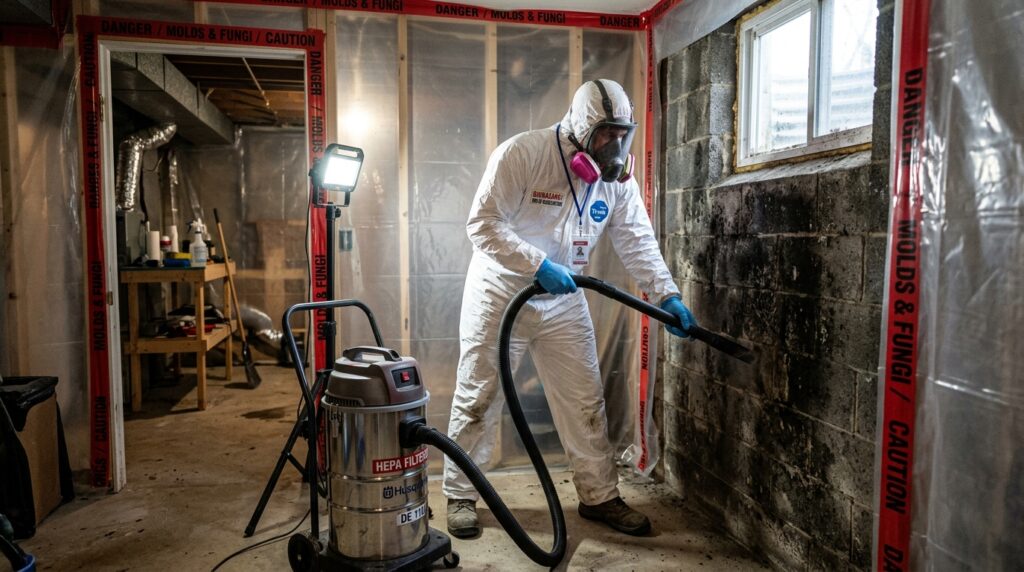
Discovering a fuzzy patch of black growth in your basement can send anyone into a panic, but you don’t need a PhD to understand how to fix it. We’ve looked past the marketing fluff and scary sales pitches to get the mold remediation process explained in plain English. This isn’t about spraying magic chemicals and hoping for the best; it’s a strict, multi-step protocol governed by industry standards.
Professional remediation experts prioritize physical removal and moisture control over temporary fixes that just mask the problem. You deserve to know exactly how technicians seal off your home with polyethylene sheeting and use negative air pressure to keep spores from spreading. We are cutting through the jargon to show you the precise steps required to restore your air quality and protect your health.
Key Takeaways
- Effective mold remediation requires physical removal of porous materials and aggressive surface scrubbing rather than relying on surface-level chemical treatments like bleach.
- Professional containment using heavy-duty polyethylene sheeting and HEPA-filtered negative air pressure is essential to prevent microscopic spores from migrating to other areas of the home.
- Structural drying with industrial dehumidifiers and air movers must continue until moisture meters confirm a bone-dry state to prevent the immediate return of mold colonies.
- Final clearance testing by an independent expert is the only way to verify that indoor air quality has returned to safe levels and the remediation was successful.
Preparation Containment And Negative Air Pressure Setup
Professional remediation isn’t about just spraying some bleach and hoping for the best because that approach actually ignores the invisible danger of airborne spores. To keep your home safe, experts build a fortress around the affected area using heavy duty 6-mil polyethylene sheeting to seal off every door, window, and air vent. Think of it as a biological clean room designed to trap the microscopic invaders exactly where they are. This physical barrier ensures that when the work begins, the mold doesn’t just take flight and migrate into your sofa or your kids’ bedrooms. It is a calculated, aggressive move to protect your living space from cross-contamination before the real cleanup even starts.
Once the plastic walls are up, the team brings in high-tech equipment known as HEPA-filtered air scrubbers to establish negative air pressure. These machines act like vacuums that pull air into the contained zone but won’t let it leak back out into the rest of your house. By venting the filtered air outside, the system creates a vacuum effect that keeps any stray spores pinned down and contained within the hot zone. You can rest easy knowing that the air you are breathing in the kitchen is completely isolated from the mess behind the plastic. This setup is the gold standard for a reason, as it turns a potential house-wide disaster into a controlled, manageable project.
Removing Infested Materials And HEPA Air Filtration
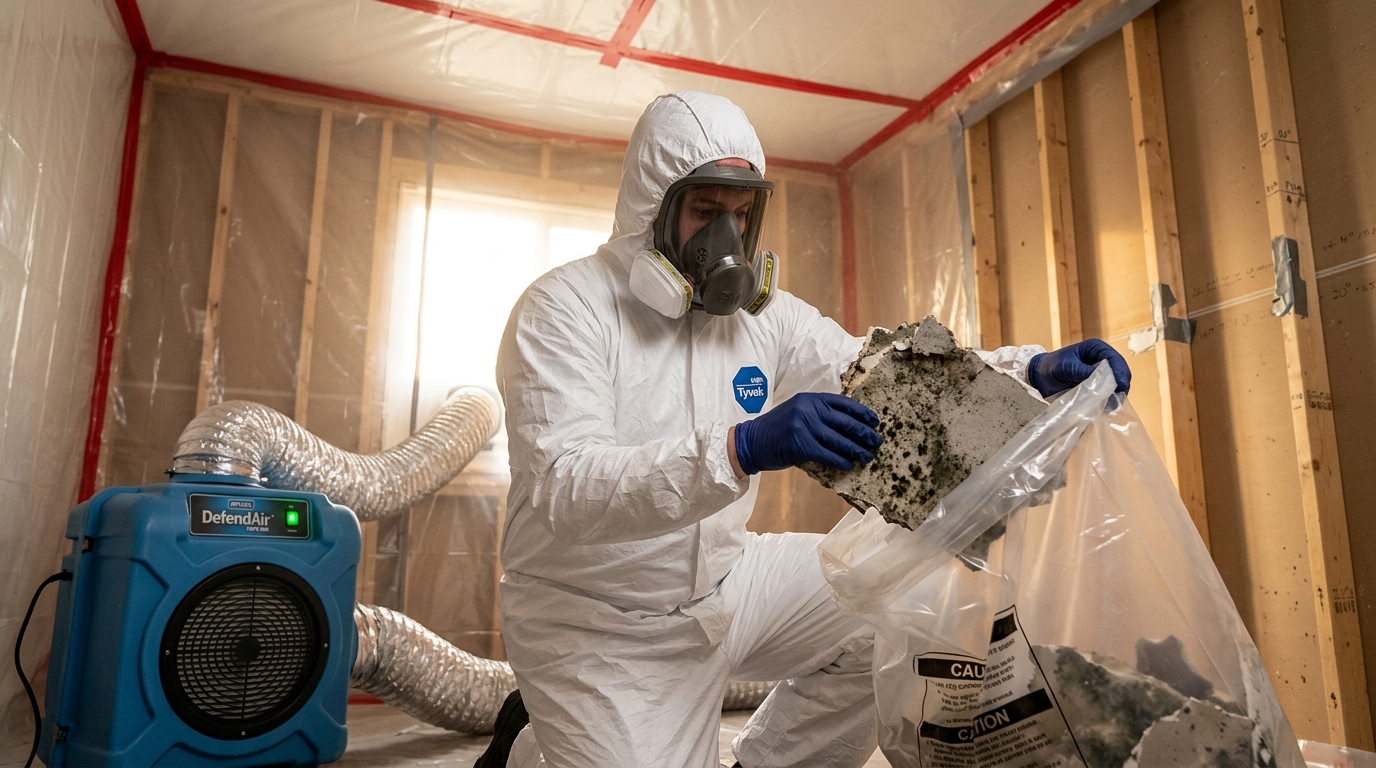
When mold moves into your drywall, it is not just sitting on the surface like dust on a bookshelf. Because materials like drywall and insulation are porous, mold roots grow deep into the fibers where no amount of bleach or scrubbing can reach. Professionals cut out these infested sections because leaving even a small amount of hidden growth is a recipe for a repeat disaster. You want that contaminated material bagged and gone so your home can start with a clean slate. It might feel drastic to see walls coming down, but it is the only way to guarantee the roots of the problem are actually out of your life for good.
While the physical debris is being hauled away, industrial grade air scrubbers act as your home’s personal bodyguard. These machines use HEPA filtration to pull invisible spores and toxic dust right out of the air before they can drift into your lungs or settle on your clean furniture. Think of it as a high powered vacuum for the air you breathe, cycling the room’s entire volume multiple times every hour. This constant filtration creates a clean zone that prevents the mess from spreading to the rest of your house. It is the invisible part of the cleanup that makes the biggest difference for your long term health and safety.
You can trust that this process follows the gold standard of professional remediation because it prioritizes physical removal over cheap chemical coverups. A quality team will not just spray a solution and walk away, as they know that dead mold spores can be just as irritating as live ones. By combining the teardown of damaged materials with constant air scrubbing, the environment is cleaned at a microscopic level. This double layered approach ensures that when the containment plastic finally comes down, you are stepping back into a space that is truly fresh and breathable. Your home deserves a real solution, not a temporary band aid that ignores the invisible threats lingering in the air.
Surface Scrubbing And Structural Drying Requirements
Forget the marketing myths about magic sprays that claim to melt mold away with a single mist. Real remediation requires serious elbow grease and physical agitation because mold roots itself deep into porous surfaces. Professionals use high-powered scrubbing techniques and industrial-grade antimicrobial cleaners to physically tear the fungi away from your home’s skeleton. This manual labor is the only way to ensure the colony is actually gone rather than just bleached white and left to rot. You want a team that isn’t afraid to get their hands dirty to protect your family’s lungs.
Once the scrubbing is done, the battle shifts from the visible growth to the invisible moisture hiding inside your wall studs. You cannot just slap new drywall over damp wood and hope for the best, as that is a recipe for a recurring nightmare. Experts use professional-grade dehumidifiers and high-velocity air movers to pull every last drop of water out of the structural framing. They will monitor the progress with moisture meters until the wood reaches a bone-dry state that meets strict industry standards. This drying phase is the most critical step to ensure your home remains a fortress against future infestations.
Final Clearance Testing And Moisture Control Prevention
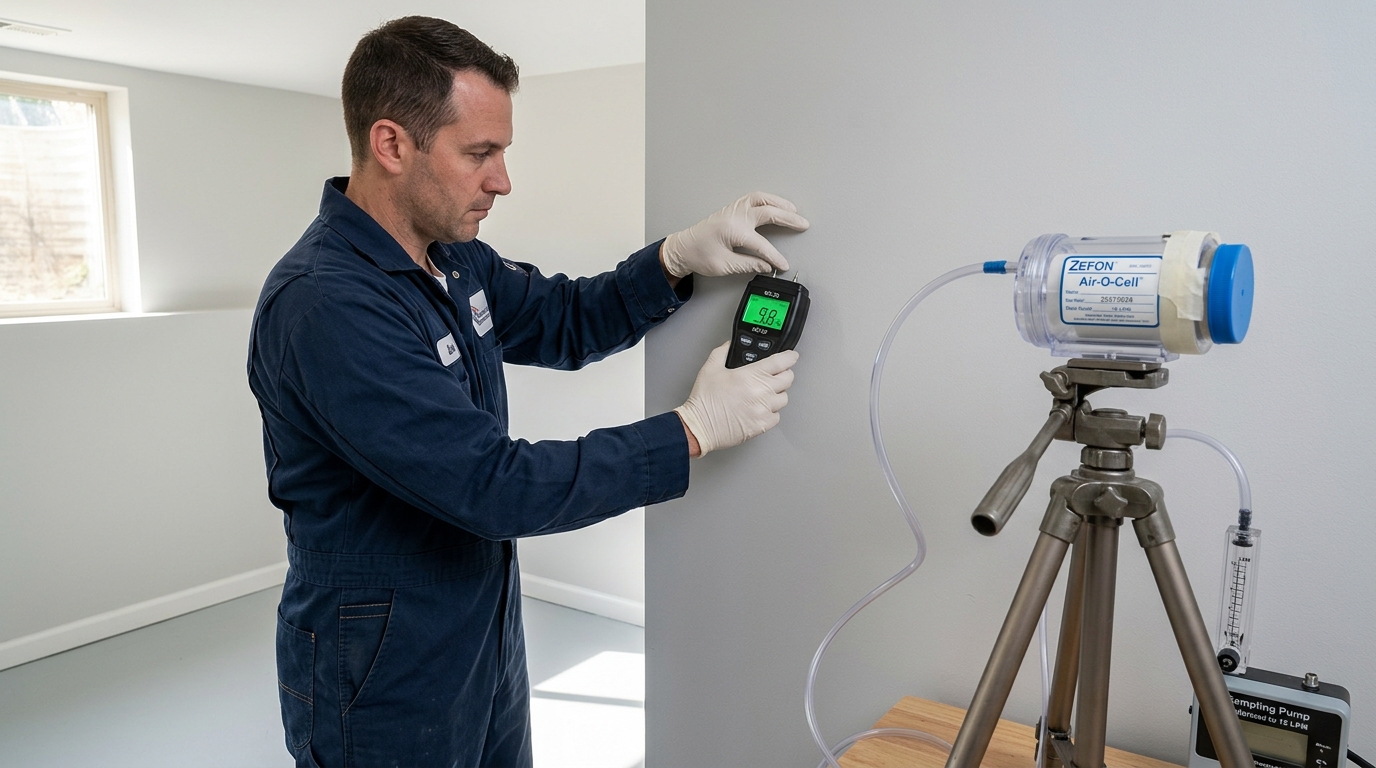
The final clearance testing is your absolute insurance policy that the job was done right the first time. You should never just take a contractor’s word that the mold is gone, because invisible spores can still linger in your air ducts and carpet fibers. A professional indoor environmental expert will come in to perform verification by taking air and surface samples. They compare these results to the air outside your home to ensure the indoor spore count is back to a safe, natural level. This independent check cuts through the marketing fluff and gives you the honest truth about whether your living space is truly healthy again.
Once you have that passing grade in your hand, your focus must shift toward keeping that moisture under control for good. Mold is a relentless opportunist that only needs a little bit of water and a food source like drywall to start a comeback tour. You need to keep your indoor humidity levels below fifty percent and fix any leaky pipes or roof drips immediately. Using dehumidifiers in damp basements and ensuring your bathroom fans actually vent to the outside are simple but effective tactics. Think of moisture control as the permanent security guard for your home that prevents future infestations from ever getting a foothold.
Professional remediation is a major investment in your family’s safety, so do not skip these final steps of the protocol. A successful clearance report means the containment worked and the HEPA filtration did its job to scrub the air clean. You want to see documented proof that the moisture source has been eliminated and the structural materials are bone dry. This data-driven approach removes the guesswork and ensures you aren’t just painting over a problem that will return in a month. Taking these precautions now saves you from the cycle of endless repairs and gives you the peace of mind you deserve.
How to Spot a Real Mold Pro
You are now equipped with the straight talk on how a real mold cleanup should go down, meaning you can spot a corner-cutter from a mile away. Real pros do not just spray some chemicals and call it a day, they focus on physical removal and strict containment to keep your family safe. By insisting on HEPA filtration and negative air pressure, you are ensuring that those nasty spores do not just relocate to another room in your house. Never let a contractor skip the containment phase or ignore the moisture source, because without fixing the leak, you are just throwing money into a pit.
Taking charge of your home environment requires the same level of scrutiny you would apply to any major life investment or business venture. We believe in cutting through the marketing fluff and looking at the cold, hard facts before you sign a contract or spend a dime. Just as you would vet a remediation team for honesty, you should apply that same skepticism to the professional services you use to manage your life and finances. To see how we apply this same no-nonsense lens to other industries, check out our Best LLC Formation Service Comparison For New Entrepreneurs to ensure your next big project starts on a foundation of truth rather than hype.
Frequently Asked Questions
1. Can I just use bleach to kill the mold myself?
Forget the bleach because it is a surface level band aid that does not kill the roots or stop airborne spores. Professional remediation is about physical removal and fixing the moisture source, not just changing the color of the fuzz. You need to pull the mold out of your home, not just drown it in chemicals.
2. How do you keep the mold from spreading to the rest of my house?
We build a plastic fortress using heavy duty sheeting to seal off the work zone completely. By using HEPA filtered air scrubbers to create negative pressure, we ensure that air only flows into the contaminated area and never leaks out into your clean living spaces.
3. What exactly is negative air pressure?
Think of it as a one way street for air that keeps microscopic spores trapped inside our containment zone. We use high powered machines to vacuum the air and vent it outside through filters, which prevents any nasty particles from floating into your kitchen or bedrooms.
4. Is mold remediation just about cleaning the visible spots?
Absolutely not, because the real danger is the stuff you cannot see floating in the air. We follow strict industry standards to ensure we are restoring your actual air quality. If you do not address the invisible spores and the moisture problem, the mold will be back in a week.
5. What is the S520 protocol and why should I care?
The S520 is the gold standard rulebook for the industry that separates the pros from the amateurs. It ensures that your home is treated with a scientific, multi step process rather than a guessing game. We follow these rules to make sure your health is protected and the job is done right the first time.
6. Do I really need professional containment for a small area?
Yes, because the second you touch a mold colony, it releases millions of spores into the air like a tiny biological explosion. Without professional containment and negative pressure, you are just helping the mold migrate to your furniture and carpets. Why Your Home Needs A Real Air Purifier For Mold Spores is a question many homeowners ask when trying to maintain safety after the cleanup. You have to lock it down before you clean it up. Many homeowners also research whole house dehumidifier cost to determine if a permanent moisture control system is a smart long-term investment for their property.