
Tarot app reviews can save you from downloading a polished-looking app packed with ads, locked features, or vague readings. You want clear interpretations, useful learning tools, and a free experience that does not push you into paying. The star rating matters, but so do privacy disclosures, subscription terms, and what you actually receive after downloading.
Some apps work well for beginners, while others are better for quick daily pulls or personal journaling. We cut through the marketing noise to see which ones deliver useful guidance, honest pricing, and a smooth experience. No mystical hype, just the details you need before tapping install.
Key Takeaways
- Choose a tarot app based on your needs: learning-focused apps suit beginners and regular practice, streamlined apps work for quick free readings, and feature-rich apps offer more decks, journaling, and customization.
- Start with the free tier and evaluate the actual readings, ads, locked features, and usability before paying. Check renewal dates, trial conversions, cancellation steps, refund rules, credit expiration, and total long-term costs.
- Treat star ratings as changing quality signals rather than proof of accuracy, and read recent reviews for recurring complaints about paywalls, billing, recycled readings, privacy, or unclear AI interpretations.
- Use tarot apps for reflection and self-examination, not guaranteed predictions. Be skeptical of claims that an app can predict exact events, guarantee outcomes, or replace personal judgment, and review data-safety disclosures before entering sensitive information.
Learning-Focused Tarot App
This learning-focused tarot app stands out because it does more than hand you a card and a vague interpretation. In the August 27, 2026 rating snapshot, it held about 4.9 out of 5 from 22,000 iOS ratings and 4.8 out of 5 from roughly 42,000 Android app marketplace reviews. Those numbers are snapshots, not permanent proof, but they point to strong user approval. You get lessons, quizzes, journals, multiple decks, daily cards, and self-guided readings in one place. That makes the app useful whether you are learning card meanings or testing your own reading skills.
The free experience is the real hook, especially if you are not ready to pay for digital readings or a subscription. The app offers plenty to explore without forcing you through a sales funnel, and its store listing says it does not use third-party advertising. That matters because intrusive ads can wreck the calm, focused mood tarot requires. The learning tools also give you something many paid options miss: a clear way to build confidence instead of outsourcing every answer to an automated reading. You should still treat app interpretations as prompts for reflection, not proof that the future is fixed.
For paid users, the question is simple: are premium extras worth paying for when the free version already covers serious practice? If you want polished lessons, repeated quizzes, journaling, daily pulls, and room to experiment with different decks, this app makes a strong case before you spend a dollar. Its high ratings support its credibility, but you should still check current pricing, subscription terms, and exactly what each upgrade unlocks before committing. The app will not replace a thoughtful human reader or your own judgment, but as an all-around learning and practice tool, it earns a place near the top of your shortlist.
Simple Free Tarot Reading App
This streamlined Android tarot app keeps the experience refreshingly simple, which is a big part of its appeal. You can start a reading quickly, and the card meanings are written in clear, readable language rather than buried under mystical jargon. As of August 27, 2026, the app had about a 4.7 out of 5 rating from roughly 7,100 Android app marketplace reviews, a solid signal of user interest but not proof that every experience is smooth. The generous free tier lets you explore readings without paying upfront. If you want basic, no-fuss guidance, that convenience is hard to ignore.
The catch is that “free” does not mean distraction-free. Advertisements can interrupt the experience, and subscription prompts may appear as you explore more features or readings. Before tapping confirm, check whether a charge is one-time or recurring, how often you will be billed, and what the cancellation process requires. The app can be useful for casual self-reflection, but you should not treat paid upgrades as a promise of more accurate answers. Tarot content is interpretive, so paying more does not make a reading more credible.
Privacy deserves the same careful look as the price tag. Review the app’s current data-safety disclosures to see what information may be collected, shared, or linked to you, because those details can change. Avoid entering sensitive personal information simply to receive a general card interpretation. Overall, this app may suit you if you value speed, plain-language meanings, and a broad free tier, but ads, upselling, and data-sharing concerns weaken its value for privacy-conscious users. Try the free features first, then decide whether the added convenience justifies a subscription.
Tarot App With Paid Features
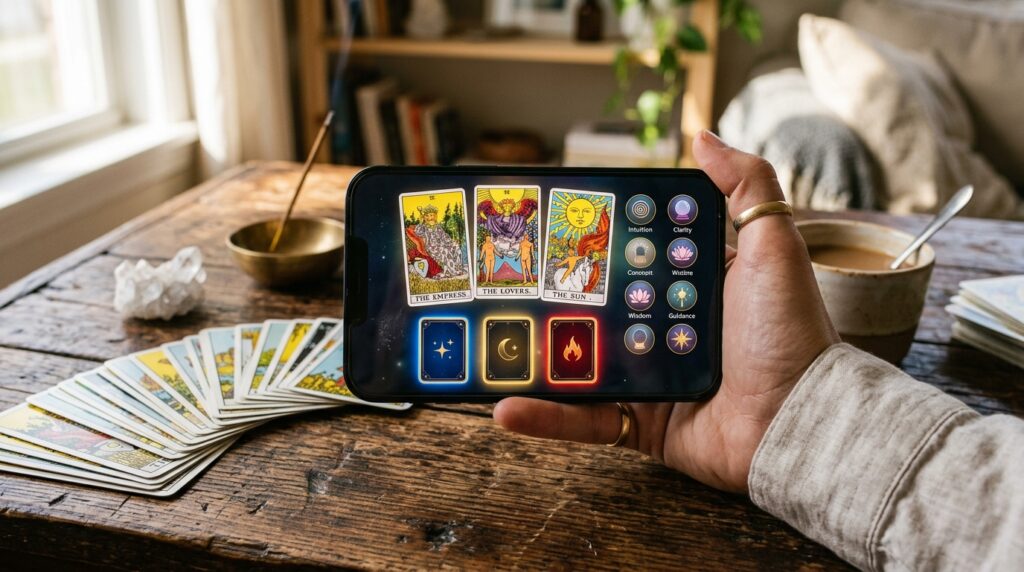
This tarot app is built around familiar Rider-Waite-Smith card meanings, so you get a recognizable foundation instead of vague, made-up symbolism. Its journaling tools can help you record spreads, questions, and patterns over time, while daily readings and home-screen widgets make regular practice easy to maintain. The free daily AI interpretation adds quick context when you want a second perspective, but treat it as a prompt for reflection, not a final answer. That mix makes the app useful for casual readers who want convenience without carrying a physical deck.
The paid experience is where the fine print matters. Advertisements can interrupt the otherwise simple flow, and paid reading credits may turn an occasional purchase into a recurring expense if you use the app often. The app also lacks a one-time option to remove ads, which means you may need to keep paying through credits or another paid plan for a cleaner experience. Before you commit, check exactly what each purchase unlocks and whether credits expire, because the headline price may not show the true long-term cost.
If you only want a daily card and basic meanings, the free tools may cover enough of your routine to make the app worth trying. Frequent readings, AI help, and an ad-free experience are a different calculation, especially when access is split between free features and paid credits. Track your usage for a week, then estimate how many readings you would buy in a month and over a year. That simple test will tell you whether the app is a practical companion or a small purchase that quietly keeps growing.
Credibility And ClickBank Screening

Treat star ratings as a signal, not a verdict on accuracy. A high score may reflect a polished design, fun lessons, or helpful journaling tools, while a low score may come from ads or billing frustration rather than poor tarot content. Read recent reviews for repeated patterns, especially complaints about unclear AI interpretations, recycled readings, hidden paywalls, or promises of psychic certainty. Any claim that an app can predict exact events, guarantee outcomes, or replace personal judgment deserves extra skepticism.
Before you pay, inspect the offer like a detective. Check whether the free trial converts into a subscription, when renewals occur, how much they cost, and whether cancellation happens in the app store or on the provider’s website. Find the refund rules before entering payment details, and save a copy of the terms because “money-back” language can hide deadlines or exclusions. Also review privacy details, including what the app collects from your questions, birth information, journal entries, and device, and whether that data is shared for advertising or analytics.
For affiliate recommendations, verify that the product is currently listed and approved through ClickBank before linking to it, and use httpsco for the direct product URL. Do not treat ClickBank status, star ratings, or sales copy as proof that a reading is accurate, ethical, or worth the price. Apps outside ClickBank can still appear as editorial comparisons, but they should not be presented as affiliate offers. The safest review separates entertainment and self-reflection features from unverifiable psychic promises, then makes the subscription, refund, and data risks impossible to miss.
Which Tarot App Fits Your Reading Style?
The learning-focused app is the best fit if you want lessons, quizzes, journaling, and steady self-guided practice instead of a quick prediction. For simple free readings, the streamlined Android option may suit you better, especially if you value readable interpretations and a generous free tier. If you use an iPhone and want more decks, daily features, and customization, choose the feature-rich iOS option. No app is automatically worth paying for, so treat ratings and review counts as changing snapshots, not permanent proof of quality.
Start with the free tier and test the readings, layout, ads, and ease of use before entering payment details. Read the subscription terms, renewal dates, trial rules, refund policy, and data-sharing disclosures carefully, because a cheap first week can become an expensive recurring charge. Pay only for tools that give you clear value, such as deeper learning content, useful journaling, or genuinely helpful customization. If you are also comparing paid digital services, explore our crypto signal service reviews to learn how to spot bold claims, hidden costs, and weak evidence before you buy.
Frequently Asked Questions
1. What should you look for in a tarot app review?
Look beyond the star rating. Check the quality of the interpretations, learning tools, journal features, deck choices, advertising, privacy disclosures, and subscription terms. A polished design means little if useful readings are locked behind an aggressive paywall.
2. Is a learning-focused tarot app good for beginners?
Yes, a learning-focused tarot app is especially useful if you want to learn tarot instead of relying on automatic readings. Its lessons, quizzes, journals, daily cards, multiple decks, and self-guided readings help you build real familiarity with the cards. You can use it for practice, reflection, and learning at your own pace.
3. Can you use a learning-focused tarot app for free?
A learning-focused tarot app can offer a substantial free experience, so you may explore its core tools without immediately paying for digital readings or a subscription. That makes it a stronger choice than apps that restrict nearly everything after download. Still, check the current app listing for any changes to free and premium features.
4. Are tarot app ratings reliable?
Ratings are useful signals, but they are not final proof that an app will work for you. The learning-focused app had strong rating snapshots on both iOS and Android as of August 27, 2026, with about 4.9 out of 5 on iOS and 4.8 out of 5 on Android. Read recent reviews too, since updates can change performance, pricing, and the overall experience.
5. Do tarot apps give real predictions about the future?
No tarot app can prove what will happen, and no automated reading should be treated as fixed destiny. Use the cards as prompts for reflection, decision-making, and self-examination. If an app makes dramatic promises or pressures you to trust it blindly, that is a red flag.
6. Do tarot apps use third-party advertising?
Some tarot apps say their store listings do not use third-party advertising, which helps keep readings and study sessions less disruptive. That is a meaningful advantage because constant ads can turn a calm practice into a sales funnel. You should still review the app’s current privacy information before sharing personal journal entries or other sensitive data.
7. Are paid tarot app features worth the cost?
That depends on what you want from the app. Premium features may be worthwhile if they add useful decks, deeper learning tools, or better journaling options, but paying for vague automated readings is harder to justify. Review the price, renewal terms, cancellation steps, and exactly what unlocks before starting a subscription.