
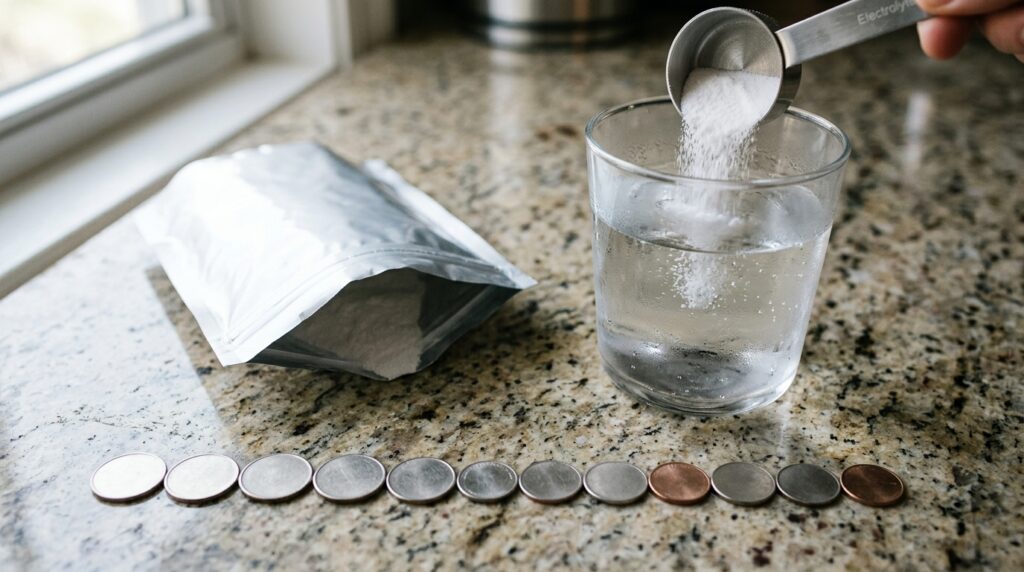
Is electrolyte powder worth it, or are you paying for flavored water and clever marketing? For most healthy people going about a normal day, plain water and regular meals do the job. But long workouts, heavy sweating, heat, vomiting, or diarrhea can quickly change the equation.
The term “electrolyte powder” can describe almost anything. Some packets provide useful sodium and fluids, while others are loaded with sugar, caffeine, or unnecessary extras. The real answer depends on what you are doing, what you are losing, and what is actually inside the packet, not the hype on the front.
Key Takeaways
- For most healthy people doing ordinary daily activities, plain water and regular meals provide sufficient hydration; electrolyte powder is mainly useful during prolonged intense exercise, heavy sweating, hot-weather work, vomiting, or diarrhea.
- Judge a powder by its actual sodium, sugar, serving size, and ingredients—not its marketing. Meaningful sodium can help replace sweat losses, while excessive sugar, caffeine, and unnecessary extras may add cost without improving hydration.
- Calculate the true cost per serving, including the number of scoops or packets actually needed, and compare it with water, food, sports drinks, or electrolyte tablets. A powder is worth the price only when it addresses a real hydration need.
- People with kidney disease, heart failure, high blood pressure, fluid restrictions, or medications affecting mineral levels should consult a healthcare professional before increasing electrolyte intake; severe or persistent dehydration symptoms require medical care.
When Electrolyte Powder Is Worth It
Electrolyte powder is most likely worth the money when you are losing a lot of fluid and sodium. A long workout, endurance event, intense outdoor job, or heavy sweating in hot weather can create a real need for more than plain water. In these situations, a powder can provide a convenient way to replace fluids while adding electrolytes in a measured serving. It may also help when plain water is difficult to drink or becomes unappealing during prolonged activity. For a short walk, routine errands, or a typical desk day, however, water and regular meals are usually enough.
Vomiting and diarrhea are other situations where an electrolyte drink may offer practical value because you can lose fluid and key salts quickly. Look for a formula designed for rehydration rather than a flashy blend packed with extras, and follow the mixing directions carefully. If symptoms are severe, last more than a short time, or prevent you from keeping fluids down, seek medical advice instead of relying on powder alone. The goal is simple: replace what you are losing, not buy an expensive drink because the label sounds impressive.
The formula determines whether the product is actually worth the price, so check the sodium, sugar, serving size, and cost per serving before you buy. A packet with little sodium may add flavor but offer limited value after heavy sweating. A product loaded with sugar, caffeine, or unnecessary ingredients may also be a poor fit for your needs. Compare the label with your situation and ask whether you would use it often enough to justify the price. If you mainly need hydration during everyday activities, a water bottle and balanced diet will usually provide more value for less money.
Sodium Sugar And Electrolyte Formulas

The question is not whether a packet says “electrolyte,” but what it actually delivers. Start with sodium, because it is often the most important ingredient when you lose a lot of fluid through heavy sweating, prolonged exercise, vomiting, or diarrhea. Check potassium and magnesium too, but do not assume higher amounts make a formula better, especially if your regular diet already provides plenty. Sugar can be useful during long, hard activity because carbohydrates help fuel your muscles and support fluid absorption. A zero-sugar mix may make more sense for short workouts or everyday use.
A formula with caffeine, vitamins, amino acids, herbs, or flavor enhancers can look impressive while adding little value for replacing fluids. Caffeine may be useful if you specifically want a stimulant, but it can also make the product a poor fit for late-day use or anyone sensitive to it. Compare the sodium, sugar, and other ingredients per serving, not just the number of packets in the box. Then calculate the real cost per serving. A bargain-looking tub can become expensive if the label calls for two or three scoops at a time.
For ordinary daily activity, water and regular meals usually make electrolyte powder unnecessary. It may be worth paying for when you are sweating heavily for hours, exercising in hot conditions, or struggling to keep fluids down, but the right formula depends on the situation. A simple product with meaningful sodium and a sensible amount of carbohydrate can beat a flashy blend loaded with extras. If the powder offers only a tiny amount of sodium and a long list of costly add-ons, you are probably paying for marketing rather than better hydration.
Cost Per Serving Versus Plain Water
To decide whether an electrolyte powder is worth it, calculate the cost per serving, not the headline price. Divide the package price by the number of servings you will actually use, then check whether one serving delivers a meaningful amount of sodium for your situation. A $30 tub with 30 servings costs $1 each, while a $20 tub that claims 40 servings costs 50 cents, but only if those smaller servings meet your needs. Plain tap water costs very little, and a normal meal can provide electrolytes for less than most packets. For everyday errands or light workouts, the price difference may buy convenience and flavor, not a real advantage.
Compare the powder with the options you already use. Sports drinks may cost more per bottle but can provide fluid, sodium, and carbohydrates during long, hard exercise. Electrolyte tablets may be cheaper if you only want flavor and a small electrolyte boost. Food-based choices, such as a meal, fruit, broth, or salty snacks, can also cover routine losses without the markup of a supplement. Look closely at serving claims because some products count a tiny scoop as one serving and assume you will mix several servings at once. The true cost is the amount you need to drink, not the most flattering number printed on the label.
Watch for formulas that charge extra for trendy ingredients, heavy branding, or fancy flavor names while providing little of the electrolytes you actually want. Subscription pricing can make the first order look cheap, so calculate the recurring charge, shipping, cancellation rules, and total cost over several months. You may also pay more for individual packets than for a tub, even when the ingredients are nearly identical. If you rarely sweat heavily or lose fluids through illness, plain water and food will usually win the value test. An electrolyte powder earns its price when its formula fits a real need and its cost per useful serving holds up against simpler options.
Who Should Skip Or Check First

If you are healthy, eating normally, and doing ordinary daily activities, you can probably skip electrolyte powder. Water and regular meals usually replace what you lose, so paying for a flavored packet may add cost without adding much value. It becomes more worth considering during long, hard workouts, heavy sweating, hot-weather work, or vomiting and diarrhea. Before buying, compare the sodium and sugar per serving, then ask whether the formula solves a real problem instead of simply sounding impressive.
Check with a healthcare professional before increasing electrolytes if you have kidney disease, heart failure, high blood pressure, or another condition affected by fluid and mineral balance. You should also ask first if you take medicines that can change sodium, potassium, or magnesium levels, including some blood pressure or fluid medicines. Extra potassium can be risky for some people, and a high-sodium mix may work against a low-salt plan. If you have ongoing vomiting, diarrhea, confusion, severe weakness, or signs of dehydration, get medical advice rather than trying to manage the issue with a supplement alone.
Our buying notes should stay transparent. Any product review or recommendation should focus on eligible products and direct product URLs should use the required affiliate format when applicable. That means judging the actual ingredient panel, serving count, total price, refund terms, and realistic use case, not repeating a sales page’s hype. If the cost per serving is high and the packet offers little sodium or no clear benefit for your routine, skip it. A product earns its place only when its formula matches your needs and the price makes sense.
When Electrolyte Powder Is Worth It
For most healthy people, electrolyte powder is not worth the extra cost for everyday hydration. Water and a normal diet usually replace what you lose during routine activities, so a colorful packet may add more marketing than value. It can earn its place during long, strenuous workouts, heavy sweating, vomiting or diarrhea, or any situation where plain water is hard to drink or does not stay down. The formula matters, too, because some powders contain meaningful sodium while others offer little more than flavor, sugar, caffeine, or a long list of extras.
Before you buy, look past the front of the package and check the actual sodium, sugar, and serving details. A powder may be useful in a demanding situation, but paying premium prices for a low-sodium mix you rarely need is a poor deal. If you are also trying to make smarter choices about everyday food spending, explore our Best Meal Prep Services To Save Time And Energy guide for another practical way to compare convenience against cost. Your decision rule is simple: compare your use case, ingredient amounts, and cost per serving before buying.
Frequently Asked Questions
1. Is electrolyte powder worth it for everyday hydration?
For a normal day, usually not. If you are eating regular meals and drinking enough water, you are likely getting what you need without an extra powder. Electrolyte packets make more sense when you are sweating heavily, exercising for a long time, dealing with heat, or losing fluids through vomiting or diarrhea.
2. When is electrolyte powder most useful?
It can be useful during long workouts, endurance events, hot outdoor work, or any situation where you sweat heavily. A good formula gives you fluids and sodium in a measured serving, which can be more practical than plain water alone. For a short walk, office day, or typical errands, water is usually enough.
3. Can electrolyte powder help after vomiting or diarrhea?
Yes, a rehydration-focused electrolyte drink can help replace the fluid and salts you lose quickly. Follow the mixing directions carefully because the right balance matters. If symptoms are severe, last more than a short time, or prevent you from keeping fluids down, seek medical care instead of relying on powder alone.
4. What should you look for in an electrolyte powder?
Start with the sodium, sugar, serving size, and cost per serving. Sodium is especially important when you have lost a lot of sweat, while sugar can be useful in some rehydration situations. Excessive sugar, however, can turn the drink into expensive flavored calories. Ignore flashy claims and inspect the nutrition label before you buy.
5. Is electrolyte powder better than plain water?
Not automatically. Water is the better choice for most routine hydration, while electrolyte powder earns its place when you are losing substantial fluid and sodium. The right choice depends on what you are doing and what your body is losing, not on the marketing printed on the packet.
6. Do electrolyte powders with sugar, caffeine, or extra ingredients work better?
Extra ingredients do not automatically make a formula better. Sugar may provide quick energy during prolonged activity, but too much is unnecessary for ordinary hydration. Caffeine can also cause unwanted effects for some people. Choose the simplest formula that matches your situation instead of paying for a crowded ingredient list.
7. How can you tell if an electrolyte powder is overpriced?
Calculate the cost per serving and compare the sodium and sugar content with similar products. A low-cost packet with almost no useful electrolytes may be poor value, while a more expensive formula may still be justified if it delivers the right ingredients for heavy sweating or rehydration. You are paying for a useful formula, not a colorful packet or clever slogan.
8. Can you drink electrolyte powder every day?
You can, but you may not need to. Daily use can add unnecessary sugar, sodium, caffeine, or calories when water and regular meals already cover your needs. Use it for a clear reason, and check with a healthcare professional if you have a medical condition or have been told to limit fluids or sodium.