E-bike conversion kit reviews help you compare bike fit, total cost, and tested range. BikeRadar reported that the Boost cost £522 as tested and traveled 40.5 miles on a mixed-surface ride. That’s one data point, not a promise for every rider or route. A conversion may make sense if you already own a compatible, well-maintained bike, but the kit price alone won’t tell you whether you’ll save money. A donor bike, repairs, or shop labor can quickly change the math.
Kits also use different designs. Some replace a wheel with a motorized hub, some attach a motor to the bike, and mid-drive systems place the motor near the pedals. Even a removable or tool-free unit can have strict fit limits. WIRED says the Clip Commuter and Explorer require a 26- to 28-inch wheel and a bike without front suspension. Their stated ranges are 4–6 miles and 10–12 miles, respectively. Before the sales pitch wins you over, check your bike, the range evidence, and the battery details. A low sticker price means little if the kit doesn’t fit or the full setup costs more than you expected.
Key Takeaways
- You should compare the full conversion cost, including any donor bike, repairs, and shop labor, with a complete e-bike; the Swytch Max+ at £999 and Skarper DiskDrive at £1,495 are kit prices, not finished-setup costs.
- Your bike must meet a kit’s exact fit limits before you buy: WIRED says the Clip Commuter and Explorer need a 26- to 28-inch wheel and no front suspension, while Bafang mid-drive kits require a 68–73mm bottom bracket.
- Treat range figures as evidence, not promises: BikeRadar measured 40.5 miles from the £522 Boost on a mixed-surface ride, while the Swytch Max+’s 40 miles and WIRED’s Clip ranges of 4–6 and 10–12 miles are claimed or stated figures.
- You should check the exact battery model, request electrical-safety documents, and confirm local e-bike rules before riding; on April 15, 2024, the CPSC warned consumers to stop using Unit Pack Power U004 and U004-1 batteries after 13 U.S. overheating reports, including seven fires. Read the CPSC warning.
Are E-Bike Conversion Kits Worth It?
A conversion kit can be worth it if you already own a compatible, well-maintained bike, but converting isn’t automatically cheaper or simpler than buying a complete e-bike. Kits work in different ways: clip-on friction drives press a motor against the tire, replacement hub wheels put the motor in a wheel, some rear-wheel systems use a separate battery, and mid-drive motors sit by the pedals. Each design has different fit requirements, so the kit that looks like a bargain may not suit your bike. Prices vary widely. Reviews cover kits that cost a few hundred dollars and models priced at more than £1,000, before you pay for a donor bike, repairs, or possible shop labor. For scale, BikeRadar listed the Swytch Max+ at £999 as tested and the Skarper DiskDrive at £1,495. Those are kit prices, not the cost of a finished, road-ready setup. Your donor bike can change the comparison. If it already fits the kit and needs no repairs, conversion may let you avoid buying a whole new bike. If you need to buy a suitable donor, fix problems, or hire a shop to install or repair the setup, the savings can shrink or disappear. BikeRadar warns that donor-bike costs and paid installation or repairs can erode conversion savings. Separate the kit price from the full project cost. Add the bike, repairs, and any labor before you judge the deal. The simplest rule is to compare the all-in conversion cost with the price of a complete e-bike that meets your needs. Include only costs you actually expect, but don’t treat the kit as the whole bill. If a complete bike costs less than the finished conversion, the kit doesn’t save you money, even if its headline price looks tempting. Reviews can help you spot the trade-offs behind the math. A kit’s range may not suit your rides, added weight can affect handling, cables can be awkward to route, and a removable system may be easier to take off than to service. A complete e-bike avoids some conversion-specific compromises, while a kit lets you keep a bike you already like. The better value depends on the bike you’re starting with and the finished setup you’ll actually use.
Which Conversion Kit Type Fits Your Bike?
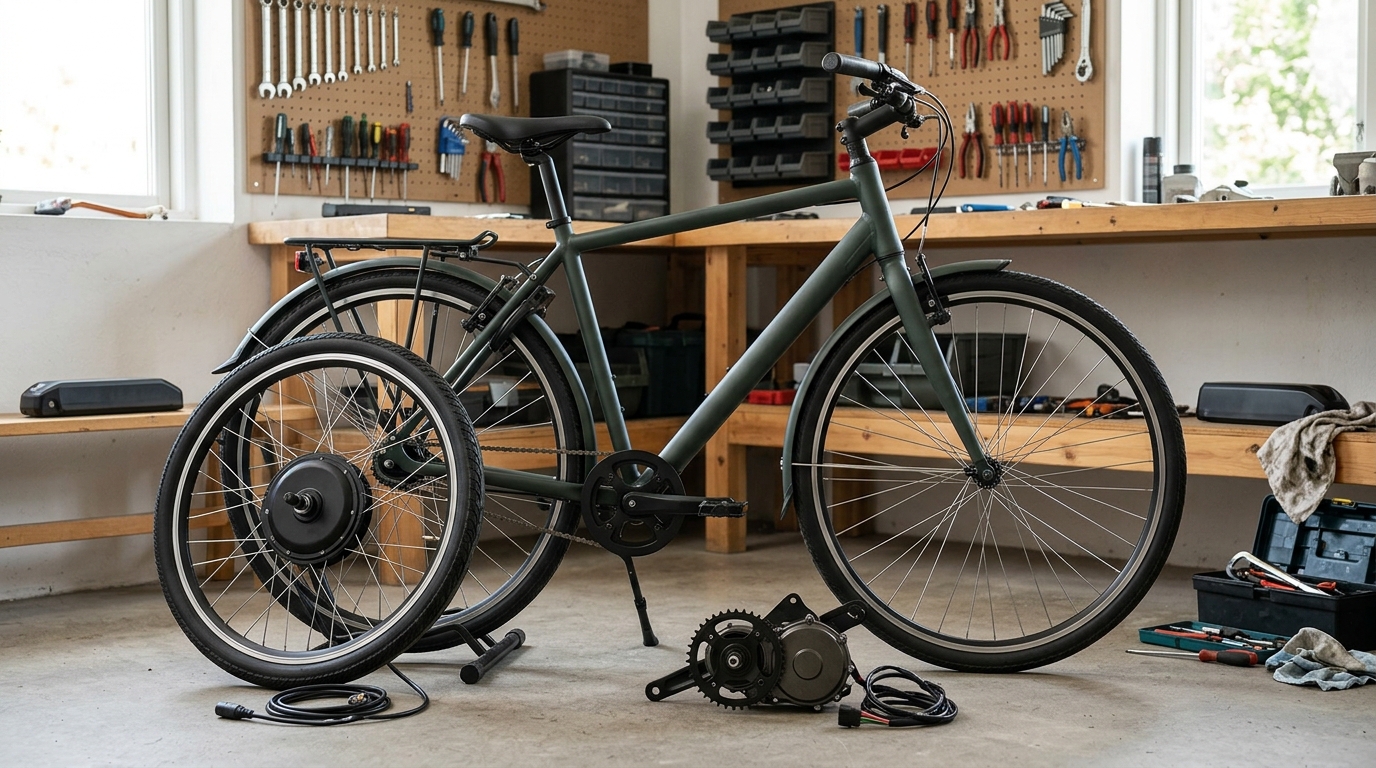
The right conversion kit depends on how it attaches to your bike, which parts need to fit, and how much setup and upkeep you’re willing to handle. A removable or tool-free design can still have strict compatibility limits, so don’t mistake quick attachment for universal fit. A friction drive clips onto the bike and presses a motor roller against the tire. That avoids replacing a wheel, but tire contact and bike shape still matter. WIRED reported that the Clip Commuter and Explorer require a 26- to 28-inch wheel and a bike without front suspension. If your bike doesn’t meet either condition, that clip-on kit won’t work for you. A replacement hub wheel puts the motor inside a wheel that replaces your existing one. A front-hub setup puts the motor at the front; a rear-wheel kit puts it at the back and may use a separate battery mounted elsewhere on the bike. That battery still needs a practical, secure place, and its cables need a clear route. Cyclingnews reviewed a Bafang front-hub setup with a 500W motor and noted cable-management challenges. This approach replaces a wheel rather than clipping a motor against the tire, but you still need to check wheel size, fork type, and how the battery and wiring fit your frame. A mid-drive motor sits by the pedals and works through the bike’s drivetrain, so it needs more space around your cranks than a clip-on unit. Bafang mid-drive buyers need a 68–73mm bottom bracket, then must choose details such as chainring size, battery size, and display. That makes it a poor choice if your bike’s bottom-bracket dimensions don’t match or you want to avoid more involved mechanical work. Before you choose a design, check wheel size, fork type, bottom-bracket dimensions, battery placement, and whether you can remove or service the system without a headache. A friction drive may suit you if you want a setup that’s quick to remove and own a compatible rigid-fork bike. A hub wheel may be a better fit if replacing a wheel suits your bike, while a mid-drive makes more sense when your frame and crank area meet its requirements. Don’t buy based on “easy install” alone. A kit can be easy to attach and still be the wrong match for your bike.
What Do E-Bike Kit Reviews Show?
E-bike kit reviews show a wide range of prices and distances, but the figures aren’t directly comparable. Some are reviewer-measured results from specific rides, while others are ranges stated by the manufacturer. Route, terrain, assist use, and the exact kit configuration can all affect how far a setup goes. BikeRadar listed the Boost at £522 as tested and measured 40.5 miles from its 216Wh battery on a mixed-surface ride. For the Skarper DiskDrive, BikeRadar listed £1,495 and reported measured ranges of 71.5km on gravel and 90km on the road. Those results apply to the reported rides, not every rider. BikeRadar listed the Swytch Max+ at £999 as tested. It combines a 250W front-hub motor with a removable 272Wh battery. Its 40-mile range is claimed, not a measured result in the cited review findings. That distinction matters: a claimed figure doesn’t prove you’ll cover that distance on your route. At the shorter end, WIRED listed the Clip Commuter at $499 with a stated 4–6-mile range, and the Clip Explorer at $599 with a stated 10–12-mile range. Those are stated ranges, not measured ride results in the cited findings. That’s a substantial difference from the longer-range kits, so match the figures to your actual trips rather than assuming every conversion system serves the same purpose. Cyclingnews listed a Bafang front-hub setup at $827.99 as tested, with a 48V 17.5Ah (840Wh) battery. The review noted that cable management was challenging. The cited findings don’t give a tested range for that configuration, so battery capacity alone can’t tell you how many miles it will deliver. Treat the numbers as evidence, not promises. A mixed-surface test, a road ride, and a stated range answer different questions. Battery size and kit configuration matter, too. Keep the currency visible, and don’t mistake an advertised range for a reviewer’s measured result.
How Hard Is Installation?
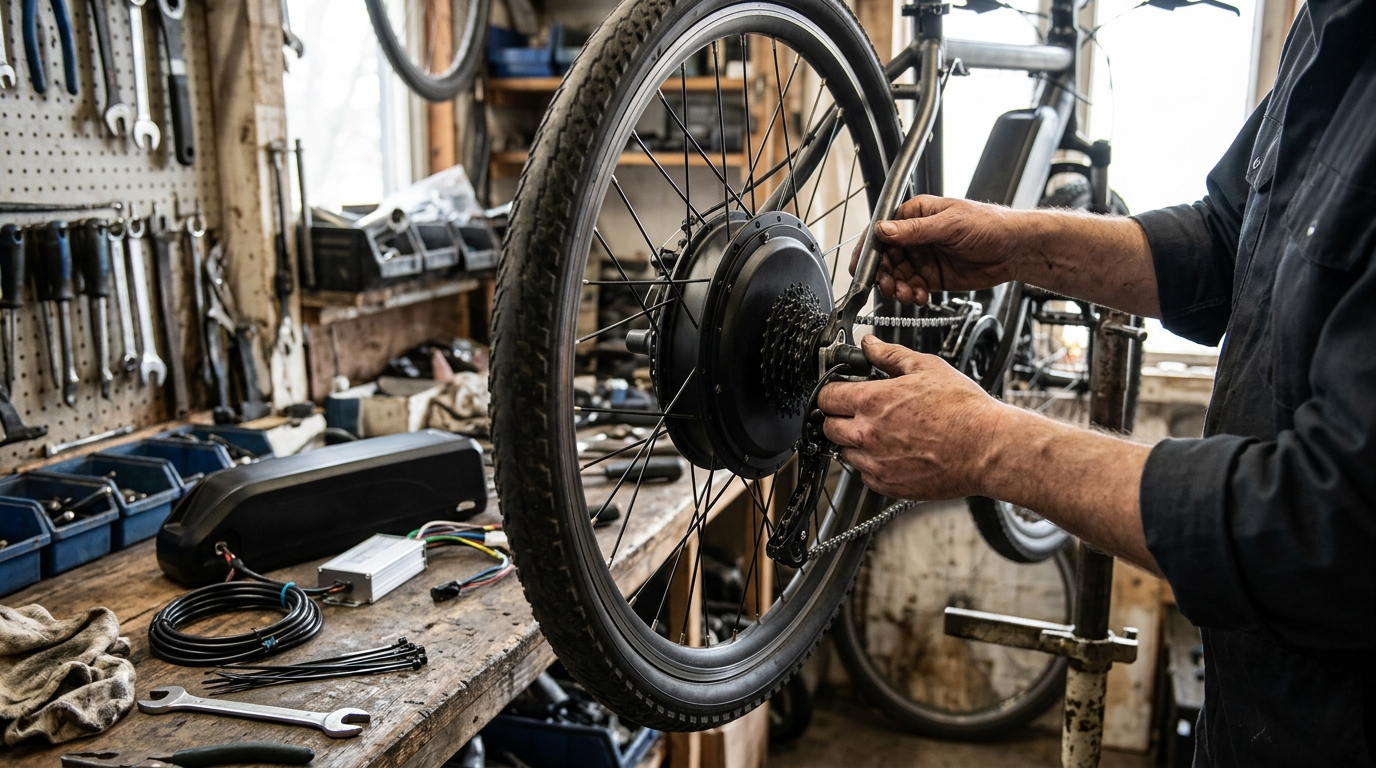
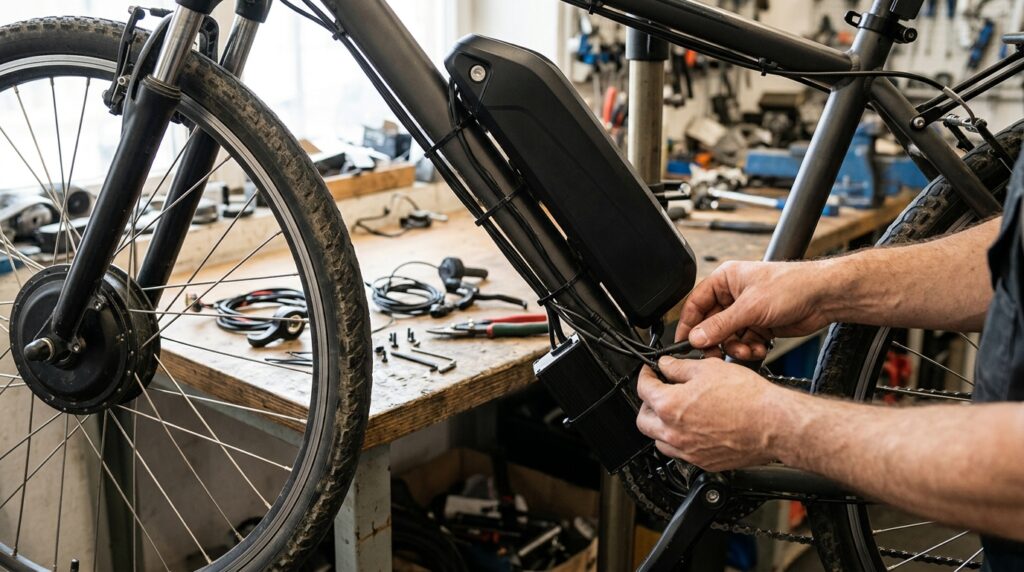
Installation can mean attaching a clip-on drive, replacing a wheel, or fitting a motor into the crank area. It isn’t always easy. A tool-free unit may be simple to attach but still incompatible with your bike. WIRED says the Clip models require a 26- to 28-inch wheel and a rigid fork, which means no front suspension. WIRED’s Clip review spells out those limits. A hub-wheel kit takes more than clipping a drive onto the bike. You replace a wheel, then need to position the battery securely and route its cables without leaving them awkward or exposed. Cyclingnews found cable management to be a drawback in its review of a Bafang front-hub kit. The Bafang review makes clear that wiring is part of the setup, not an afterthought. A mid-drive needs a closer fit check around the cranks and more involved mechanical work. Cyclingnews lists Bafang’s fit range as a 68–73mm bottom bracket. If your bike falls outside that range, the kit isn’t a match. Cyclingnews’ Bafang guide also notes choices such as chainring, battery, and display, which can add setup decisions. Before you buy, use this checklist to spot a promising kit or a potential fit problem:
- Confirm your bike’s wheel size, fork type, and any bottom-bracket dimensions the kit requires.
- Check your bike’s condition, including whether any existing parts need repair before you add a motor.
- For a hub-wheel or rear-wheel system, plan where the battery will sit and how the cables will reach the motor.
- Decide whether you can handle the fitting and cable setup or would rather have a bike shop do the work.
Don’t treat “tool-free” as a promise that the whole conversion will be effortless. A removable unit may still need careful positioning, while a wheel swap or mid-drive can call for mechanical skills and later checks or service. If your bike needs repairs, or you want a shop to handle installation, include that possible labor in your comparison. BikeRadar cautions that shop work and repairs can eat into conversion savings. Its conversion-kit guide is a reminder that the kit price is only one part of the bill.
Are Conversion Kits Safe And Legal?
A conversion kit can be safe and legal, but you need to check its battery and electrical safety information and confirm that its motor and assisted speed meet the rules where you ride. U.S. requirements aren’t identical everywhere, so don’t assume a kit that qualifies as an e-bike in one state will be treated the same in another. California example: The California Highway Patrol’s summary of California Vehicle Code §312.5 defines an electric bicycle as having fully operable pedals and a motor no greater than 750W. Class 1 and Class 2 assistance cuts off at 20mph. Class 3 pedal assistance cuts off at 28mph and requires a speedometer. In California, riders under 16 may not operate a Class 3 e-bike, and Class 3 riders and passengers must wear helmets. These rules are a California example, not a nationwide standard. Check local requirements before you buy or ride, especially if a kit’s motor power or assisted speed could change how your bike is classified. The California Highway Patrol’s summary lays out the state’s classifications and rules. Battery safety deserves just as much attention as bike fit. On April 15, 2024, the U.S. Consumer Product Safety Commission (CPSC) told consumers to stop using Unit Pack Power U004 and U004-1 batteries after receiving 13 U.S. reports of overheating, including seven fires. A familiar-looking battery or a low kit price is no substitute for checking the exact battery model. Read the CPSC warning on the Unit Pack Power batteries. For electrical-system safety, look for information about ANSI/CAN/UL 2849, the named safety standard for e-bike electrical systems. CPSC said it urged more than 2,000 manufacturers and importers to comply with applicable voluntary UL standards, including UL 2849. The word voluntary matters: the standard is a safety benchmark, not proof that every kit on sale has been certified. Ask for clear documentation rather than relying on a vague “safe” claim. CPSC’s statement on voluntary UL standards explains its call to manufacturers and importers. There’s also a proposed federal rule to track, but don’t mistake a proposal for a current requirement. On June 22, 2026, CPSC approved publication for public comment of a proposed mandatory lithium-ion battery safety standard for micromobility products. The draft scope includes components sold with e-bike conversion kits. It is proposed, not finalized, so it isn’t yet a settled mandate. CPSC’s announcement about the proposed rule describes its status and scope.
Which Kits Belong On Your Shortlist?
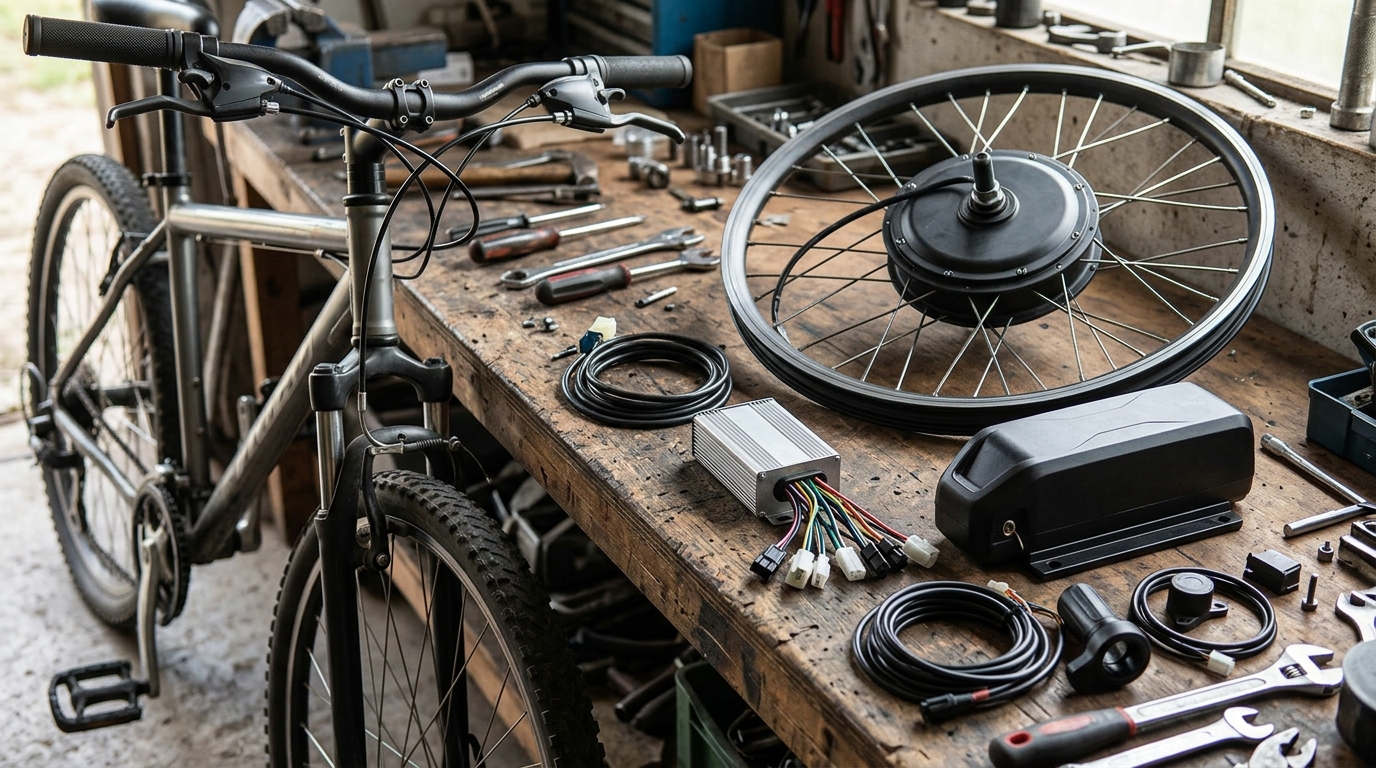
Your shortlist should fit your bike, your all-in budget, and your priorities. Don’t chase a one-size-fits-all “best” kit. For a simple removable setup, prioritize exact fit requirements and realistic range over claims that installation is effortless. A quick attachment is no bargain if it won’t fit your bike or its range doesn’t suit your regular rides. For hub or mid-drive options, check the key setup details before comparing prices:
- Hub kit: Confirm wheel compatibility, battery configuration, cable routing, and how the system will be serviced.
- Mid-drive: Confirm bottom-bracket fit, battery configuration, cable routing, and what mechanical work or service the kit may need.
Then price the whole conversion, including a donor bike, repairs, and shop labor, and compare that total with a complete e-bike for the same use. BikeRadar warns that those extra costs can erode conversion savings. Ruckus Reviews summarizes published reviews and specifications. This article doesn’t claim that our editors tested the kits firsthand. Your shortlist should reflect what reviewers report, not suggest that Ruckus Reviews tested every kit. A conversion is only part of your riding setup. Compare Ruckus Reviews’ helmet coverage and bike-light coverage alongside its cycling and outdoor gear reviews.
Check Fit, Cost, And Safety
Before you choose a kit, make a fit file for your bike. Record its make and model, wheel size, fork type, and bottom-bracket measurement if you’re considering a mid-drive. Add clear photos of the fork, rear dropouts, crank area, and possible battery location. Send the file to the kit maker and ask for written confirmation that the exact kit fits. If the reply skips your measurements, don’t treat that as a yes.
For each finalist, write down the kit price, any donor-bike cost, repairs, and a shop’s installation estimate if you’ll need help. Note whether the battery and charger are included, and separate tested range from a claimed figure. Compare the finished conversion cost with the price of a complete e-bike for the same riding needs. If you’d have to buy a bike and pay for substantial work, pause before committing.
Before you pay, check the exact battery model against CPSC battery warnings, then request safety documentation for the kit’s electrical system. Confirm that the motor and assist settings meet the rules where you’ll ride. California riders can check the California Highway Patrol’s classification guide. Save the maker’s fit reply and safety documents before placing an order.
Frequently Asked Questions
1. Can you install an e-bike conversion kit on a carbon-fiber bike?
A carbon-fiber bike may be compatible with some kits, but don’t assume a kit is safe to install on it. Before you buy, ask the bike maker and kit maker to confirm in writing that the frame and mounting points are suitable.
2. Can you ride an e-bike conversion kit in the rain?
You can ride a converted e-bike in the rain only if the kit maker says its electrical parts are suitable for wet conditions. Check the guidance for the battery, motor, display, and connectors. Don’t assume rain resistance means the kit can be submerged or washed with high-pressure water.
3. How long does a conversion-kit battery last before it needs replacing?
There’s no universal replacement age for a conversion-kit battery. Its lifespan depends on the battery and how you use, charge, and store it. Follow the maker’s care and replacement guidance, and stop using a battery that is damaged or shows signs of overheating.
4. How fast is a high-powered e-bike conversion kit?
Voltage and motor wattage alone can’t tell you a kit’s top speed. The controller, bike setup, rider, and riding conditions all matter, so check the maker’s speed information and the rules where you plan to ride.