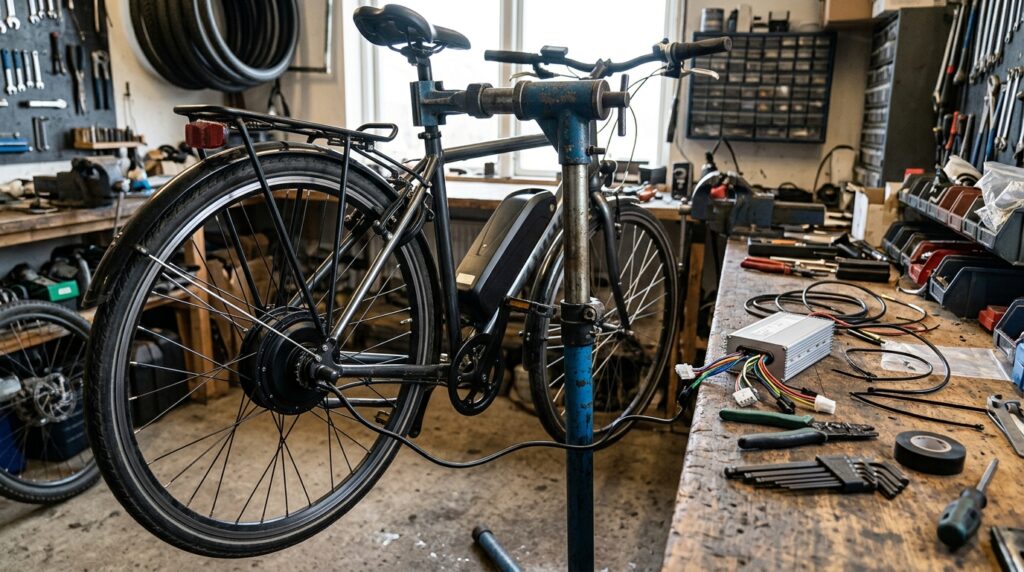
E-bike conversion kit reviews are useful when they compare fit and total cost, not just motor claims. BikeRadar’s 2026 guide listed the Boost kit at £522 and the Skarper DiskDrive at £1,495 as tested. That gap shows why “conversion kit” doesn’t mean one simple price. The designs differ, too: Skarper’s 3.9kg drive unit clips onto a special rear disc rotor. You’re comparing different setups, not just bigger and smaller motors. A useful shortlist looks at what each design means for your bike, route, and budget.
Start with a pass-or-fail fit check. Swytch says its GO kit won’t fit thru-axle forks, and its motor wheel suits tires 1.1–2.5 inches wide. That could rule out your bike before you even compare prices. Swytch estimates installation takes 25–45 minutes, but you’ll need a pump, adjustable spanner, ruler, scissors, Allen keys, and tire levers, none of which are included. Keeping a familiar bike may make sense. If not, a ready-to-ride e-bike could spare you the fit puzzle and tool hunt. The most useful reviews compare compatibility, installation effort, usable range, performance, and extra costs, so you can decide whether a tempting conversion is really practical.
Key Takeaways
- A conversion kit is a no-go until you confirm the exact match for your bike’s fork, tire width, wheel size, and brakes; Swytch GO does not fit thru-axle forks, and its motor wheel fits tires 1.1–2.5 inches wide.
- A kit’s real cost includes the kit price plus any tools, repairs, replacement parts, and fitting help, so compare that total with a ready-to-ride e-bike instead of trusting the headline price.
- Boost cost £522 as tested and delivered 40.5 miles on a 216Wh battery during one mixed-surface ride, while Swytch Max+ cost £999 as tested and claims 40 miles from its removable 272Wh battery, so don’t treat those range figures as a head-to-head test.
- Swytch estimates GO installation at 25–45 minutes, but the required pump, adjustable spanner, ruler, scissors, Allen keys, and tire levers are not included, so count missing tools and your comfort with the work before buying.
Are E-Bike Conversion Kits Worth It?
Yes, an e-bike conversion kit can be worth it if your existing bike is in good condition, the kit fits, you’re comfortable installing it, and the full cost works for your budget. If your bike needs repairs or the kit doesn’t fit, a ready-to-ride e-bike may be the simpler choice.
Start with the bike you already own, not the motor you want. A conversion won’t fix a worn drivetrain, damaged wheels, or a frame that isn’t suitable for the kit. If you need to replace parts before you start, add that bill to the conversion price. A good fit matters as much as a tempting deal.
The price spread is wide: the Boost kit was £522 as tested, the Swytch Max+ was £999 as tested, and the Skarper DiskDrive was £1,495 as tested. Those prices cover different designs and levels of convenience, so the cheapest kit isn’t automatically the best value. The real question is whether the setup suits your bike and the way you ride.
Performance needs the same reality check. The Boost’s 216Wh battery delivered 40.5 miles on a tester’s mixed-surface ride, while the Swytch Max+ pairs a 250W front-hub motor with a claimed 40-mile range. These figures help set expectations, but they don’t tell you how well a kit will fit your bike, how much work installation will take, or whether the ride feel suits your routes. Motor power is only one part of the deal.
Then count the extras. Cycling Weekly listed the Swytch GO+ kit at $654, but that price excluded items such as a new chainring, chain, and installation tools. The same review compared it with ready-to-ride e-bikes priced at $1,000–$1,500. That gap may look generous at first, then shrink once you add the parts and work your conversion needs.
A ready-to-ride e-bike is often the more practical choice if your current bike is a poor match, needs costly repairs, or you’d rather avoid installing a kit. You’re paying for a complete bike instead of adapting one you already own. A conversion makes more sense when your bike is in good condition, the kit fits without a fight, and keeping your familiar bike is worth the extra effort.
Provisional verdict: Choose a kit if you want to reuse a good bike and the full conversion cost works for you. Lean toward a ready-to-ride e-bike if you want a simpler purchase or your bike needs substantial work. The reviews ahead compare fit, installation, performance, and total cost, rather than treating motor power as the whole story.
What Should You Check Before Buying?
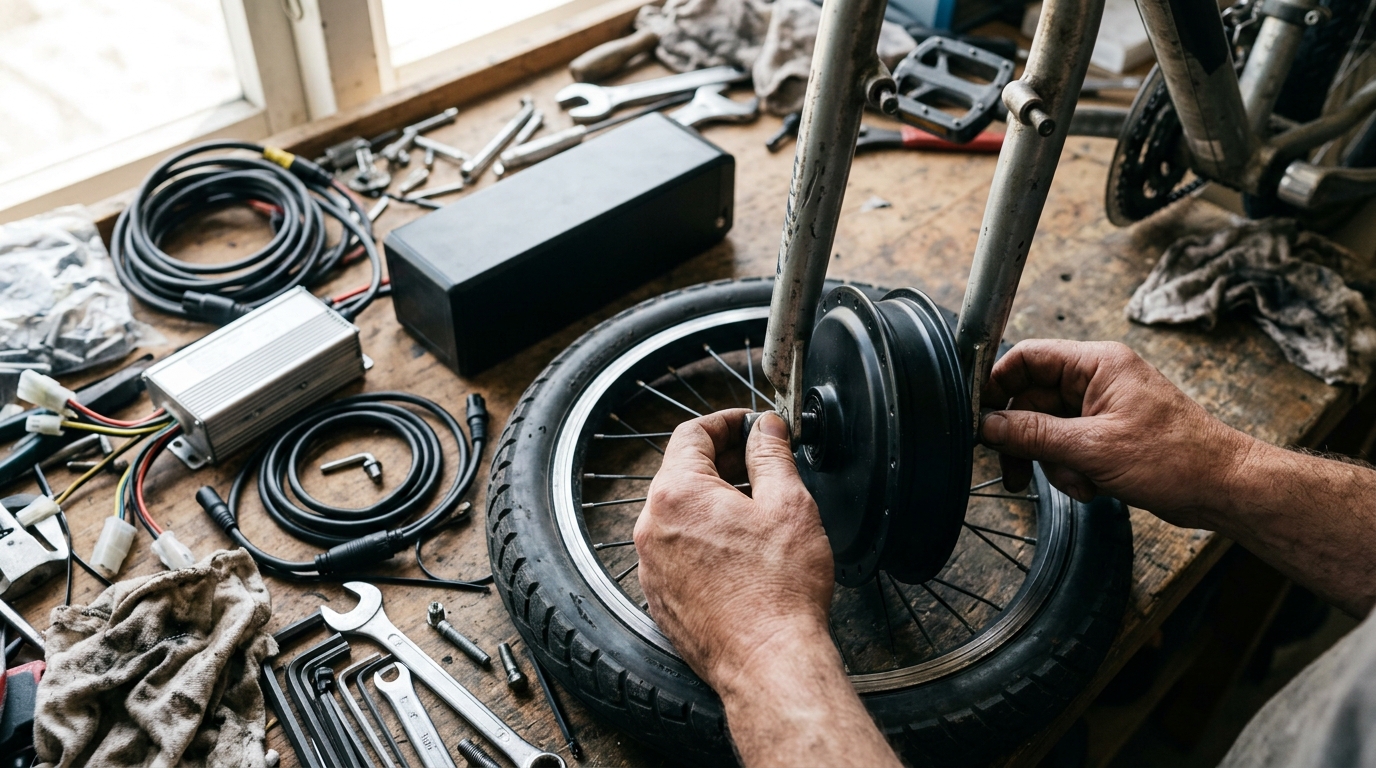
Before buying, confirm that the exact kit fits your bike’s fork, tires, wheel, and brakes. If any required match fails, treat the kit as a no-go. Start with the parts the kit has to connect to. A broad “fits most bikes” claim doesn’t guarantee it will fit yours, and a mismatch can turn a tempting price into a dead end.
- Check your fork type. Swytch GO is not compatible with thru-axle forks. Identify whether your bike has a thru-axle or another fork setup, then compare it with the kit’s stated axle requirements.
- Measure your tire width. Swytch’s motor wheel fits tires 1.1–2.5 inches (28–64mm) wide, which excludes fat tires and very narrow road tires. Compare your measurement with the Swytch kit specifications instead of guessing from how the tire looks.
- Match the wheel and brake setup. Check your bike’s wheel size and how its brakes attach or make contact with the wheel. Then confirm that the specific kit’s replacement wheel supports that setup. Don’t assume a wheel that fits the fork will also work with your brakes.
- Verify every requirement for the exact kit and bike. Compare the kit’s full fit details with your bike’s measurements and parts before ordering. If a requirement is unclear, ask the kit maker for confirmation before you pay. A general compatibility claim doesn’t confirm that your particular bike will fit.
Do this before comparing prices or getting attached to a product. A kit can have appealing power or a low headline price and still be unusable on your bike. Look for specific requirements, not just phrases such as “fits most bikes.” Write down your fork type, tire width, wheel size, and brake setup before reading more reviews. If a listing leaves out a detail that matters to your bike, treat it as an unanswered fit question, not proof of compatibility. Reviews are most useful when they name the setup tested. A positive review of one bike doesn’t confirm that the kit will fit yours.
Which Kit Design Fits Your Riding?
The best fit depends on what matters most to you: a lower as-tested price and a reported ride result, a front-hub setup with a removable battery, or a clip-on drive unit. The Boost conversion kit is the lower-price example at £522 as tested. Its 216Wh battery delivered 40.5 miles on a mixed-surface ride, giving you a real-ride reference alongside the price. But one ride can’t promise the same distance on your bike or route. The Swytch Max+ costs £999 as tested and takes a different approach: its 250W motor sits in the front hub, and its 272Wh battery can be removed. Swytch claims a 40-mile range. If you want a front-hub kit and value being able to remove the battery, those details may matter more than the headline range alone. The listed 40Nm of torque gives you another point to compare, but it doesn’t tell you exactly how the kit will feel on your bike. Skarper DiskDrive is the most expensive example here at £1,495 as tested. Its 3.9kg drive unit clips onto a special rear disc rotor. That attachment design may appeal if you prefer a clip-on system, but consider the unit’s weight alongside the rest of your setup. No battery capacity or range figure is given here, so you can’t compare its distance with the Boost ride result or Swytch’s claim. Keep the range figures in context: the Boost figure comes from one mixed-surface ride, while Swytch’s 40 miles is a claimed range. They aren’t directly comparable. Your actual distance depends on riding conditions and setup, so a larger battery or promising figure alone can’t tell you which kit will suit your route.
| Buyer fit | Example | What stands out |
|---|---|---|
| Lower-price example | Boost conversion kit | £522 as tested; 216Wh battery; reported 40.5 miles on a mixed-surface ride |
| Front-hub option | Swytch Max+ | £999 as tested; 250W front-hub motor, 40Nm torque, and removable 272Wh battery; claimed 40-mile range |
| Clip-on design | Skarper DiskDrive | £1,495 as tested; 3.9kg drive unit clips onto a special rear disc rotor |
How Much Work Is Installation?
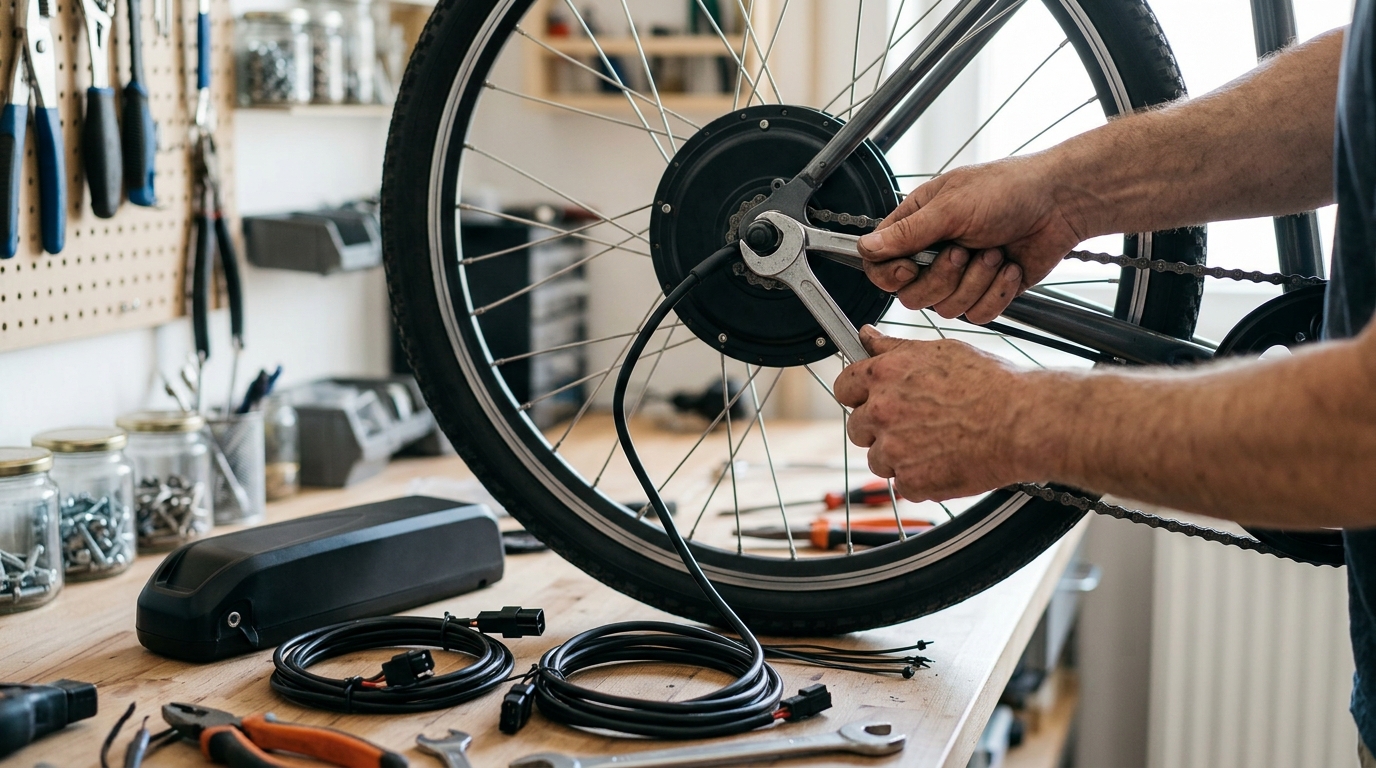
Installation effort depends on the kit design and your bike, so Swytch’s 25–45-minute estimate is a useful reference, not a promise that every conversion will be quick. The listed tools are a bike pump, adjustable spanner, ruler, scissors, Allen keys, and tire levers. They aren’t included.
A front-hub kit, a kit that replaces a wheel, and a clip-on drive unit don’t all attach the same way. The parts you need to work around can differ, too. A product-page estimate can’t tell you how confidently you’ll handle the job on your particular bike.
The clock also starts with a bike that’s ready for the work. The estimate doesn’t include diagnosing or repairing existing problems, such as a wheel or brake issue that needs attention before fitting. If your bike needs repairs, the job may take longer and require extra parts or help.
Before you buy, check exactly what the kit includes and compare its installation instructions with your bike’s setup. List the tools you already own, then account for anything missing. If a step is beyond your confidence or equipment, include the cost of getting help in your comparison.
That’s part of the real effort, not a reason to rule out every kit. If you’re comfortable with the stated steps and have the right tools, installation may be manageable. If you’re unsure about fitting parts around your wheel, brakes, or fork, a kit that looks cheaper on paper may take more time or outside help than you want to spend.
What Does a Conversion Really Cost?
A conversion really costs the kit price plus any tools, replacement parts, bike repairs, or fitting help needed to make your particular bike ride-ready. The price on the kit listing is a starting point, not a guaranteed all-in bill. The as-tested prices give you a useful range, but they don’t include every cost you might face: Boost was £522, Swytch Max+ was £999, and Skarper DiskDrive was £1,495. Your total can rise if your bike needs work before fitting, if you have to buy missing tools, or if the kit requires parts that aren’t in the box. A damaged or worn component doesn’t become free just because you’re converting instead of buying a complete e-bike. The Swytch GO+ example shows the gap: its listed price was $654, excluding items such as a chainring, chain, and installation tools. Those aren’t guaranteed costs for every rider, but they show why you should check the kit’s contents against your bike before treating the advertised price as the final figure. Add the cost of tools you lack, any replacement parts your setup needs, and repairs required to get the bike ready. If you expect to pay for fitting help, include that cost, too. That $654 example was compared with ready-to-ride e-bikes priced at $1,000–$1,500. Those prices apply to that comparison, not necessarily to every model or country. Still, they reveal the key value question: when the kit, missing parts, tools, repairs, and fitting costs approach the price of a complete bike, the savings may no longer justify adapting your old one. Make a fair comparison. Put the kit price beside the cost of every item or repair your conversion needs, then compare that total with a suitable complete bike available to you. Don’t compare a bare kit with a ready-to-ride bike and call the kit cheaper. That leaves the extra bill out of sight. A bike in good condition that fits the kit and needs few additions can make conversion an appealing choice. A bike needing several repairs, replacement parts, and tools can change the numbers quickly. Choose the option with the lower complete cost for the setup you actually need, not the lower headline price.
Are Converted E-Bikes Safe and Legal?
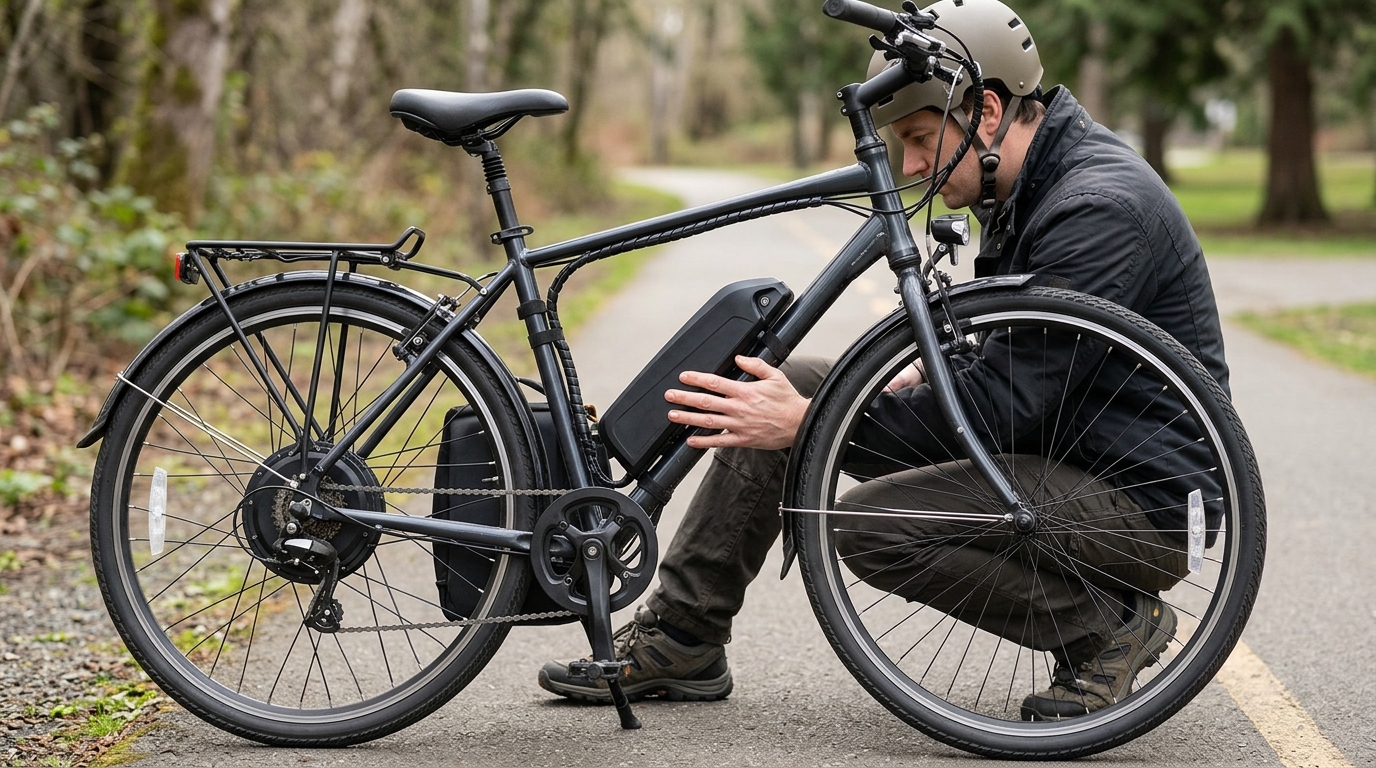
Yes, a converted e-bike can be safe and legal, but electrical-system safety and permission to ride are separate checks. The rules depend on where you live and ride. For U.S. consumer-product safety purposes, 15 U.S.C. § 2085 defines a low-speed electric bicycle as a two- or three-wheeled vehicle with fully operable pedals, a motor under 750 watts, and a motor-only maximum speed under 20 mph on a paved, level surface with a 170-pound operator. That definition doesn’t answer whether a converted bike meets your state or city’s riding rules. Treat product safety and local riding requirements as separate checks. For the electrical system, check whether the kit’s certification covers the actual system you plan to use, not just a battery or motor mentioned in a sales pitch. UL 2849, titled Electrical Systems for eBikes, covers the drive unit, battery, battery-management system, wiring, power inlet, and dedicated chargers in an e-bike electrical system. It doesn’t generally cover the bike’s mechanical structure, so certification doesn’t replace checks of the frame, wheels, brakes, and kit compatibility. New York City has a specific rule: Local Law 39 requires covered powered bicycles sold, leased, rented, or distributed in the city to have electrical-system certification to UL 2849. The city’s guidance also specifies UL 2271 certification for lithium-ion batteries used in covered micromobility devices. Certification or testing-laboratory identification must appear on the bike, battery, packaging, or sale documentation. Check the city’s Local Law 39 guidance for details that apply there. Don’t assume the same requirement applies everywhere. For riding rules, U.S. e-bike laws vary by state. Class definitions, access, and other operating rules may differ where you plan to ride, so use PeopleForBikes’ state law pages to check the relevant state rules. Confirm local requirements separately, especially if you ride across city or state lines.
Make Your Final Kit Shortlist
Open a note and give every candidate four rows: fit, installation, full cost, and the kind of evidence behind its range claim. Enter your bike’s fork type, tire width, wheel size, and brake setup. Mark a kit “unconfirmed” if its fit details don’t cover your exact setup. Don’t treat missing information as a yes.
Now keep only the designs that match your priorities. Put the Boost conversion kit on your list if its lower as-tested price and reported mixed-surface ride matter most. Consider Swytch Max+ if a front-hub motor and removable battery suit your needs. Keep Skarper DiskDrive in contention if its clip-on drive-unit design appeals to you and your bike works with its special rear disc rotor. Rule out Swytch GO if your bike has a thru-axle fork.
For each remaining kit, check the included-parts list against your bike and add the cost of any tools, repairs, replacement parts, or fitting help you’ll need. Write down whether the range figure is a claim or a reported ride result, so you don’t mistake different kinds of evidence for a head-to-head test.
Your shortlist is ready when every candidate has a confirmed fit, a realistic total cost, and installation steps you’re willing to take on. If one box is blank, contact the maker with your bike’s exact details before ordering.
Frequently Asked Questions
1. Can you move an e-bike conversion kit from one bike to another?
You may be able to move a conversion kit between bikes, but it must be compatible with each one. Check the fork, wheel, brakes, and any mounting points on the second bike, then follow the maker’s refitting instructions before you ride.
2. Can you convert a carbon-frame bike?
For a carbon-frame bike, check the kit maker’s compatibility guidance for that frame and attachment method before buying.
3. What should you do if a conversion kit’s battery needs replacing?
Replace the battery with one the kit maker confirms is compatible with your motor, wiring, and charger. Don’t assume a battery that looks similar will work. Contact the maker for the correct replacement and instructions.
4. Which e-bike conversion kit is the most reliable?
There isn’t enough comparable long-term reliability evidence here to name one kit as the most reliable. Before choosing, check whether the maker offers replacement parts and batteries, clear support, and compatibility guidance for your bike.