
You’re tired of the empty promises and the endless five-minute games that leave you stuttering when it’s time to actually speak. Finding the best language learning apps shouldn’t feel like a minefield of marketing fluff and buzzwords. You want a tool that actually gets you to fluency, not just another digital trophy for your collection.
We’ve stripped away the flashy interfaces to see which platforms actually deliver on their claims of real-time conversational mastery. Whether you’re aiming for professional-grade speaking skills or just trying to survive a trip abroad, you deserve the truth about what works. Stop collecting streaks and start having real conversations with confidence.
Key Takeaways
- Gamified apps are essential for building a consistent daily habit and lowering the barrier to entry for beginners, but they are only a foundation rather than a path to total fluency.
- True conversational mastery requires moving beyond digital streaks to engage with generative AI or audio immersion tools that simulate unscripted, real-world speech.
- Professional tutoring remains the gold standard for achieving high-level fluency, as human interaction provides the cultural nuance, accountability, and real-time feedback that algorithms cannot replicate.
- Achieving professional-grade language skills demands a pivot from passive button-clicking to high-intensity methods that prioritize speaking, listening, and intellectual energy.
Gamified Foundations And Habit Building
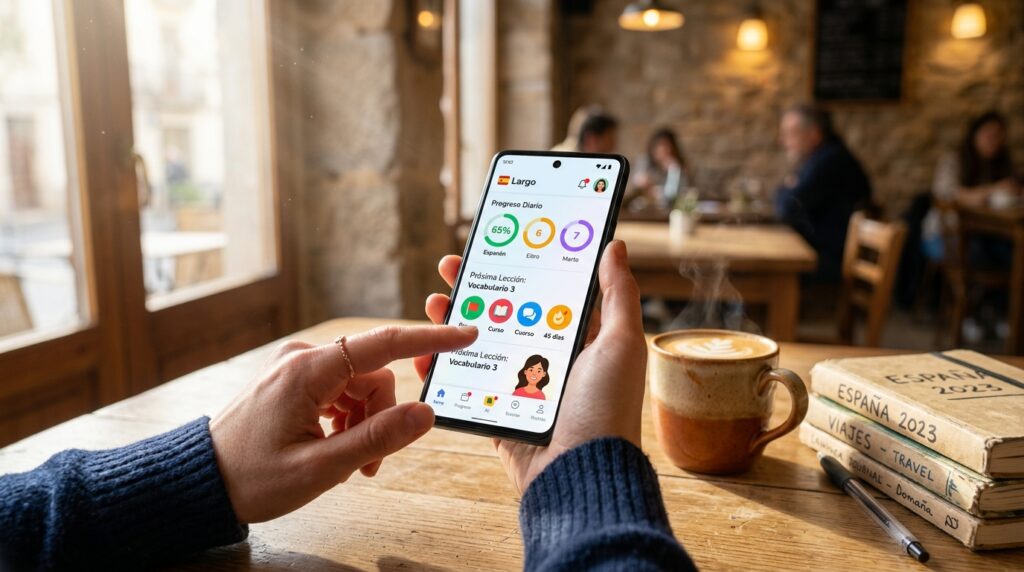
The most popular beginner apps understand one simple truth: the hardest part of learning a language is actually showing up. While some platforms drown you in complex grammar charts, these apps turn your daily practice into a high-stakes game where your primary goal is keeping a digital streak alive. You will find yourself tapping through quick lessons during your lunch break or while waiting for the bus just to satisfy the algorithm. It is a masterclass in psychological hooks, using colorful visuals and instant feedback to make the daunting task of starting a new language feel as easy as playing a mobile game.
The genius of this approach lies in how it lowers the barrier to entry for anyone who has ever felt intimidated by traditional classrooms. You are not just memorizing vocabulary, you are earning experience points and climbing leaderboards that make the process feel rewarding rather than like a chore. This habit-building engine ensures that even on your busiest days, you spend at least five minutes engaging with your target language. By the time the marketing fluff fades away, you realize you have actually built a foundation of basic phrases and core concepts without ever feeling like you were studying.
Despite the flashy updates and sophisticated speaking tools hitting the market, these platforms stay relevant by focusing on the fundamentals of consistency. They do not promise to make you a professional diplomat overnight, but they do guarantee you will develop the discipline needed to reach the next level. The bite-sized lessons are perfect for building the mental muscle memory required before you move on to more intensive conversational practice. If you are tired of starting and quitting every few weeks, a gamified system is exactly what you need to finally make your learning goals stick.
Mastering Real Conversations Using AI Technology
You have probably spent months clicking colorful buttons and matching pictures to words, only to freeze the moment a real person asks you a simple question. It is the great lie of the digital education world that games alone will make you fluent. True mastery requires the sweat of a real conversation, and that is where generative AI finally cuts through the noise. Modern platforms use technology to simulate unscripted interactions that actually feel natural. You are no longer just rehearsing canned phrases because the AI reacts to what you say in real time, forcing your brain to think on its feet.
The beauty of this approach is how it aggressively targets speaking anxiety by providing a judgment-free zone for your worst mistakes. We have all felt that pit in our stomach when trying to speak a new language, but practicing with a responsive AI removes the social pressure entirely. You can stumble, mispronounce words, and restart sentences until your muscle memory actually takes over. This is not about passive listening or boring grammar drills that lead nowhere. It is a high-energy environment designed to bridge the gap between knowing a language and actually using it with confidence.
If you are tired of being a beginner who can read a menu but cannot hold a conversation, it is time to pivot your strategy. These tools are built specifically for those aiming for professional-grade fluency and real-world social mastery. They move you past the basic habit formation stage and into the deep end of linguistic competence. By focusing on unscripted dialogue, you are training your brain for the unpredictable nature of human speech. Stop wasting your time on digital stickers and start building the cognitive power required for true conversational freedom.
Professional Tutoring And Human Interaction
You can play with all the AI avatars and gamified streaks you want, but eventually, you have to face the music and talk to a real human being. While digital tools are great for building a vocabulary base, they often fail to prepare you for the messy, unpredictable nature of actual conversation. Professional tutoring platforms cut through the marketing fluff by connecting you directly with experts who can spot your specific mistakes in real time. You get instant feedback on your pronunciation and grammar that a computer algorithm simply cannot replicate. It is about moving past the robotic repetition and into the realm of genuine, fluid communication.
The real magic happens when you get into the cultural nuances and slang that only a native speaker can provide. You will learn how people actually speak on the streets, rather than the stiff, formal sentences found in a standard curriculum. Tutors act as your personal cultural guides, helping you navigate social cues and idiomatic expressions that define true fluency. It is a personalized experience that adapts to your specific goals, whether you are prepping for a business meeting or a casual vacation. You are not just clicking buttons, you are building a bridge to another culture through direct human interaction.
Let’s be honest, it is much harder to skip a lesson when a real person is waiting for you on the other side of the screen. This level of accountability is the secret sauce that keeps you moving forward when your motivation starts to dip. You get a customized roadmap designed for your brain, not a one-size-fits-all path created for millions of other users. By investing in professional tutoring, you are choosing the most direct route to social mastery and professional-grade speaking skills. It is the gold standard for anyone who is tired of playing games and ready to actually speak the language.
Audio Immersion And Pronunciation Mastery
Some systems aren’t interested in making you tap colorful buttons or match pictures of apples to words; they want you to actually speak the language. The core of an audio-based system is built on the science of spaced repetition, which forces your brain to recall words just as you are about to forget them. You won’t find flashy animations here, but you will find a method that builds deep, long-term memory through active participation. By focusing on audio cues and verbal responses, the program trains your ears to catch subtle nuances that most visual learners completely miss. It is a no-nonsense approach for people who are tired of playing games and ready to start communicating.
You can finally reclaim your wasted time by turning your morning commute or gym session into a high-intensity language lab. Because the lessons are entirely hands-free, you can master complex pronunciation while keeping your eyes on the road or your hands on the treadmill. Most apps fail because they require your undivided visual attention, but an audio immersion strategy fits into the cracks of a busy lifestyle without compromise. You will find yourself mimicking native speakers in real time, which builds the muscle memory necessary to lose that clunky accent. It is the ultimate hack for anyone who feels like they don’t have an extra hour to sit at a desk.
Choosing the right tool ultimately comes down to your personal lifestyle and how much you value sounding like a local. If your goal is to survive a vacation with basic phrases, a simple gamified app might suffice for a few weeks. However, if you want to walk into a room and speak with the confidence and rhythm of a native, investing in a proven audio immersion system is the smartest move. Stop scrolling through endless lists of features and pick the method that aligns with your daily routine and long-term fluency goals. Your journey to mastery starts the moment you stop playing with digital toys and start using your voice.
Cutting Through the App Hype
Choosing the right language learning app comes down to being honest about your actual goals versus the marketing hype. If you just want to keep a streak alive while waiting for the bus, the big gamified players are fine, but they won’t make you fluent on their own. For those of you serious about professional speaking or deep conversation, you have to look toward the new wave of AI-native platforms that prioritize real-time feedback. We have interrogated the sales pages and tested the interfaces, and the truth is that no single app is a magic bullet without your consistent effort. You need a tool that challenges your brain power rather than one that just lets you click colorful buttons for a hit of dopamine.
The market is currently flooded with promises of instant fluency, but you are too smart to fall for that fluff. Real progress happens when you move past basic vocabulary and start engaging with structured lessons or immersive audio that forces you to actually speak. Whether you prefer the visual immersion of established giants or the high-tech conversational practice of AI newcomers, make sure the value matches the price tag. We have seen too many people waste money on subscriptions they never use because the app was more fun than it was functional. Pick a tool that fits your lifestyle, stay skeptical of secret hacks, and focus on the platforms that actually demand your intellectual energy.
Scrutinize your digital education choices with the same intensity you would use for any other major life investment. Just as you would carefully vet the tools you use for your career or your finances, you should be picky about where you spend your learning time. If you are looking to apply this same level of radical honesty to other areas of your life, you might want to see how we dissect other professional tools. Ready to take the next step in organizing your life beyond just language skills? Discover how our How Much Remote Bookkeeping Service Costs Really Are can help you manage your resources with total transparency and clarity. You can also explore the Best Manifestation Apps 2025 to see how tech-backed tools can help you rewire your brain and master your reality. Finally, if you’ve ever wondered is body language training worth it or just expensive hype, you can apply that same critical eye to your nonverbal communication skills.
Frequently Asked Questions
1. Can I actually become fluent using just a mobile app?
Apps are fantastic for building a foundation and a daily habit, but they won’t make you a native speaker on their own. You need to use them as a launchpad for real conversations rather than treating them as the final destination. Use the app to learn the mechanics, then get out there and actually talk to people.
2. Is the daily streak just a gimmick or does it actually work?
The streak is a psychological masterclass designed to keep you from quitting when things get boring. While it feels like a game, it forces the consistency you need to actually retain information over the long term. It is one of the best tools available for making sure you don’t give up after the first week.
3. Are these apps worth the monthly subscription price?
Most apps are worth the investment if you actually use them, but you have to watch out for the marketing fluff that promises overnight results. Focus on platforms that prioritize speaking and listening over just clicking buttons. If an app doesn’t get you talking within the first hour, you are probably wasting your money.
4. How much time do I really need to spend practicing every day?
You only need five to fifteen minutes a day to see progress, provided you are consistent. It is much better to do a quick session every single morning than to cram for three hours once a week. Short bursts of high-energy practice keep your brain sharp without causing burnout.
5. Do these apps work for professional-grade language skills?
Basic apps are great for travel and casual chat, but you will need more intensive tools for business-level mastery. Look for platforms that offer real-time conversational practice and advanced grammar modules. Most gamified apps will get you to a solid intermediate level, but the rest is up to your own grit.
6. Which app is best if I am a complete beginner?
Gamified apps are the kings of the beginner hill because they lower the barrier to entry and make learning feel like play. They strip away the intimidating textbooks and replace them with instant feedback and colorful rewards. They are the perfect starting point before you move on to more serious, conversation-heavy platforms.