Teeth whitening kit costs can range from about $20 to $70 for an over-the-counter kit, but the price tag does not tell the whole story. Some kits include an LED light, extra treatments, or stronger formulas. Cheaper options may offer fewer applications and less even results. Before you buy, make sure you know what you are paying for.
Dentist-supplied take-home kits typically cost $100 to $600, while in-office whitening can run $300 to $1,000 or more. The right choice depends on your budget, sensitivity, expected results, and whether custom-fitted trays matter to you. Skip the hype and compare the real value, not just the bold number on the sales page.
Key Takeaways
- Over-the-counter whitening kits typically cost $20–$70, dentist-supplied take-home kits cost $100–$600, and in-office whitening costs $300–$1,000 or more. Higher prices may reflect professional supervision, custom trays, stronger formulas, or faster results—not automatically better value.
- Compare cost per complete treatment, not just the advertised price. Account for treatment count, refill and replacement costs, shipping, reusable equipment, subscriptions, and automatic charges before choosing a kit.
- Evaluate ingredients, treatment strength, sensitivity guidance, tray or strip fit, refund terms, and customer reviews alongside price. LED lights and premium packaging can add cost without guaranteeing better whitening results.
- Choose based on your budget, desired speed, sensitivity, and need for professional guidance. Consult a dentist before whitening if you have cavities, gum problems, crowns, or significant tooth sensitivity.
Over-the-Counter Kit Prices
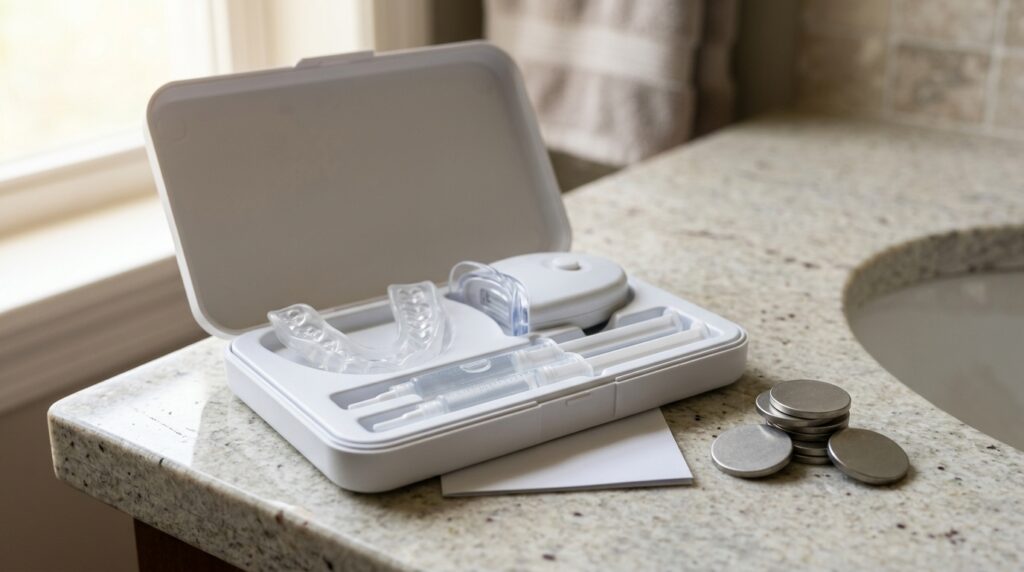
Basic over-the-counter whitening kits usually cost $15 to $35 in the U.S., making them an accessible starting point for a one-time treatment. Standard whitening strips often include 10 to 14 applications. Whitening pens typically cost about $10 to $30 and offer fewer, less uniform applications. Gel-and-tray systems generally cost $30 to $50 and include a tray or mouthpiece, gel, and sometimes an LED device. Check the package carefully, because a low price may cover only one treatment cycle.
Premium strips commonly cost $35 to $60, especially when they include more applications or formulas designed for sensitive teeth. Strip kits with a reusable LED light often cost $50 to $70, while LED tray systems usually cost around $30 to $50. Your total teeth whitening kit cost can rise when you buy gel syringes, replacement strips, or extra treatments, so compare refill prices before you buy. Reviews can help you find kits that provide enough product for the price instead of flashy packaging and a short supply.
Dentist-Supplied Whitening Costs
Dentist-supplied take-home kits usually cost about $100 to $600, depending on the tray style and treatment plan. Prefilled trays are often the lower-cost choice, typically around $100 to $300, and they are ready to use without a separate mixing step. Custom-fitted trays cost more because they are made to match your teeth. They may improve comfort and coverage while reducing gel waste. Ask whether the quoted price includes enough gel for the full treatment, because refills can increase your total cost later.
In-office whitening usually costs about $300 to $1,000 or more for one session, making it the fastest but most expensive option. You are paying for professional application, stronger whitening products, and chairside supervision, not just a tray or tube of gel. Take-home kits may deliver results more gradually, but they can fit more easily into your routine and may offer better value when you need touch-ups. Before you commit, compare the one-time kit price with refill costs, the number of treatments included, sensitivity support, and reviews of the whitening options you are considering.
Whitening Cost Per Treatment
The sticker price is only the starting point when you compare teeth whitening kit costs. Divide the total price by the number of complete applications to find your cost per treatment. For example, a $30 kit with 10 applications costs $3 per use, while a $25 kit with only five applications costs $5 per use. In the U.S., many at-home kits cost between $20 and $70, but a higher price may be reasonable if it includes more gel, reusable trays, or an LED light.
Look beyond the first box before you decide. Gel refills and replacement strips can quickly raise your long-term cost, especially if the kit requires frequent touch-ups. A tray that stays comfortable and usable for months can offer better value than a cheap tray that cracks, loses its shape, or needs replacing after a few treatments. You should also add shipping, handling fees, and any required accessories to the advertised price.
Subscriptions deserve a close look because a low introductory price can turn into automatic monthly charges. Check how many applications each refill contains, when shipments are sent, whether you can skip or cancel easily, and whether the seller clearly explains its refund policy. A kit that costs $3 per treatment on paper may be far more expensive once refill orders, shipping, and unused product are included. Compare the full first-month and six-month costs, then read product reviews to see whether the claimed number of treatments matches real-world use.
Comparing Whitening Kits
When comparing whitening kits, focus on the total cost rather than the bold price on the sales page. An at-home kit may cost about $20 to $70, but shipping, automatic refills, extra gel, or replacement strips can change the final bill. Check how many treatments you get and calculate the cost per use, especially when one kit offers 10 applications and another offers 30. Use the direct product URL to confirm the current price, package contents, and checkout terms before buying. A low one-time price is not a bargain if the product quietly enrolls you in repeat orders.
- Ingredient details: Look for the active whitening ingredient, its strength, and any added flavoring or ingredients intended to reduce sensitivity.
- Treatment count: Confirm the number of strips, gel applications, or tray sessions included.
- Sensitivity guidance: Check whether the instructions explain how to reduce use or pause treatment if your teeth or gums feel uncomfortable.
- Refund terms: Read the refund window, return requirements, and exclusions before placing an order.
- Customer reviews: Look for repeated comments about fit, taste, ease of use, results, shipping, and billing, not just star ratings.
The best option is the one whose price, ingredients, and policies are easy to verify, not the one making the loudest promises. Treat dramatic claims as marketing, not guaranteed results, because whitening can vary based on stains, enamel, and how consistently you follow the directions. Reviews are useful for spotting patterns, but they cannot replace clear product instructions or professional advice when you have cavities, gum problems, crowns, or strong sensitivity. If a sales page hides the ingredient list, treatment count, recurring-charge details, or refund policy, move on. Compare the full cost and available evidence first, then use the product link only when the offer passes your checklist.
Compare Teeth Whitening Kit Costs by Type
Teeth whitening kit costs usually fall between $20 and $70 for at-home options in the U.S. Basic strips often cost $15 to $35, premium strips run about $35 to $60, and kits with an LED light commonly cost $30 to $70. Dentist-supplied take-home kits are a bigger investment at roughly $100 to $600, while in-office whitening may cost $300 to $1,000 or more. The cheapest option can look appealing, but a low price means little if the kit delivers weak results, causes discomfort, or includes too few treatments.
Before you buy, compare the full treatment cost instead of focusing only on the checkout price. Check how many uses are included, what replacement gel or strip refills cost, whether the tray or light is reusable, and what the product’s refund and shipping terms actually say. A slightly more expensive kit may offer better value if it lasts longer and gives you more consistent coverage. If you are also managing other personal-care expenses, compare those costs before deciding how much to spend on whitening.
Frequently Asked Questions
1. What is the average teeth whitening kit cost?
Over-the-counter kits usually cost about $20 to $70 in the U.S. Dentist-supplied take-home kits generally range from $100 to $600, while in-office whitening can cost $300 to $1,000 or more. The cheapest option is not always the best value, especially if it includes too few applications or requires expensive refills.
2. What do basic over-the-counter whitening kits cost?
Basic kits typically cost $15 to $35. Whitening strips often include 10 to 14 applications, while whitening pens usually cost $10 to $30 and contain less product. Gel-and-tray systems commonly cost $30 to $50, with some including an LED device.
3. Are more expensive whitening kits worth the extra money?
Sometimes, but a higher price does not guarantee better results. Premium kits may include more applications, stronger formulas, options for sensitive teeth, or reusable equipment. Check the amount of product, treatment count, refill price, and return policy before paying for flashy packaging.
4. Does an LED light make a whitening kit more effective?
An LED light can be a useful add-on, but it should not be the main reason you buy a kit. The whitening gel or strips, treatment time, and regular use usually matter more. Compare the kit with and without the light, then decide whether the extra cost makes sense for your budget.
5. How much do dentist-supplied take-home whitening kits cost?
Dentist-supplied take-home kits usually cost about $100 to $600. You are paying for professional guidance, a treatment plan, and, in some cases, custom-fitted trays that sit more securely on your teeth. These kits cost more than store-bought options, but they may offer a more controlled and consistent experience.
6. Is in-office whitening worth the cost?
In-office whitening typically costs $300 to $1,000 or more, making it the most expensive option. It may suit you if you want professional supervision and faster treatment, but it is not automatically the best choice for every budget. Ask what is included, how many sessions you get, and whether follow-up treatments cost extra.
7. What extra costs should you expect after buying a whitening kit?
Your initial purchase may not cover the full whitening routine. You might need replacement strips, gel syringes, extra treatment cycles, or products for sensitivity. Always check refill prices and how many complete applications the kit provides before judging the deal.
8. How can you choose the best whitening kit for your budget?
Start by deciding how much whitening you need, how quickly you want results, and whether your teeth are sensitive. Then compare the total treatment cost, not just the number on the front of the box. A cheaper kit with uneven results or costly refills can end up costing more than a better-planned option.