
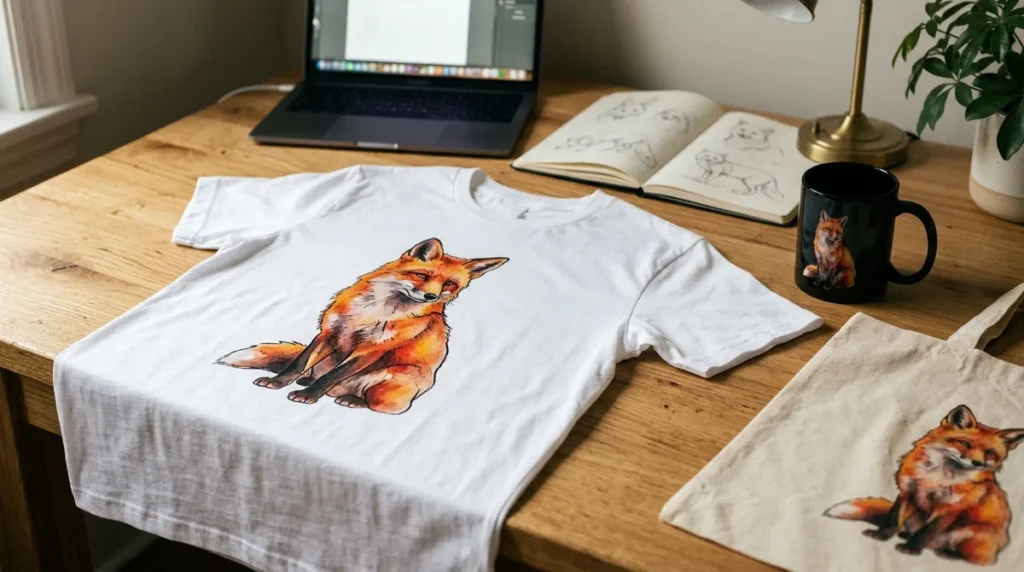
Print on demand copyright comes down to one rule: if you didn’t create the artwork, you probably can’t print it and sell it without permission. In the United States, copyright protects original works of authorship once they are fixed in a tangible form. That protection belongs to the person who made the work, not whoever posted it online. That cartoon fox from a meme? Its creator owns it. “I found it on Pinterest” is not a license. Sports logos, movie characters, and copied fan art are the usual traps, and they’re the fastest way to get your shop taken down.
The good news is that not every word on a shirt is locked up. Copyright does not protect ideas, names, titles, short phrases, or slogans, although some of them can be trademarked. That’s where the real risk sits. A federal trademark application starts at $350 per class at the USPTO. Thinking about registering your own designs? The Copyright Office charges $45 or $65 depending on the application type. For a published work, you generally need to register within three months of first publication if you want statutory damages and attorney’s fees available. Miss that window and you’re planning around a deadline you never saw coming.
Key Takeaways
- Recoloring a copyrighted design doesn’t make the result yours, since a recolored copy is still a copy.
- Fonts released under the SIL Open Font License can be used on printed products you sell, as long as you follow its terms.
- Before you print any slogan, search its exact wording in the federal trademark database, then check state records.
- Customer uploads never transfer copyright, so every buyer-supplied design needs written rights confirmation before printing.
- Refunded orders eat your margin, since the production and shipping costs for that item are already spent.
Can You Legally Print Someone Else’s Design?
No, not unless the person who made the artwork has said yes. Printing and selling someone else’s design is the fastest way to lose a shop you’ve spent months building.
Copyright is automatic. When an artist draws, paints, or digitally builds something original and saves it in a form you can see or keep, the artist owns the rights. No filing or fee comes first. The Copyright Office describes originality as independent creation by a human author with at least a minimal degree of creativity. A picture someone made with their own creative choices counts. A plain circle or a basic shape that anyone could draw does not.
Let’s make it concrete. Say you grab a sports team’s logo, or a cartoon bear mascot an illustrator drew for a local team, and print it on a black tee. The artwork is protected by copyright, and the logo is very likely a trademark too, so you’re facing two separate problems. You don’t need a thousand sales to get noticed. One listing is enough.
“I found it on Pinterest” is where most sellers get burned. Posting an image online doesn’t hand over the rights. Pinterest, Google Images, a free wallpaper site, or a fan forum can’t give you permission to sell the artwork on a shirt, because none of them own it. Free to look at is not free to print.
Changing the colors doesn’t fix it either. Copyright protects the original creative expression, and a recolored or slightly resized copy of a recognizable picture is still a copy. Swapping navy for red won’t save you. Popular designs get spotted fast. The rights holder can send a takedown notice under the Digital Millennium Copyright Act, and the marketplace may pull your listing before you get a chance to explain.
So run a quick gut check before you upload. Ask yourself:
– Did I make this, or can I name the creator? – Do I have written permission, or a license that covers selling products? – Does that license allow merchandise, or only personal use? – Would my design still look like the original if I put them side by side?
If you can’t answer yes to the first two, stop. Your sketch is yours. Someone else’s fox, team logo, or cartoon bear is not, no matter how good the mockup looks.
What Copyright Doesn’t Protect: Titles, Slogans, and Typefaces
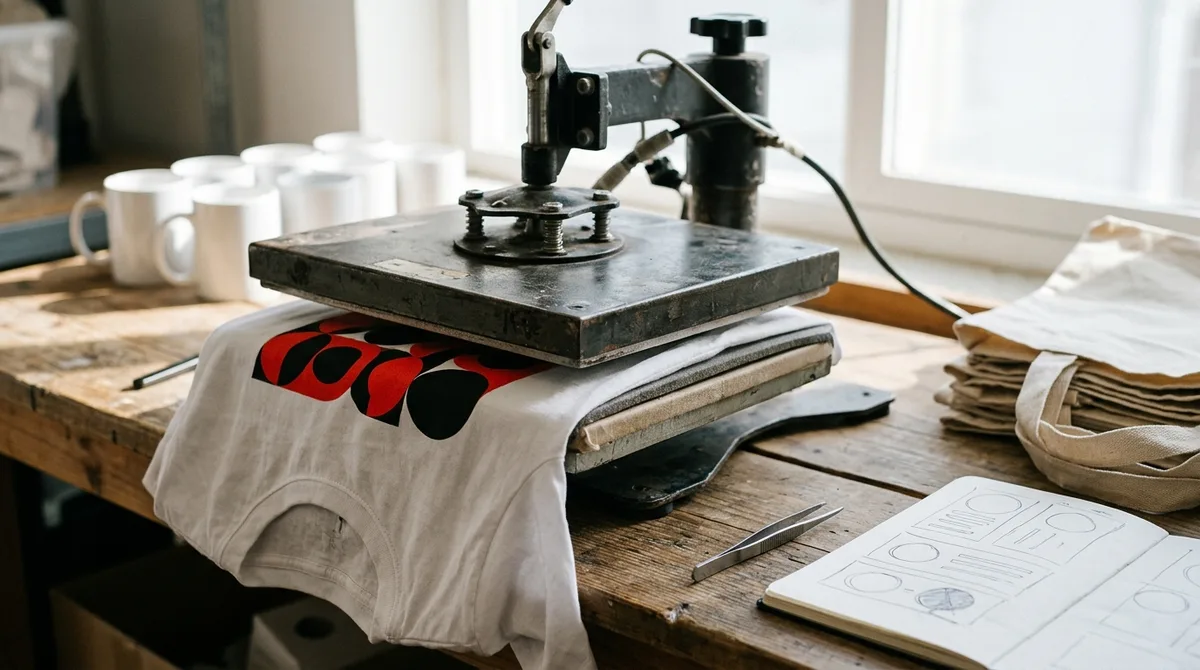
Here’s the myth that keeps sellers up at night: “If it’s printed on the shirt, it must be copyrighted.” Not quite. Copyright is the wrong tool for most of the words you’ll put on a tee.
Ideas, names, titles, short phrases, and slogans are generally outside copyright. That means a punchy line like “Coffee Fueled, Chaos Approved” can’t be locked up the way a painted fox can. Sounds like a free pass, right? Not so fast. Being outside copyright doesn’t make the words free to use. It just moves the risk somewhere else.
That somewhere else is trademark. Some names and slogans can be protected as brands, and trademark is about who a word identifies in the marketplace, not who wrote it. Think of a company’s catchphrase or a band’s name printed on your merch. Those are the words that can get you in trouble.
Placement matters too, but not in the way you’d hope. The USPTO notes that a prominent slogan across the front of a T-shirt may be treated as decoration rather than a brand, while small wording on a pocket or chest may be recognized as identifying a source. Don’t read that as a loophole. A big slogan can still cause confusion, and a small logo can still be a brand. Placement changes how the wording gets read. It doesn’t make the risk disappear.
So before you print a slogan that sounds like someone’s brand, search for it. The USPTO’s guidance on similar trademarks says a clearance search should cover the federal trademark database, state trademark databases, and the internet. Similar marks used for related goods can create a likelihood of confusion, meaning a shopper might think your shirt comes from the original brand. Search the phrase exactly as written, then search close variations and misspellings. If the first page of results is full of a company selling apparel, walk away.
Fonts are the other trap that catches people off guard. A typeface as typeface isn’t protected by U.S. copyright. The Copyright Office’s guidance on typefaces says some font-related material may qualify for protection in limited cases. So the safe reading is that the font itself is usually not the problem, but the files and their terms can be. Don’t assume every font you download is free for any use.
The license is what actually decides things. Fonts released under the SIL Open Font License can be used in electronic or printed materials, including commercial uses, as long as you follow the license’s requirements. That’s a green light for selling shirts, but it’s not a blank check. Other font licenses have their own rules, and a font that looks free on a download site may come with terms that say otherwise.
Keep the license file with your design files. Note where you got the font and which license covers it. If you can’t find the terms, don’t guess. Pick a font you can document.
How Do You Check a Slogan Before You Print It?
Run the exact slogan through the federal trademark database first, then check state trademark records and the open web. If anything close shows up for apparel or merch, don’t print it. That’s the core of the check, but the details decide whether you get burned.
Start with where the words sit on the shirt. A big slogan stretched across the front may be read as decoration, not a brand. A small line on a pocket or the breast area may be read as a mark that identifies who makes the shirt. Neither placement clears you. A large phrase can still confuse shoppers, and a small logo can still be a brand, so design around the risk, not around the placement.
Next, build your search list. Don’t stop at the phrase you like best. Search:
- The USPTO federal trademark database, using the exact wording as written.
- Close variations, including plurals, reordered words, and common misspellings.
- State trademark databases, since a local business may hold rights to a name you’d never find federally.
- The open web, including Google results, marketplace listings for shirts and mugs, and social media accounts selling merch.
Read the results like a shopper would. Ask yourself whether someone scrolling past your listing could think it came from that other company. That question is the heart of a likelihood of confusion, and it doesn’t require you to copy a single letter. Similar marks used for related goods can trigger the problem on their own. If the first page of results shows a company already selling apparel under a near-identical phrase, you’re looking at a fight you probably won’t win.
Filing your own federal application is the next cost to plan for. The USPTO’s base fee is $350 per class, effective February 18, 2025, and extra fees can be added on top. Each class you file under costs that base fee, so a shop selling several product types can see the total climb quickly. Budget for that before you decide a slogan is worth protecting.
Filing isn’t the only thing to watch. Keep a dated screenshot of your search results, the search terms you used, and the date you ran them. If a rights holder ever questions your shop, that record shows you checked before you printed.
If the phrase is taken, change it. Swapping one letter or adding a “the” doesn’t fix a likelihood of confusion, and shoppers won’t notice the difference any more than a judge will. Pick a line nobody else is selling, search it again, and only then order the first batch of shirts.
Who Really Owns the Artwork You Print?
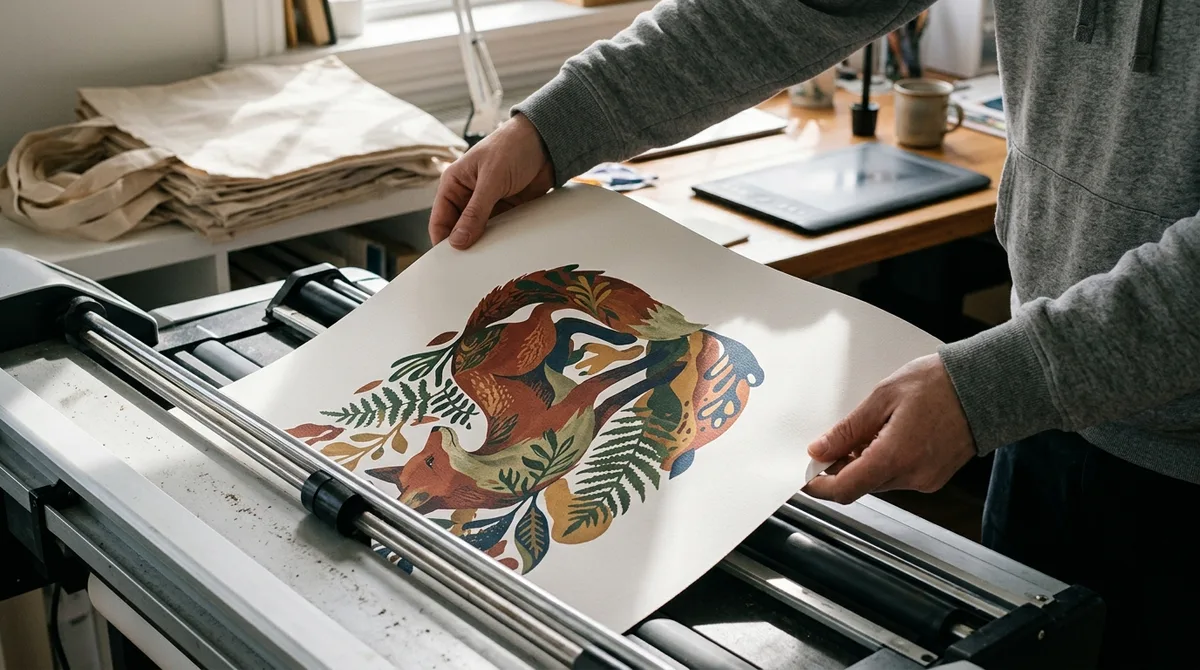
You own the artwork you print only if you made it yourself or the artist gave you a license that covers selling products. Everything else is borrowed, and borrowed art comes with strings attached.
There are three ways a design ends up in your shop, and each one comes with different paperwork.
Option 1: You made it. Your sketch, your photo, your hand-lettering. You hold the rights once the work exists in a saved form. Keep your original files, dated drafts, and any reference images, so you can show what you made and when.
Option 2: You licensed it from an artist. This is the cleanest route for art you didn’t create. Get the terms in writing. Check whether the license covers printing on shirts, mugs, or stickers, how many units you can produce, and whether you can resell finished products. A quick “sure, go ahead” in a DM won’t help you when a marketplace starts asking questions.
Option 3: Stock or free images with attached terms. Stock sites and free image libraries aren’t handing over the rights. They’re handing you a license with conditions. A “commercial license” can still bar certain product types, such as merchandise, or forbid reselling the file itself as a design. Free doesn’t mean unrestricted. Read the terms before you download, then save a copy of the page you agreed to.
Read every license for three things: limits on merchandise, limits on print runs or units, and whether you can transfer the license to someone else. That last one matters if you plan to sell your shop or bring in a partner. Buying an image does not automatically cover every product type or resale use, so check the license against each item you plan to make.
AI-generated art: a prompt isn’t authorship. Plenty of sellers now type a line into an image generator and hit go. On January 29, 2025, the U.S. Copyright Office’s position on AI output concluded that generative-AI output can be copyrighted when a human author determines sufficient expressive elements. Merely providing prompts is not enough to claim authorship. Typing “cool wolf in a forest, watercolor style” makes you the person who asked for an image, not the author of its expression.
So what counts? Your choices have to shape the result. Select and arrange elements, edit and combine outputs, and make the creative decisions the machine didn’t make for you. Save the drafts, the edits, and the layers, because those records show where your work begins. Check the image tool’s own terms of use too, since they set rules on top of the copyright question.
Before you upload anything, keep a folder for each design with the source file, the license or tool terms, and the date you got it. When someone asks who made the artwork, you’ll have an answer that goes beyond “I found it.”
What Happens When a Customer Uploads a Design You Don’t Own?
A customer’s upload doesn’t make the artwork yours. If the file belongs to someone else, you are the seller holding the printed shirt, and you’re the one who gets flagged. Buyers often mean well, but sending you a file through a checkout form doesn’t transfer any copyright. The customer can only hand you rights they actually have, and most people uploading a “custom” design have none.
Picture the usual scenario. A buyer uploads a shirt featuring a famous cartoon mouse, a superhero logo, or a photo of a celebrity with a catchphrase. They say it’s a gift for a birthday party. You print it, list it, and the rights holder finds it. Guess whose shop shows up in the report.
Those three categories cause most of the trouble. Popular characters, team and brand logos, and celebrity-linked designs are the most common copying problems in print on demand, because they’re the easiest to spot and the most valuable to the people who own them. A buyer who says “it’s just for me” is still asking you to make a copy you have no right to sell.
When a rights holder finds a copy, the usual move is a takedown notice. Under section 512 of the Digital Millennium Copyright Act, a copyright owner can notify the online platform hosting the listing and ask it to remove the material. That’s the notice-and-takedown process, and platforms often act quickly. The notice identifies the copied work and where it appears. If you think the notice is wrong, the law provides a counter-notice route, but that takes time, and your listing may stay down while you wait. Don’t build your shop around winning that argument.
Your best defense is paperwork before anything gets printed. Add written terms to your order process that say the customer confirms they own the uploaded art or have clear permission to put it on a product. Make them check a box at checkout, and save that confirmation with the order. Add a line saying you can refuse any order, and that the customer is responsible for any claim caused by the design they supplied.
Then add a rights confirmation step before anything goes to print. Someone on your side should look at every custom upload for recognizable characters, logos, team marks, and celebrity names. Run a quick search on the file itself. If something looks borrowed, don’t print it, and don’t rely on the customer’s word alone. Plenty of buyers grab an image from a search result without knowing who made it.
Keep the records. Save the uploaded file, the date, the customer’s confirmation, and the decision you made. If a notice shows up months later, you’ll have proof you asked and checked. That record won’t make an infringing design legal, but it shows good faith, and it makes a dispute far easier to handle.
Should You Register Your Own Designs With the Copyright Office?
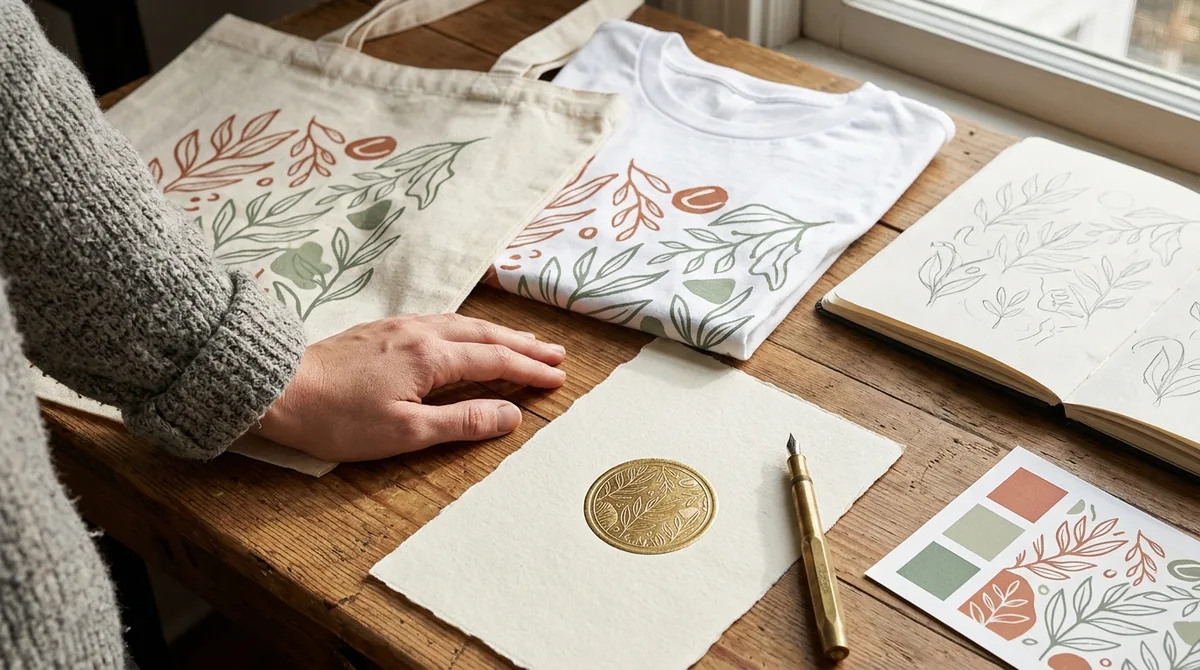
Yes, register the designs that matter to your shop, and do it fast. Copyright exists the moment your art is fixed in a saved form, but registration decides which legal remedies you can reach later, and the clock starts ticking sooner than most sellers expect.
Start with the bill. As of November 2026, the Copyright Office’s fee schedule lists two numbers you need to know:
- $45 for an electronic application covering a single author, a single claimant, and one work that is not made for hire.
- $65 for the standard application, which covers designs that don’t fit that profile.
Most solo sellers filing their own original art will land on the $45 option. Check the category before you pay, because picking the wrong one is an easy mistake.
Then plan for the wait. The Copyright Office’s processing times show an average of 4.1 months for claims closed between April 1 and September 30, 2026. That’s an average, not a promise. Your certificate might show up sooner or later, so don’t schedule a launch that depends on it arriving next week.
Here’s the deadline that matters most. Under section 412 of the Copyright Act, a published work generally needs to be registered within three months of first publication. Miss that window and you can lose statutory damages and attorney’s fees for infringement that began after publication but before you registered.
Picture it. You publish a fox design on March 1, and your three months run out around June 1. A copycat lists your fox in April, and you don’t file until July. You can still register, but you’ve lost the stronger remedies for that April infringement. Put the first-publication date on your calendar the day your listing goes live.
Your protection also lasts a long time, which is good news if a design becomes a bestseller. For most works created on or after January 1, 1978, copyright lasts for the author’s life plus 70 years. Works made for hire follow a different clock: 95 years from first publication or 120 years from creation, whichever is shorter.
Don’t register your whole catalog at once. Start with the designs that already sell or that you’d hate to lose. Register them inside the three-month window, keep the confirmation with your design files, and let the rest wait until the numbers justify the fee.
How Much Do You Actually Keep Per Sale?
You keep whatever is left after the base product cost, platform fees, shipping you cover, refunds, reprints, and ad spend come out of the sale price. For most new shops, that leftover is much thinner than the sales page made it look.
Print on demand works on a simple idea. A customer buys a design, and only then does a production partner print that one item and ship it to the buyer. Nothing gets printed in advance, so you don’t end up with a garage full of shirts nobody wants. That’s the appeal. The catch is that every order carries its own costs, and you pay them whether the item sells once or a hundred times.
Here’s the math to run before you trust anyone’s screenshot:
– Sale price – base product cost – platform and payment fees – shipping you absorb – refunds and reprints – ad spend, split across the orders it actually produced
What’s left is your margin per item. If that number is close to zero after you do this honestly, the shop is a hobby with a checkout button, not a business.
Startup costs come before the first sale, and they’re easy to undercount. Design time is the biggest hidden one. The hours you spend sketching, researching fonts, and clearing slogans don’t show up on a receipt, but they’re still real hours you didn’t spend on paid work. Then there are sample orders. Buy your own products before you sell them. A sample shows you how the print really looks, how the fabric feels, and whether the colors match your mockup. Samples cost money every time, and a few bad ones add up fast. Finally, add the legal costs we covered earlier: the trademark filing fees and the copyright registration fee for designs worth protecting. Put all of it in the spreadsheet as startup money, not as a footnote.
Returns and reprints are where margin quietly leaks. Unless the terms say otherwise, a refunded order means the cost of making and shipping that item is already gone. You paid to produce it, and the customer gets their money back. Do the math on that one sale and you’ll see the loss.
Misprints are worse because they can cost you twice. Picture a shirt with a misaligned print. The customer wants a replacement, the provider prints a second one, and now you’re paying for a reprint and a second shipment on a sale that already happened. Before you sell anything, read the terms and answer three questions:
– Who pays for a misprinted item: the provider, you, or nobody? – Who pays if a shirt arrives damaged in shipping? – How long do customers have to report a defect, and what proof do they need to send?
Save photos of every bad item and every complaint. Without that record, a defect claim turns into your word against a support ticket queue.
Ad spend is the other margin killer. An ad campaign that costs more than the profit on the sales it produced isn’t marketing. It’s an expensive way to buy your own shirts back. Track ad cost against orders every week, and cut anything that isn’t paying for itself.
Anyone calling this passive income is skipping the math. Design time, sample money, reprints, and refund fights don’t disappear once the listing goes live. If a pitch promises easy money but never shows you a per-item column, it’s not a business plan. It’s noise.
Which Products and Sales Channels Make the Most Sense?
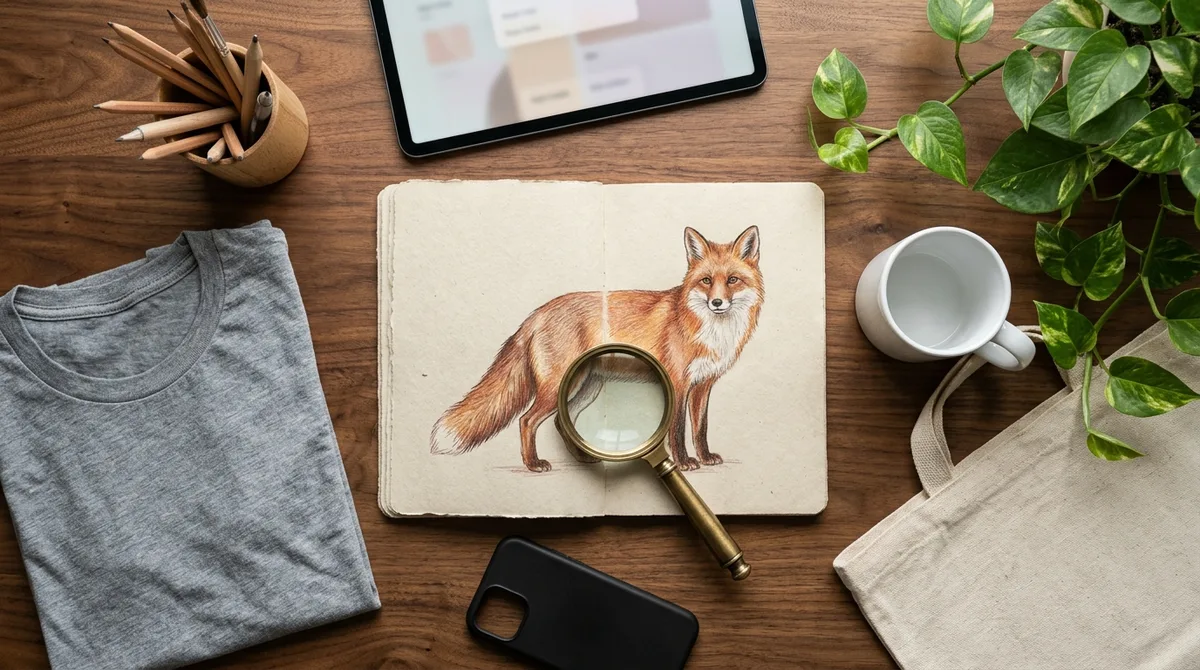
Original art you made yourself, printed on a simple product and sold through a channel where you control the files, carries the least copyright risk. Every extra product type, licensed image, or sales channel you add gives a rights problem another place to show up.
Marketplace or your own store? A marketplace feels safer because someone else runs the storefront. When a rights holder complains, the platform often pulls the listing fast, sometimes before you get a chance to explain. That speed protects the platform. You lose the listing, your account may take a hit, and the complaint history can follow you to the next product.
Your own store works differently. Nobody pulls anything down for you, but nobody else takes the blame either. If a takedown notice hits your shop, you handle the response, the counter-notice, and every angry customer question. That’s the full responsibility, so the paperwork from the earlier sections is your whole defense.
White-label doesn’t clear anything. Many providers offer white-label printing, where your brand goes on the packing slip and the box, and the factory stays invisible. That changes the label, not the rights in the art. A white-label shirt with someone else’s cartoon fox is still a copied fox. The same goes for trademarks. Shoppers see your name on the listing, so the blame lands on you, not the factory.
Quality and turnaround make disputes harder. A smudged print or a slow production run turns a small problem into a long fight. Picture a shirt with a blurry slogan arriving late, while a takedown notice sits unanswered in your inbox. Slow production also means you can’t pull a bad design quickly. Order a sample of every product type before you list, and photograph it next to your mockup. Ask the provider for realistic production and shipping windows in writing, not just the best-case number on the sales page.
Test one design in a small batch first. Don’t launch ten designs across five products on day one. Pick one design, one product, and a small run. Then watch for flags: a marketplace warning, a rights complaint, a customer asking whether the art is licensed, or a takedown notice. Give the test a clean stretch of sales before you move on. If a flag shows up, you’ve lost one design, not your whole catalog.
Print on demand versus web-to-print. In standard print on demand, you upload the artwork, you control the files, and the provider prints what you sent. In web-to-print, customers often build their own products in an online editor, using artwork, fonts, and clip art from a template library. That hands artwork control to the customer, which changes who checks the rights. If buyers can drop in their own images, your rights check has to happen before a template goes live. Every asset in the library needs its own license trail, or you’re selling a template full of other people’s work.
Your Pre-Upload Copyright Checklist
Grab your current design list and run every item through three questions before it goes near a print file. Did you make it, or can you name the creator? Do you have a license that covers selling merch? Does the slogan pass a trademark search? Anything that fails gets parked, not printed.
Next, open a folder for each design. Put the source file, the license or the tool’s terms, your dated search screenshots, and the date you first published the listing inside it. When a complaint shows up six months later, that folder is your proof that you checked before you printed.
Then set your deadline. Write the first-publication date on your calendar the day a listing goes live, and mark the three-month window right beneath it. Pick the one or two designs that already sell or that you’d hate to lose, and file those first. Let the rest wait.
Finally, add the checkout checkbox and a rights check step to your order process before launch day. Test one design, one product, and a small batch. Only after that design runs clean through real orders should you add the next one. Slow is boring, but a clean shop is worth more than a fast takedown.
Frequently Asked Questions
1. Do I need a © symbol or copyright notice on my own designs to protect them?
Copyright begins once the art is fixed in a saved form. Adding a © notice with your name and the year is still a cheap way to show you claim the work, and it can discourage casual copying.
2. Are vintage or public-domain images safe to use without checking anything else?
Not automatically. An old image isn’t always free to use, because its copyright history can be complicated. Some older images were later restored or edited in ways that create new protected material, so check the source, look for a clear public-domain statement, and confirm the exact version you downloaded isn’t someone else’s recent edit.
3. If someone accuses me of infringement, what should I do first?
Don’t ignore the claim, and don’t argue with the accuser in public comments. Pause or pull the listing to stop further exposure, then gather your design folder, license terms, and order records. Read the notice closely to see which work is claimed and where it appears, and only then decide whether to remove the item, respond, or talk to a lawyer.
4. Can a design I created for a client still be mine to sell on my own shop?
Possibly, but the answer usually lives in your contract rather than in the artwork itself. If the agreement doesn’t transfer the rights to the client and you never signed them away in writing, you may still hold the copyright. Get the terms in writing before you list it, and be careful with any client logo or brand name in the design, since the client may control those elements.
5. Can I print books on demand with copyrighted quotes or cover art inside?
Not with someone else’s cover art unless the owner or artist has given you permission. Short quotes may fall under fair use, but that defense is judged case by case and gets shaky with long passages or a book built mostly from other people’s words. Use quotes sparingly, credit the source, and get written permission for anything you can’t defend as a short, purposeful excerpt.