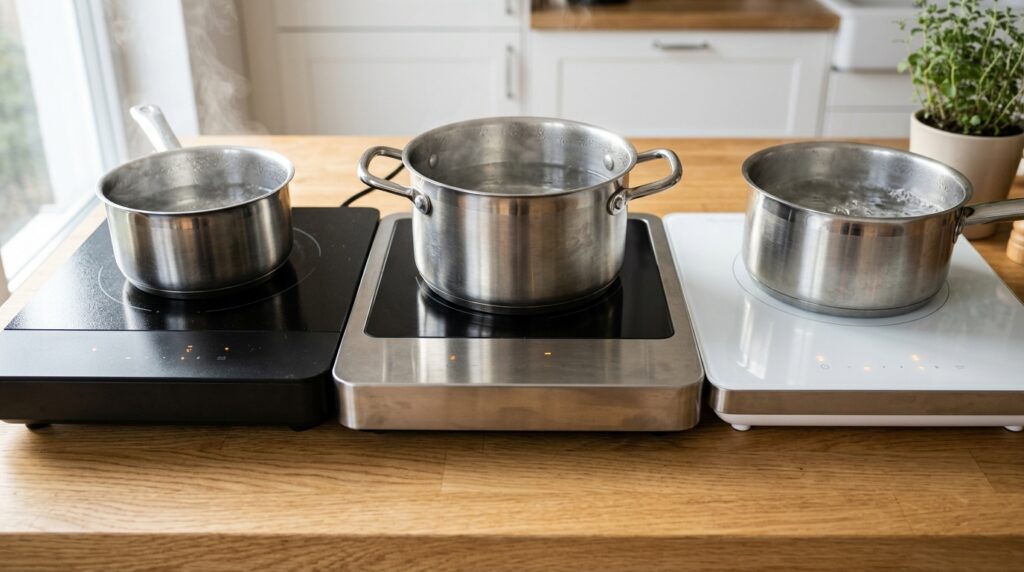
A portable induction cooktop comparison comes down to four things: whether your pans will work, how much power the unit draws, how precisely it holds heat, and what it really costs. Price alone will mislead you. IKEA’s TILLREDA single-zone unit lists at $74.99 and draws 1,800 W from a standard 120 V outlet, while the Breville Control Freak Home sits at $1,499.95 with a temperature range of 77°F to 482°F. Both heat food. They are not the same appliance.
Here’s the signal in the noise. The U.S. Department of Energy says induction is up to three times more efficient than gas and boils water 20% to 40% faster than the gas and conventional electric cooktops tested. Sounds like a no-brainer? Those are category-level numbers, not a ranking of the model sitting on your counter. So before you buy, grab a magnet. If a flat-bottomed pan grabs it, that pan will work. Then match the wattage to your outlet, set a price ceiling, and walk away from any “limited time” deal that expires in a day.
Key Takeaways
- Run a fridge magnet across the base of every pan you own, because only pans with flat bases that grip the magnet firmly will work on a portable induction cooktop.
- Aluminum and copper pans usually won’t work on standard portable induction cooktops because they aren’t magnetic, so budget for new cookware if those are your everyday pans.
- The IKEA TILLREDA lists at $74.99 and draws 1,800 W from a standard 120 V outlet, which uses the full 15 amps of a standard 15-amp circuit at full power, so keep that cooktop off any circuit shared with a kettle or toaster.
- The Breville Control Freak Home, listed at $1,499.95 with a 77°F to 482°F temperature range, is only worth the splurge if you make delicate sauces, custards, or chocolate every week.
- Walk away from any portable induction cooktop listing that won’t show its wattage, lowest temperature, and warranty length, and measure every other listing against IKEA’s 2-year limited warranty.
How Does Portable Induction Actually Heat Your Pan?
Your pan is the heater. A portable induction cooktop has a coil under its glass surface. When you switch it on, the coil creates an electromagnetic field, and that field pushes electrical currents straight into the metal base of any compatible pan. The resistance in the metal turns those currents into heat, so the cooking happens inside the pan itself.
That’s a different setup from what you’re used to. A gas burner throws a flame at the bottom of the pan, and a lot of that heat drifts off into your kitchen air. A standard electric coil has to heat up first, then warm the glass, then warm the pan. Induction skips most of that middleman work, so less of the energy goes anywhere except your dinner.
The result is a surface that stays cooler than the pan. The glass warms mostly from contact with the hot pan, not from the coil doing the heavy lifting. Don’t read that as “safe to touch,” though. Residual heat from the pan can still warm the glass, and a cooktop that just finished a boil can still burn your fingers.
This is why the efficiency and speed claims matter when you compare models. If the basic mechanism is the same across the category, then the energy savings and quick boil times are things you should expect from any well-made unit. The real differences sit elsewhere. A $75 unit and a $1,500 unit both use the same trick, but they may not handle the same jobs. A cheap unit might boil a pot of water fast and still struggle to hold a gentle simmer for a sauce.
People are noticing. In a Consumer Reports survey, almost 70% of respondents said they would consider induction for their next range or cooktop. That’s a big pool of shoppers, and big pools attract hype. Expect sales pages to shout words like “instant,” “pro-grade,” and “revolutionary.” Ignore the adjectives. Look for the wattage, the temperature control, and the pan requirements, because those are the details that decide whether the thing on your counter earns its spot.
Will Your Pans Work on a Portable Induction Cooktop?
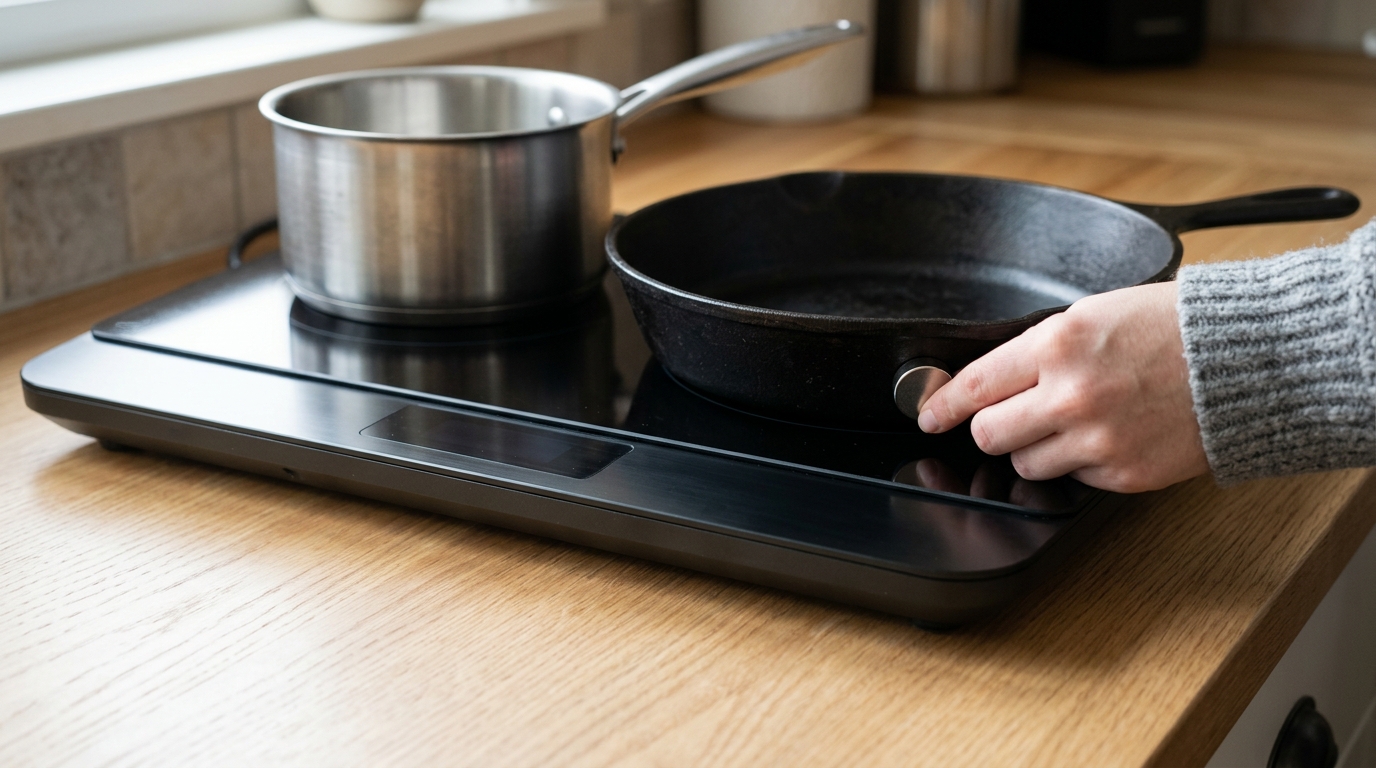
Yes, your pan will work on a portable induction cooktop if its base is flat and a magnet sticks to it firmly. That one check decides more purchases than price or wattage, and plenty of buyers skip it.
Grab a fridge magnet and test every pan you own. Start with the bottom, then move up the sides. A strong pull across the base is what you want. A weak pull, or a magnet that slides off in one spot, means the metal won’t heat evenly, and you’ll end up with a lukewarm dinner and a cooktop that seems to be failing.
Flat matters because induction works through close contact. A warped or dented base leaves tiny gaps between the metal and the glass, and the heat turns patchy. Thin bottoms cause the same trouble, with hot spots that scorch the center of your sauce while the edges barely warm up.
Cast iron and enameled steel usually pass the magnet test. Some stainless steel pans pass too, but stainless comes in magnetic and non-magnetic versions, so don’t trust the label. Trust the magnet.
Aluminum and copper are the real trap. Most aluminum and copper pans won’t work on standard induction because they aren’t magnetic. Researchers are working on changing that. A 2024 project presentation named cookware compatibility as a barrier to induction adoption and described research aimed at heating nonferromagnetic metals such as aluminum. That’s promising, but it’s research, not something you can plug in today. If your favorite skillet is aluminum, plan on buying new cookware or choosing a different appliance.
Then check size. The cooking zone is a fixed circle, and the IKEA TILLREDA’s zone is 7 inches across. A 10-inch skillet will hang well off that circle and heat only part of its base. Measure the bottom of each pan, not the rim, and compare it to the zone diameter on the spec sheet.
Here’s where most buyers go wrong. They fall for a sales page, click buy, and only then open the cupboard. Do it in the opposite order. Sort your pans into three piles:
- Pans that pull the magnet firmly and have flat bases that fit the zone
- Pans that pass the magnet test but are too big for the cooking area
- Aluminum or copper pans that won’t work on standard induction
If your everyday pans land in the first pile, you’re in good shape. If they land in the second or third, you’ve just learned what the cooktop will actually cost you.
What Does Each Price Tier Actually Get You?
Price tells you what kind of machine you’re buying, and the three tiers are not close cousins. Budget single-zone units sit at the bottom of the market, mid-range models trade up for control, and precision machines cost well over $1,000.
Tier one: the budget single-zone unit. This is the entry point, and the price is hard to ignore. IKEA’s U.S. TILLREDA lists at $74.99, which is typical entry-level pricing for a single-zone portable induction cooktop. A May 2023 federal figure put a single-burner induction appliance at as little as $70, but that’s a dated reference, not today’s quote.
Then there’s the NuWave PIC Flex, listed at a sale price of $89.99. At the time of access, the product page was marked sold out. That’s the sale-price trap in a nutshell. A deal that looks live this morning can be gone by dinner, and you’re left comparing against a listing you can’t buy.
Tier two: the mid-range middle. Models here sit between the two extremes, and the extra money usually buys control rather than raw heat. Expect better temperature settings, sturdier build, and more ways to adjust the heat as you cook. Judge this tier by what it adds to the spec sheet, not by how the price tag makes you feel.
Tier three: the premium precision model. Breville’s Control Freak Home lists at $1,499.95, a splurge-level price for a precision-focused appliance. It covers a temperature range of 77°F to 482°F, and its through-glass sensor measures surface temperature 20 times per second. If you’re making delicate sauces, candy, or anything where a few degrees change the result, that’s the job it’s built for. If you mostly boil pasta, you’re paying for a race car to drive to the corner store.
The warning label on cheap units. Sound too good to be true? Usually it is. A low price often means fewer controls, smaller cooking zones, and shorter warranties. IKEA’s 2-year limited warranty is the number to measure any other listing against. If a seller doesn’t state the warranty length at all, treat that silence as a red flag, not a footnote.
Wattage, Zones and Temperature Control: Which Specs Matter?
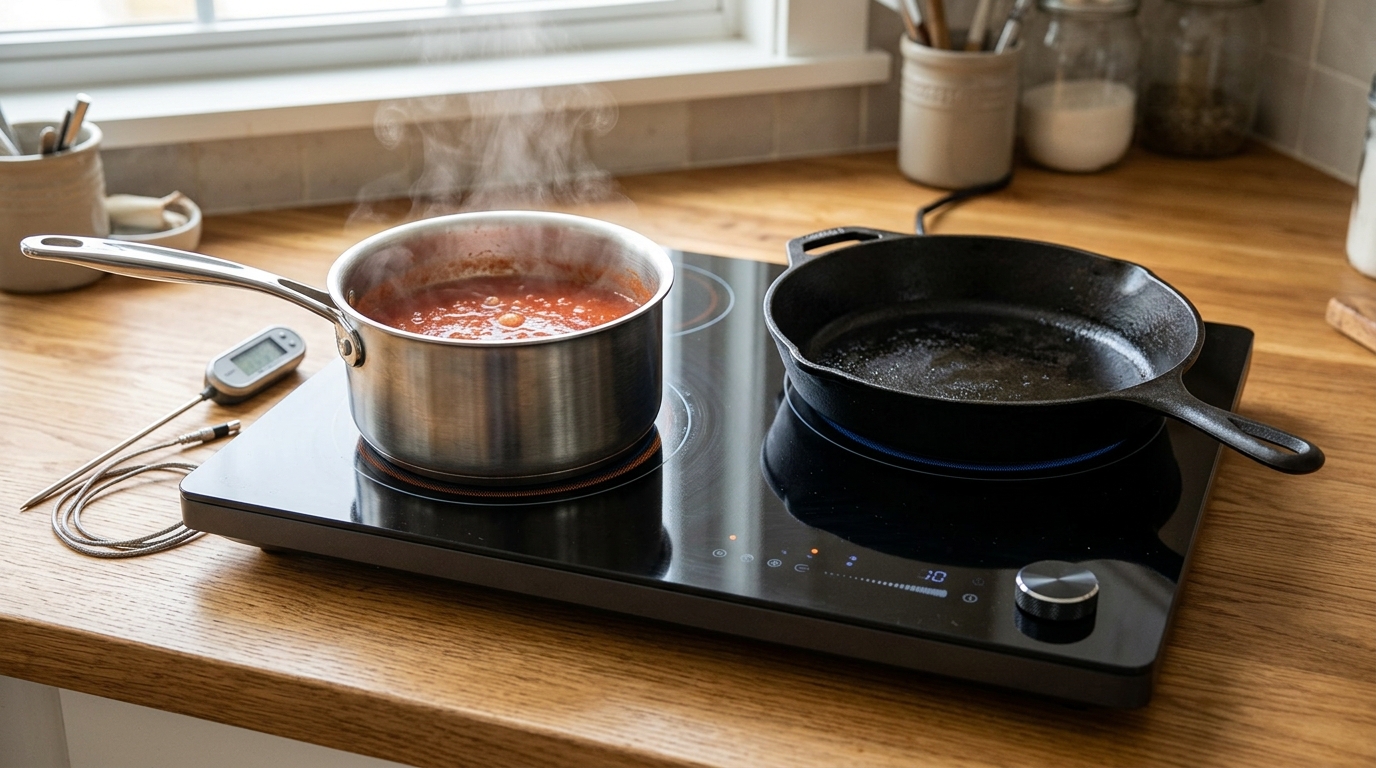
Wattage tells you how fast a unit heats, but it won’t tell you how well it cooks. The specs that change your daily cooking are power draw, burner count, temperature range, and how quickly the sensor reads the pan. Wattage gets the headline because it sounds impressive, and that’s exactly why you should look past it.
Start with power draw. The IKEA TILLREDA is rated at 1,800 W on 120 V and 15 A. Divide 1,800 by 120 and you get 15, which is the full capacity of a standard 15-amp circuit. Run it at full power and it uses the whole circuit, so anything else on that circuit, like a toaster or a kettle, will compete with it. Plug it into its own outlet if you can, and don’t run a microwave on the same line.
The NuWave PIC Flex runs at 1,300 W, so it draws less from the same outlet. That’s easier on your circuit and a bit slower to bring water to a boil. For pasta water, that extra 500 W is the difference you’ll notice. For a slow onion base, you probably won’t.
Here’s the catch. Higher wattage buys speed on boiling and searing. It does not buy control. A high-powered unit with a crude heat setting will scorch your sauce just as fast as it boils your water.
Temperature range and sensing matter for delicate work. The Breville Control Freak Home covers 77°F to 482°F, and its through-glass sensor reads surface temperature 20 times per second. Why does that matter? Sauces break when they overheat, chocolate seizes, and butter goes from golden to burnt in seconds. A sensor that checks the surface 20 times a second catches the drift before your sauce does. The low floor matters too. A gentle, low setting lets you hold a sauce just warm enough to stay smooth without hovering over the pan.
The NuWave lists a temperature capability up to 500°F, which is higher than Breville’s top setting. That’s handy for searing and frying. But the top number is only half the range. Ask for the low end before you buy. A cooktop that gets very hot but can’t hold a gentle heat is a searing machine, not a sauce machine.
Burner count is the spec people forget. A single-zone unit suits a solo cook who makes one pan at a time. You put the skillet on, cook, and move on. If you cook for a family, or you want rice simmering on one zone while onions sizzle on the other, a double-burner unit saves you from juggling pans. Just check the zone sizes. Two small zones won’t comfortably handle two large pans side by side.
Are Portable Induction Cooktops Safe, and What Do the Standards Say?
Portable induction cooktops can be safe, but only when the product is built to a published safety standard and you check for proof of that before you buy. The standards are more specific than most sales pages let on, so here’s what they actually cover.
The first one to know is IEC 60335-2-9:2019, a safety standard from the International Electrotechnical Commission. It sets safety requirements for certain portable household cooking appliances rated at no more than 250 V. Its examples include hotplates and induction wok hotplates, which makes it the closest match for a countertop induction unit.
Underneath that sits the general baseline. IEC 60335-1, sixth edition, was published in 2020 and sets general safety requirements for household and similar electrical appliances. Its scope runs up to 250 V for single-phase appliances and up to 480 V for other appliances. Think of it as the foundation, with the cooktop-specific rules built on top.
The U.S. side works differently. The Consumer Product Safety Commission says a General Certificate of Conformity, or GCC, is required when a product is subject to an applicable consumer-product safety rule or a similar CPSC-enforced requirement. If no listed requirement applies, the CPSC says a GCC is likely not required. So the paperwork depends on which rules cover the product, not on how polished the box looks.
That means the certificate is not something you can assume. Here’s your practical checklist before you hand over your card:
- Find the certification mark on the packaging and in the manual. If neither mentions one, ask the seller in writing before you buy.
- Read the warning label on the unit and in the manual. It should cover hot surfaces, pan placement, and keeping children and pets away.
- Find the auto-shutoff rules. Check what happens when the pan is lifted off mid-cook, and whether the unit shuts itself off after running unattended for a set time.
- Read the rating label on the unit and match it to the outlet you plan to use, including any other appliances on the same circuit.
- Skip the extension cord. A portable cooktop pulls real current, and a cheap cord is the weakest link in the setup.
Don’t read a logo as a guarantee, and don’t panic if a listing is vague. Read the manual first. A brand that hides its warnings and safety features in fine print is telling you something about how it treats its customers.
Which Portable Induction Cooktop Should You Buy?
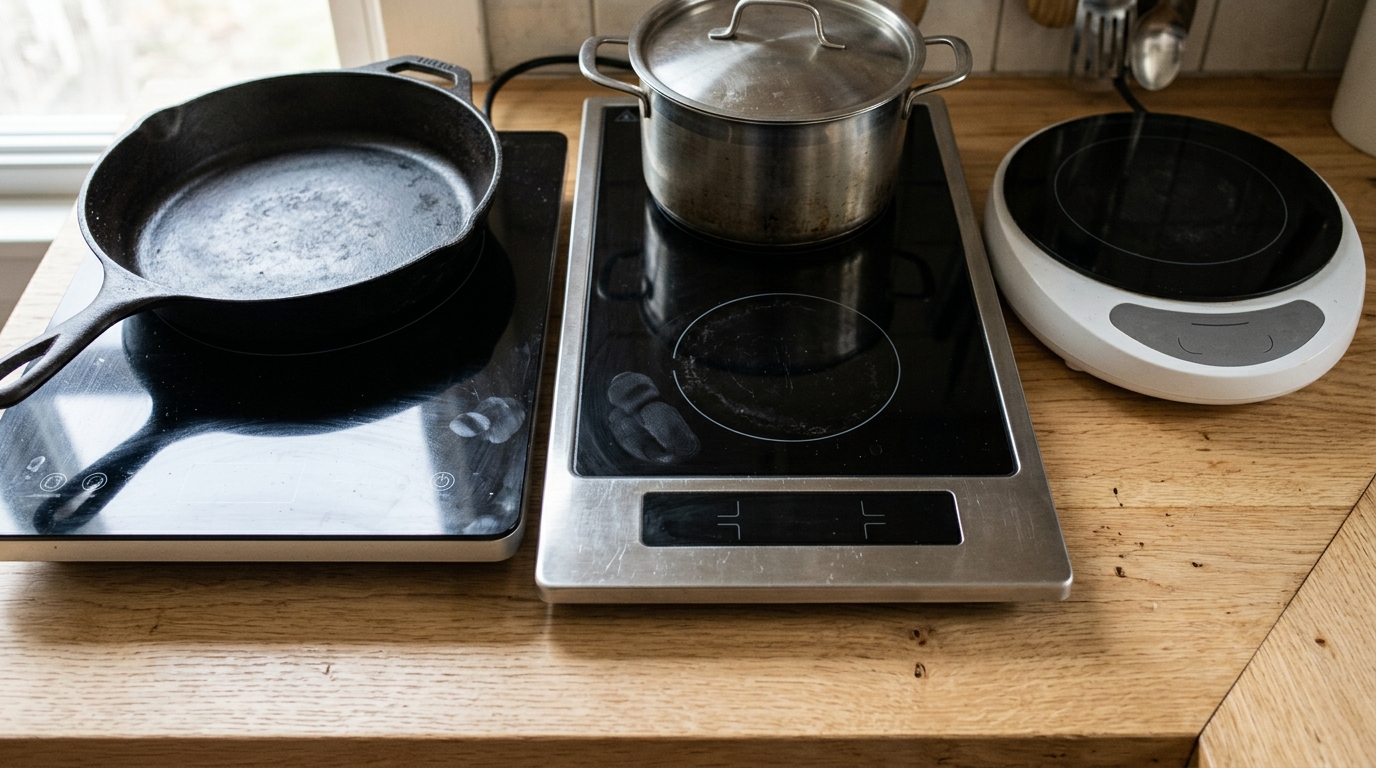
Buy a single-zone unit if you cook one pan at a time in a small kitchen. Buy a double-zone unit if you feed a family. Pay the big money only if fine heat control is a daily need. Wait if the model you want is sold out, and run from any listing that hides its specs.
Find your buyer type below, then check the verdict for it.
- The budget single-zone buyer. You cook occasionally, your kitchen is small, and you rarely need two pans going at once. The IKEA TILLREDA, listed at $74.99, or the NuWave PIC Flex, listed at a sale price of $89.99, fits this profile. Buy only after your magnet and diameter checks pass. A pan that fails the magnet test turns a $75 purchase into a paperweight.
- The everyday double-zone buyer. You cook for a household and want two pans going at once. Choose a double-zone unit, then check each zone’s diameter against your largest pan. Add up the power draw of both zones and confirm your outlet can handle it, with nothing else on the same circuit.
- The precision splurge buyer. The Breville Control Freak Home, at $1,499.95, is the only splurge worth discussing here. It’s justified only if fine temperature control is a daily need, like delicate custards, chocolate, or sauces that break above a set heat. If your weekly menu is pasta water and fried eggs, you’re paying for control you’ll never touch.
Wait for a sale if the model you want is sold out or only available as a flash deal. An unproven unit bought at full price is a gamble, and a sold-out listing gives you nothing to compare. The NuWave product page was marked sold out when it was checked, which is a good reminder that prices and stock change fast. Waiting costs you some time. Buying the wrong unit can cost you the whole purchase.
Run away from any listing that hides wattage, temperature range, or warranty details. No wattage means you can’t check your outlet. No temperature floor means you can’t tell whether it will hold a simmer. No warranty length means you have no idea what happens when it fails. Close the tab. A seller who won’t print those three numbers isn’t hiding a bargain. They’re hiding a problem.
Now the gurus. The ones with a countdown timer, a “limited time offer” badge, and a video of someone’s sauce looking perfect are selling urgency, not performance. A deal that expires tonight doesn’t change the wattage, the zone size, or the warranty. Those numbers are the same at midnight as they were at noon.
That’s where shiny object syndrome hits hardest. A glowing display, a “pro-grade” label, or a flashy accessory can make a plain unit look dull. Check the magnet, measure the pan, read the spec sheet, and buy the boring machine that fits your cooking.
Picking Your Portable Induction Cooktop Today
Before you check out, work through these five steps in order. Each one can rule out a purchase, so don’t skip ahead.
- Run the magnet test on every pan you own. Hold a fridge magnet against the base of each pan, edge to edge. Pans that grip firmly and sit flat go in the keep pile, and anything that slides off goes in the “buy new” pile.
- Match the cooking zone to your pans. Measure the bottom of your biggest skillet and compare it to the zone diameter on the spec sheet. If the pan hangs over the edge of the circle, it will heat unevenly, so either buy a larger zone or stop using that pan.
- Check wattage against your outlet and circuit. Divide the wattage by the voltage to find the amps the unit pulls, then confirm that number fits your breaker with room to spare. Keep the cooktop off any circuit that also runs a kettle or toaster.
- Pick a price tier based on how precise your cooking needs to be. If you mostly boil pasta and fry eggs, the budget tier does the job. If you make delicate sauces, chocolate, or candy every week, the precision tier earns its price.
- Confirm the warranty and certification before you check out. Find the warranty length in the listing and look for a certification mark on the packaging or in the manual. If either one is missing, ask the seller before you pay, not after the box shows up on your porch.
Run the checks first, then buy the machine that passes them. No countdown timer required.
Your Pre-Checkout Shortcut
Start with the magnet, not the cart. Tonight, grab a fridge magnet and test every pan you own. Sort them into a keep pile and a buy-new pile before you open a single product page.
If you cook solo and your favorite pan is cast iron, you’re close. Pick a single-zone unit, measure your biggest pan, and confirm the zone diameter on the spec sheet is wide enough for its base.
If you feed a household, count how many pans need heat at the same time. A 1,800 W unit on a 120 V outlet pulls 15 A, which is the full capacity of a standard 15-amp circuit. A 1,300 W unit pulls about 11 A. Either way, keep the cooktop on a circuit with nothing else running on it.
If you’re eyeing the Breville Control Freak Home, ask yourself one question: do you make delicate sauces, custards, or chocolate every week? If not, skip it and keep the money.
Then open the listing you’re considering and write down three numbers: the wattage, the lowest temperature, and the warranty length. If the seller won’t show all three, close the tab and move on.
Frequently Asked Questions
1. Can you run a portable induction cooktop on RV or off-grid power?
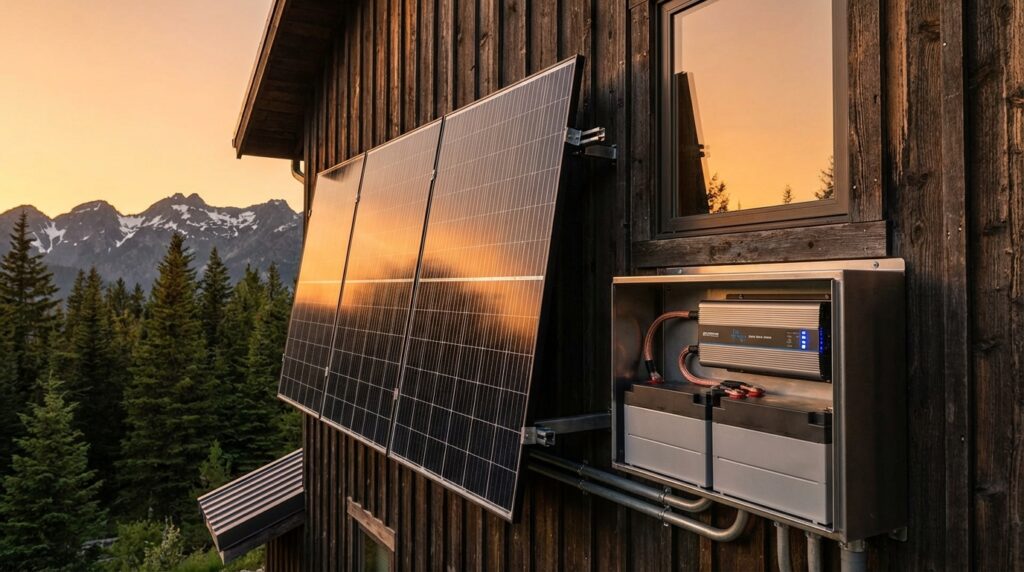
Yes, but the power source has to deliver the full draw of the unit. The IKEA TILLREDA pulls 1,800 W on 120 V, which is 15 A at full power, so a generator or inverter must supply that continuously without tripping. Check the unit’s wattage against your power setup before you plan an off-grid cooking routine.
2. Can a budget single-zone induction cooktop hold a gentle simmer for sauces?
It depends on the temperature controls, not the price tag. A cheap unit can boil water quickly but may not hold a low, steady heat, so look for a published lowest setting before you buy. If the listing doesn’t show a low end, assume the unit is better for boiling and searing than for delicate sauces.
3. Can you use a wok on a portable induction cooktop?
Only if the wok has a flat base that sits fully on the glass and passes the magnet test. Round-bottomed woks rock on the zone and heat unevenly, so they need a special stand or a flat-bottomed alternative. Measure the base before you assume a wok will work.
4. How should you clean the glass surface of a portable induction cooktop?
Wipe the glass once it has cooled down, using a soft cloth and a mild cleaner. Avoid abrasive scrubbers, which can scratch the surface, and wipe up spills quickly so they don’t bake onto the glass. Always let the surface cool first, since residual heat from the pan can still warm the glass.