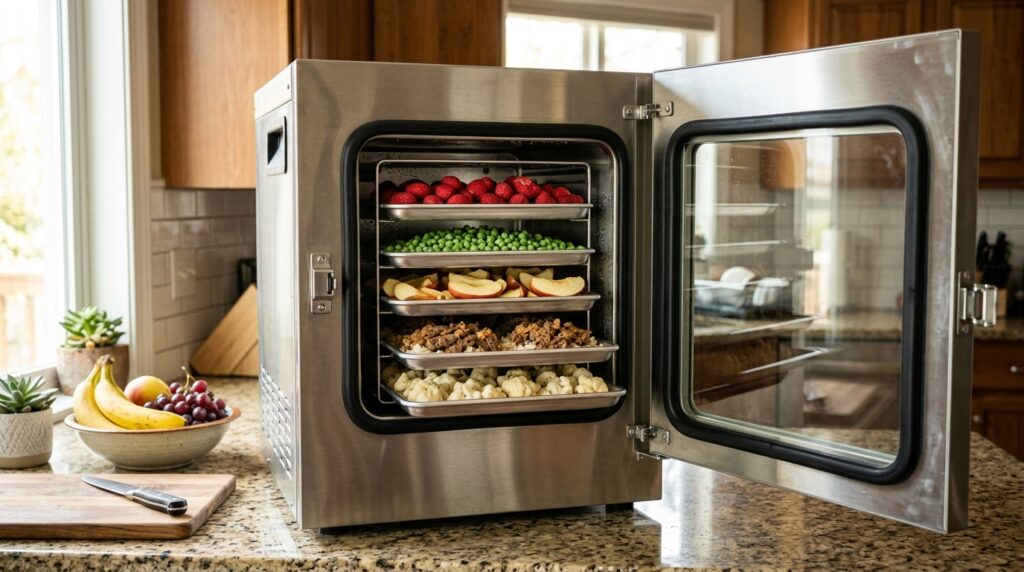
Freeze dryer reviews can make every machine sound like a miracle until you face the noise, steep price, long cycles, and messy learning curve. You are not just buying an appliance. You are taking on a heavy, power-hungry commitment that needs space, patience, and reliable support. The real question is whether the convenience and food savings justify the cost.
This guide cuts through polished sales claims and focuses on what owners actually report: performance, ease of use, repair problems, noise, value, and long-term reliability. You will get the practical details you need to spot a smart purchase and avoid an expensive machine that becomes garage decor.
Key Takeaways
- Evaluate a freeze dryer by total ownership cost—not just the purchase price. Include electricity, maintenance, pump oil, packaging, replacement parts, storage space, noise, and the value of your time.
- Match capacity to your actual preservation volume. Larger units reduce the number of long cycles for frequent harvests or preparedness batches, but they require more space, power, and upfront investment.
- Prioritize warranty coverage, repair support, replacement-part availability, and independent owner feedback. Repeated reports of vacuum leaks, cooling failures, sensor problems, or slow service matter more than isolated star ratings or manufacturer-hosted testimonials.
- Freeze drying requires ongoing hands-on work, including food preparation, loading, monitoring, cleaning, maintenance, and airtight packaging. It is generally a poor value for occasional users but can be worthwhile for households preserving food regularly.
Freeze Dryer Reviews Introduction
These freeze dryer reviews are built for serious home preservation, not the occasional weekend experiment. If you are preparing for emergencies, storing a harvest, or processing large batches of meals and ingredients, capacity and consistent performance matter far more than a flashy feature list. You will also need to account for the work involved, including pre-freezing some foods, loading trays, monitoring cycles, cleaning the machine, and sealing food for storage. A unit that looks affordable on paper can become frustrating if it is noisy, slow, difficult to maintain, or too small for your needs.
This research snapshot was checked on September 2, 2026, so treat prices, ratings, and availability as changing details rather than permanent facts. The comparisons draw on owner feedback, manufacturer details, retailer reviews, independent testing, consumer complaints, and food-safety guidance. The goal is to show you how each type of machine performs in the real world, including its capacity, operating effort, reliability, warranty support, and likely repair needs. High ratings help, but they do not erase patterns involving service delays, failed parts, or a steep learning curve.
The real number to watch is total ownership cost, not just the checkout price. Electricity, replacement parts, maintenance supplies, storage bags, and the value of your time can change which machine offers the best long-term deal. You should also separate established owner experience from optimistic marketing claims, because a newer design may promise easier automation while having less history to prove its reliability. Use these reviews to match the machine to your preservation volume and tolerance for hands-on work instead of buying the biggest or cheapest option by default.
Established Home Pro Medium Freeze Dryer Reviews
The established home medium freeze dryer remains a popular choice if you want a machine with a long track record. You get a large owner-review base, broad availability through major retailers, and plenty of real-world feedback to study before spending serious money. Replacement parts, trays, pumps, and accessories are also easier to find than with newer machines, which can make long-term ownership less stressful. An active user community gives you access to recipes, troubleshooting tips, and practical advice when the manual falls short.
Capacity is a major reason preparedness buyers choose this type of model, but you still need to plan for the work involved. Each batch can take many hours, and you will need freezer space, packaging supplies, storage room, and patience while learning how food size, moisture, and loading affect results. Reviews commonly praise the finished food and the machine’s flexibility, but they also mention loud operation, a large footprint, and a noticeable learning curve. Before buying, check the warranty terms and service process carefully, because customer support experiences may vary.
The bigger concern is that ownership is not completely hands-off. Some users report refrigeration problems, vacuum leaks, failed sensors, or electrical issues, and repairs can be frustrating if you are outside the warranty period. Those complaints do not erase the model’s strong parts network or large knowledge base, but they should factor into your total cost and emergency plans. If you value a proven track record, repair resources, and community support more than quiet operation or simple setup, an established medium freeze dryer can offer solid long-term value, provided you are ready to maintain it and troubleshoot when necessary.
Automation-Focused and High-Capacity Freeze Dryer Reviews
An automation-focused freeze dryer stands out in reviews by reducing the hands-on work that can frustrate first-time buyers. Preset recipes, faster cooling, and simpler controls may appeal to you if you want a smoother path from loading the machine to storing the finished food. That convenience may matter more than squeezing out every bit of tray space, especially when you preserve food often. Still, newer models have a shorter track record and a smaller independent owner-review base, so long-term reliability and service are harder to judge with confidence.
A high-capacity model makes a stronger case on paper with its advertised tray space, which may appeal to households processing larger batches. Company-hosted review scores can also look encouraging, but you should treat those testimonials as selected feedback rather than a complete picture of ownership. Look for details about cycle times, noise, cleaning, failed batches, shipping, warranty support, and replacement parts before trusting the headline rating. A roomy machine is not automatically a better value if it costs more to run or support becomes difficult.
The key distinction is evidence quality. Broad independent owner feedback gives you a wider view, while manufacturer-hosted testimonials show what a brand chooses to highlight. Newer models have less independent review history than established options, so you face more uncertainty when judging durability and long-term value. One type favors easier operation and faster cooling, while another emphasizes advertised capacity and strong on-site scores. For a costly preparedness purchase, compare those benefits with warranty terms, service responsiveness, operating effort, and the amount of real-world owner feedback available.
Freeze Dryer Capacity And Costs
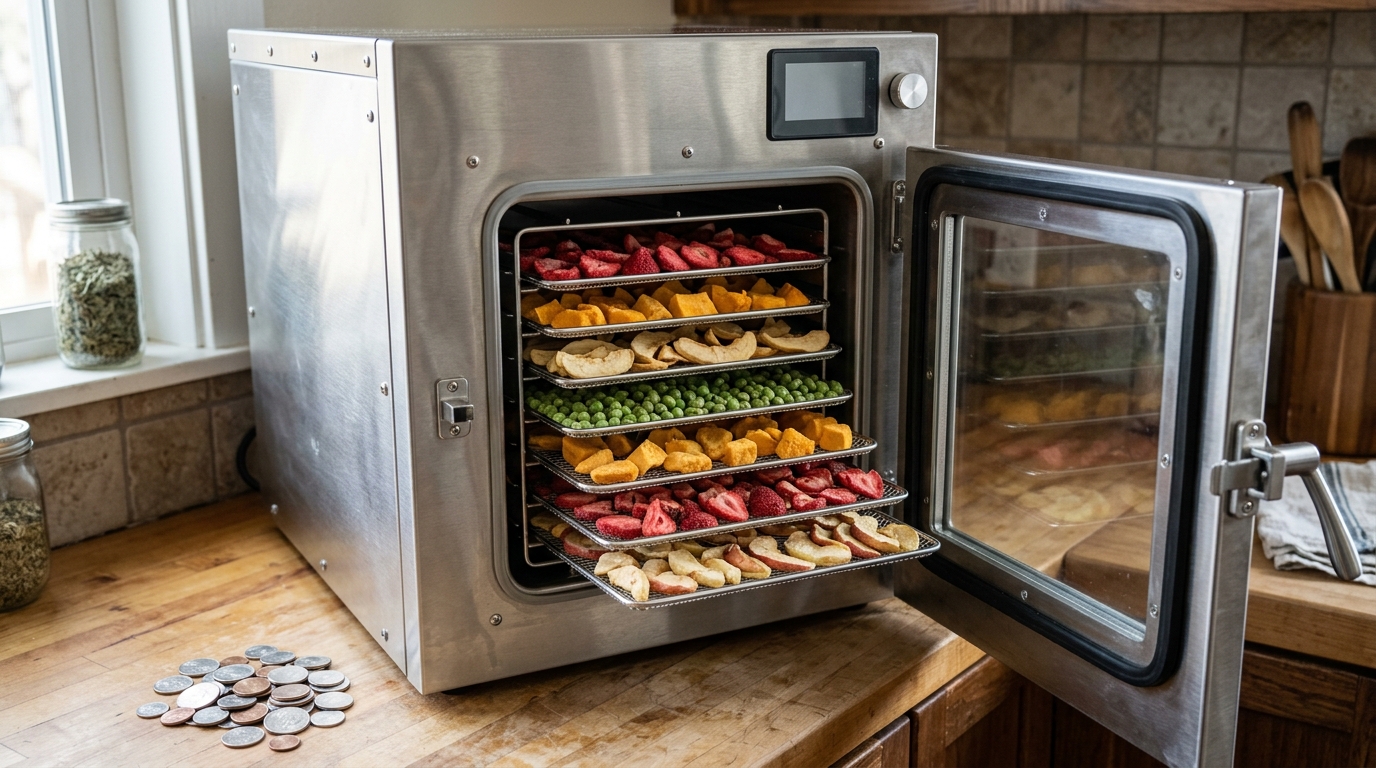
Tray space matters more than the number of servings promised on a sales page. A freeze-drying cycle can take about a day or longer, so a small machine may leave you waiting through several cycles to preserve one garden harvest, a batch of meat, or a full family meal. Larger and extra-large models let you process more food at once, which can save time and make the higher purchase price worthwhile if you use the machine often. Check the usable tray dimensions and recommended batch weight, not just the model name or marketing claims. In freeze dryer reviews, owners often find that extra capacity is the feature they appreciate most after the novelty wears off.
The purchase price is only the first hit to your budget. You may need pump oil and regular oil changes, or you may pay more upfront for an oil-free pump, while electricity adds to every long cycle. These machines can also be loud, heavy, and difficult to tuck away, so plan for a sturdy location with ventilation and enough storage space for trays, bags, and accessories. Cleaning takes time, especially after sticky fruit, dairy, or greasy meals. A realistic ownership review should count the space, noise, power, maintenance, and cleanup before calling any model a bargain.
Food safety deserves the same attention as capacity and cost. You still need to handle raw meat safely, avoid cross-contamination, dry food completely, package it in moisture-proof containers, and label each batch with its contents and date. A large machine offers better value when you regularly preserve harvests or stock full meals, but it can be overkill if you only process small amounts a few times a year. Look closely at warranty coverage, replacement parts, pump requirements, and service feedback before buying. The best choice is the model that matches your real batch size and routine, not simply the one with the biggest tray count.
Freeze Dryer Reliability And Warranty
A bad review is a signal, not a verdict. When you see complaints about vacuum leaks, cooling failures, electrical faults, or shipping damage, look for patterns across many owners and check how the seller responded. One damaged shipment may point to poor packaging, while repeated reports of the same failure after normal use deserve more weight. Reviews that include dates, photos, troubleshooting steps, and repair outcomes are far more useful than angry one-line posts.
Warranty details can make or break the long-term value of an expensive freeze dryer. Check what the warranty covers, how long coverage lasts, whether labor and shipping are included, and who pays to return a heavy machine for service. You should also confirm that replacement parts are available and that customer support can help with common fixes instead of sending you in circles. Before buying, ask support about repair times, return windows, restocking fees, and the process for handling a unit that arrives damaged.
The smartest move is to contact the seller before placing your order and save the answers in writing. A fast, clear response is encouraging, while vague promises about “priority support” should make you cautious. We may earn a commission from qualifying purchases, but that never changes how we judge warranty limits, service complaints, or return policies. When a product link is relevant, we use only verified direct links through httpsco and identify affiliate relationships clearly.
Freeze Dryer Reviews Summary
An established medium freeze dryer is the safest choice if you want the strongest track record, the biggest owner community, and easier access to parts and accessories. Its machines still demand patience, and reviews mention noise, bulky size, learning curves, and uneven service experiences. An automation-focused model stands out if you care most about preset recipes and a quicker, simpler workflow. The trade-off is a shorter track record and a smaller base of independent owner feedback, so you have less long-term evidence to rely on.
A high-capacity model looks attractive when advertised price, included features, and apparent value are your top priorities, but read the warranty and support terms carefully before you buy. A lower upfront price does not automatically mean lower ownership costs, especially if repairs, shipping, accessories, or downtime enter the picture. For frequent meal prep, large harvests, or serious preparedness plans, a larger freeze dryer can be the better tool because it reduces the number of batches you need to run. Just remember that bigger machines also consume more space, power, and attention.
The best choice depends on how often you will use the machine, not which sales page makes the biggest promise. Compare real capacity, cycle time, noise, warranty coverage, service reputation, replacement parts, and expected electricity costs before handing over your money. If you will run batches regularly, an established model offers the most proven path, an automation-focused model favors easier operation, a high-capacity model emphasizes output, and larger units make sense for high-volume users. For occasional use, however, a freeze dryer is usually a poor value unless you are prepared for its time, space, maintenance, and operating costs.
What to Check in Freeze Dryer Reviews
Freeze dryer reviews are most useful when you look past star ratings and sales claims. Focus on usable capacity, batch size, noise, cycle time, cleaning, and the daily effort required to run the machine. You should also check warranty terms, repair support, replacement parts, and reports of refrigeration, vacuum, or electrical problems. A lower purchase price may look attractive, but long-term value depends on reliability, operating costs, and whether you can get help when something goes wrong.
An established choice often gives you more owner feedback, accessories, and community advice, while newer options may offer simpler controls and faster automation but have less long-term history. Your best pick depends on how much food you plan to preserve, how often you will use the machine, and how much hands-on work you can handle. Do not rush into a costly appliance based on a handful of glowing reviews, especially when prices and ratings can change. If you are also planning practical food storage around a busy schedule, explore our guide to the best meal prep services for saving time and energy to make the rest of your food planning easier.
Frequently Asked Questions
1. What should you look for in freeze dryer reviews?
Look past star ratings and sales claims. Focus on real owner feedback about batch capacity, cycle times, noise, cleaning, failed parts, customer support, and long-term reliability. A machine can earn glowing reviews and still be a poor fit if it is too small, too loud, or too expensive to maintain.
2. Are home freeze dryers worth the high price?
They can be worth it if you regularly preserve garden harvests, bulk food, or complete meals. The value drops fast if you only plan to use the machine a few times each year. Add electricity, vacuum pump oil or maintenance, packaging, replacement parts, and your time to the purchase price before deciding.
3. How long does a freeze-drying cycle take?
Most batches take many hours, and some run for a full day or longer depending on the food, moisture level, load size, and machine settings. You may also need to pre-freeze certain foods, which adds more time. Fast cycle claims should be treated cautiously because real results vary with every batch.
4. Are freeze dryers noisy?
Yes, noise is one of the most common complaints from owners. The vacuum pump and cooling system can run for long periods, so placing the unit in a garage, utility room, or other isolated space is usually more comfortable than keeping it near living areas. Check actual owner experience, not just the manufacturer’s specifications.
5. How much work does a home freeze dryer require?
Freeze drying is not a push-button process. You need to prepare and sometimes pre-freeze food, load trays evenly, monitor the cycle, check dryness, clean the chamber, maintain the pump, and package the finished food in airtight containers with oxygen absorbers. Skipping those steps can reduce shelf life and create food-quality problems.
6. What problems do freeze dryer owners report most often?
Common complaints include long cycles, loud operation, software or sensor issues, vacuum leaks, pump maintenance, failed parts, and slow repair support. A steep learning curve can also make the first batches frustrating. Look for repeated complaints across independent reviews instead of judging a machine by one unusually positive or negative experience.
7. How do you compare freeze dryer capacity accurately?
Compare usable tray space and realistic food capacity, not just the number of trays or a headline specification. A larger unit costs more and needs more room and electricity, but a small unit may force you to run extra batches. Think about how much food you plan to process in a typical week and whether the machine can keep up.
8. What should you check before buying a freeze dryer?
Confirm the machine’s power needs, dimensions, noise level, warranty terms, return policy, replacement-part availability, and service process. Check whether you have a suitable location, enough ventilation, and a plan for sealing and storing the food. Reliable support matters because a heavy, expensive appliance is a painful investment when repairs turn into a months-long battle.