

Let’s be real: your mental health is priceless, but your bank account definitely has a limit. When you start digging into the cognitive behavioral therapy cost for 2024, the numbers can feel like a punch to the gut. With individual sessions swinging anywhere from $100 to $350, finding a way to rewire your brain shouldn’t mean emptying your wallet.
You’re likely staring at a potential $5,000 bill for a full course of treatment and wondering if there’s a better way to get results. We’ve interrogated the data, and while specialized doctors charge a premium, there are smarter, more transparent ways to access these tools without the massive markup. You deserve the truth about what you’re paying for and whether the “gold standard” of therapy is actually worth the hype.
Key Takeaways
- Standard private CBT sessions range from $100 to $350 per hour, with a full course of treatment typically requiring a total investment of $1,200 to $5,000.
- The cost of therapy is primarily driven by the provider’s credentials and location, with PhD-level specialists in major metropolitan areas commanding the highest premiums.
- CBT is a time-limited, short-term investment designed to provide a lifelong toolkit, making it more cost-effective than long-term, unstructured therapy.
- Digital platforms and guided online modules offer a high-quality, affordable alternative, often reducing weekly costs to between $40 and $110.
Typical Price Ranges For Private CBT Sessions
Making the move from self help books to professional intervention is a serious financial step that requires a clear look at the numbers. You can generally expect to pay between 100 and 250 dollars per session for out of pocket CBT, though high end specialists in major cities often push those rates toward 350 dollars. While these figures might give you a bit of sticker shock, remember that CBT is designed to be a short term investment rather than a lifelong commitment. Most people complete their treatment within twelve to twenty sessions, meaning your total cost for a full transformation usually lands between 1,200 and 5,000 dollars. It is a significant chunk of change, so you need to be sure you are putting your money where it actually works.
The price you pay usually boils down to the letters behind the therapist’s name and their level of specialized training. Master’s level counselors or licensed social workers are your most common choice for standard CBT, typically charging on the lower end between 100 and 180 dollars. If you decide you need a heavy hitter with a PhD or PsyD, you are paying for that higher level of clinical expertise which starts around 175 dollars. These psychologists have spent years dissecting the mechanics of the human brain, which is why they command those premium rates. You are essentially choosing between a reliable standard service and a specialized expert who has seen every edge case in the book.
If those hourly private rates feel like they are draining your bank account before you even start, digital platforms offer a more affordable middle ground. Subscription based online services often bring the weekly cost down to somewhere between 65 and 110 dollars, which usually includes a mix of messaging and live video sessions. There are even guided internet CBT programs that drop the price as low as 40 dollars for those who are comfortable with a more self paced approach. We are tired of seeing people priced out of mental health care, so exploring these tech forward alternatives is a smart way to get the help you need without going broke. It is all about finding that sweet spot where professional quality meets a price you can actually live with.
Geographic And Specialization Factors Affecting CBT Rates

Where you live plays a massive role in how much you will shell out for a single hour of professional guidance. If you are sitting in a high rise in New York City or a tech hub in San Francisco, you can expect to pay a premium that reflects the local cost of living, often reaching $350 per session. These major metropolitan areas are significantly higher than what you would find in smaller towns or rural areas where overhead is lower. While it might feel unfair, therapists in major cities have to cover higher rent and insurance costs, which they pass directly to you. You are essentially paying for their zip code as much as their clinical expertise.
Specialization is the other heavy hitter that can send your total bill skyrocketing or keep it grounded. If you are looking for standard CBT for general anxiety, you can often find a licensed counselor or social worker charging between $100 and $180. However, if you need a specialist for something like OCD or insomnia, you are entering the territory of PhD level psychologists who command top dollar for their niche training. These experts often charge upwards of $250 because they have mastered specific protocols that get results faster than a generalist. It is a classic case of paying more upfront to potentially spend less time in the chair overall.
Transitioning from self help books to professional intervention is a big financial leap, but you do not have to go broke to get mental clarity. Many people are ditching the traditional office visit for digital platforms that offer structured CBT at a fraction of the price. These online subscriptions often bundle messaging and live sessions for about $65 to $110 per week, making professional support accessible without the big city markup. It is about being smart with your budget and recognizing when a digital tool can deliver the same punch as a high priced specialist. You deserve the best care, but you should not have to sacrifice your savings to get it.
Total Investment For A Full CBT Course
Transitioning from self-help books to professional intervention is a major step for your mental health, but you need to be realistic about the financial commitment. While individual sessions typically range from $100 to $250 out of pocket, a full course of CBT is a marathon rather than a sprint. Since this therapy is structured and time-limited, you are looking at a standard window of 12 to 20 sessions to see lasting results. For most people, this means the total investment for a complete treatment cycle falls somewhere between $1,200 and $5,000. It is a significant chunk of change, but knowing the finish line exists helps you budget for the total cost rather than paying indefinitely.
The price you pay often depends on the credentials of the person sitting across from you or on your screen. Psychologists with specialized doctoral training usually command the highest rates, often reaching $350 per hour in major cities, while licensed social workers offer a more accessible entry point. If those numbers make your wallet ache, digital platforms and guided internet programs have emerged as a modern therapy workaround. These options can drop your weekly commitment significantly, sometimes costing as little as $40 for guided modules. You have to decide if you want the high-end specialized experience or a streamlined digital version that fits a tighter budget.
We have seen every marketing “hack” in the book, and the truth is that paying for therapy is an investment in your future productivity and peace of mind. You are essentially buying a lifelong toolkit that you will use for the rest of your life, which beats buying endless “quick fix” ebooks that never deliver. If you are tired of the trial and error approach, calculating this 20-session total gives you a clear target to aim for. Do not let the upfront price tag scare you off from getting professional help that actually works. It is about cutting through the fluff and spending your money where it will actually move the needle on your well-being.
Digital Alternatives And Online CBT Platform Pricing
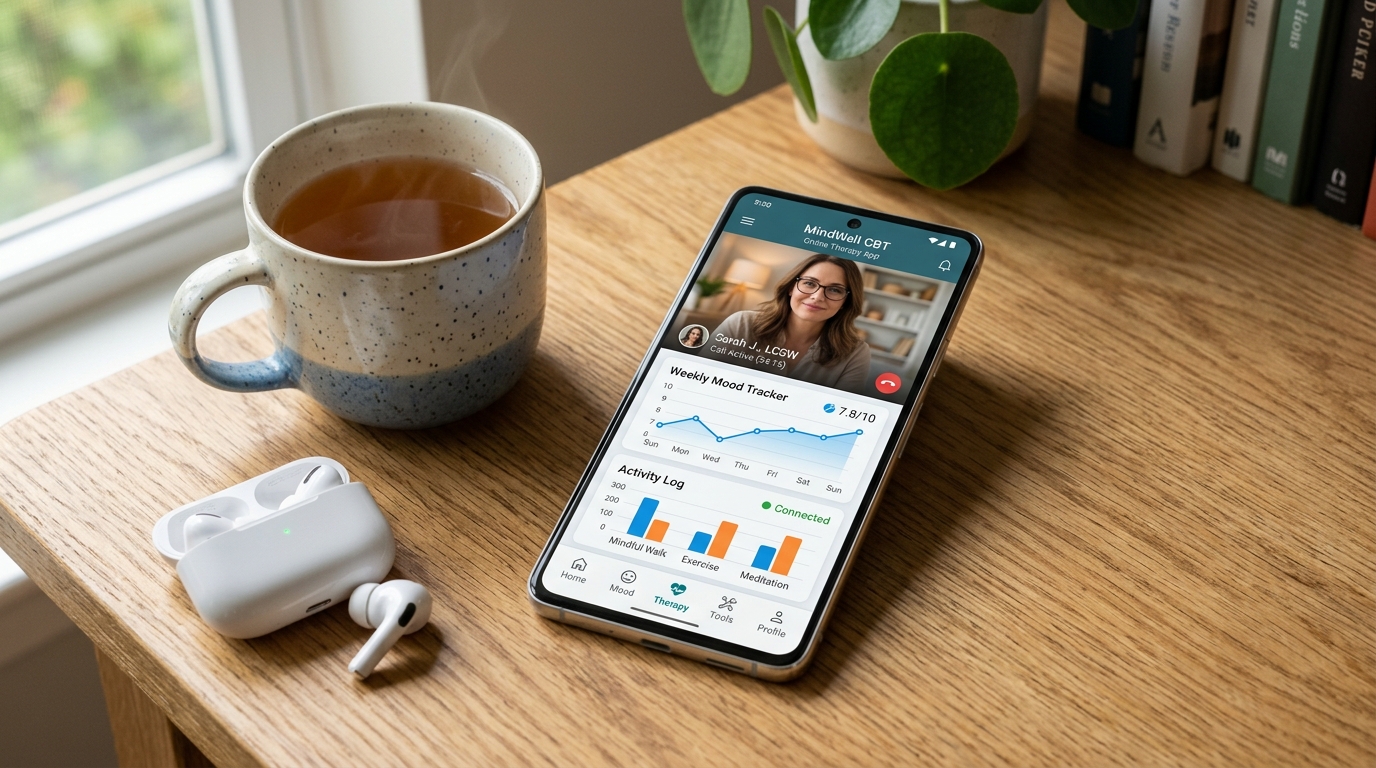
If you are tired of staring at a $250 per hour price tag and wondering if mental health is only for the wealthy, digital alternatives are changing the game. Subscription based apps and guided internet modules are shredding the old playbook by offering professional structure without the heavy office overhead. You can typically expect to pay between $65 and $110 per week for platforms that bundle messaging with live video sessions. This is a massive shift for anyone transitioning from basic self help books to serious professional intervention. It allows you to test the waters of cognitive behavioral therapy without committing thousands of dollars upfront for a traditional twelve session course.
The real magic happens when you look at guided internet modules, which can drop your costs as low as $40 per month. These digital paths cut through the marketing fluff and get straight to the tools you actually need to rewire your brain and thought patterns. You get the same evidence based strategies used by top tier psychologists but delivered through an interface that fits your budget and your schedule. It is a gritty, no nonsense approach for the consumer who is done with the waiting lists and the corporate speak of traditional clinics. You are essentially taking the wheel of your own treatment while keeping your bank account intact.
Choosing a digital platform means you are prioritizing transparency and accessibility over mahogany desks and waiting room magazines. These online bridges are perfect if you want to interrogate your own habits without the financial pressure of a $350 specialized session. You get to skip the commute and the insurance headaches while still receiving a high energy, structured program that works. It is about finding a solution that respects your intelligence and your wallet at the same time. By moving your therapy online, you are making a smart financial move that ensures your mental health journey does not become a source of new stress.
The Real Cost of Your Transformation
Investing in your mental health is a major pivot from the world of self help books and quick fixes into the realm of professional results. While a price tag of $1,200 to $5,000 for a full course of CBT might feel like a punch to the gut, you have to look at the return on investment for your future self. Paying out of pocket for a licensed psychologist at $350 per session is a heavy lift, but staying stuck in old patterns costs you much more in lost productivity and happiness over time. We are tired of the marketing fluff that says therapy is cheap, because the truth is that quality intervention requires a real financial commitment. You are essentially buying a structured toolkit that lasts a lifetime, making it one of the few purchases that actually pays dividends every single day.
Managing these costs requires a sharp eye and a realistic budget to ensure you do not drop out halfway through your treatment. Online subscription platforms offer a middle ground at around $100 per week, but you must decide if a digital interface provides the depth you need for a breakthrough. We have interrogated the data and it is clear that the most expensive option is not always the best fit for your specific goals. You deserve a transparent look at where your money is going so you can stop guessing and start healing. To ensure you are making the smartest financial decisions across all areas of your life, take a moment to ask is hypnosis worth it or explore our Honest Truth About The Best Breathwork Program Reviews to see how professional investments can reshape your personal world.
Frequently Asked Questions
1. How much should I actually expect to pay for a single CBT session?
You are looking at a range between $100 and $250 for most private sessions, though high-end specialists in big cities can charge up to $350. The price usually reflects the therapist’s credentials, so expect to pay more for a PhD than a licensed social worker.
2. What is the total price tag for a full course of treatment?
Since CBT is a short-term tool, most people wrap things up in twelve to twenty sessions. This means your total investment will likely land between $1,200 and $5,000 to get the results you want.
3. Why does the price vary so much between different therapists?
You are paying for the letters behind the name and the years of specialized training they have under their belt. Master’s level counselors are the budget-friendly experts, while psychologists with doctorates command the highest premiums in the industry.
4. Is CBT actually worth the high cost compared to other therapies?
CBT is considered the gold standard because it focuses on fast, measurable rewiring of your brain rather than endless venting. It is designed to be a one-time investment that gives you tools for life, making it more cost-effective in the long run.
5. Are there ways to get CBT tools without paying for a private doctor?
Absolutely, because you can access the same proven techniques through digital programs and self-led tools for a fraction of the price. We have interrogated the options and found smarter, more transparent ways to get these results without the massive markup.
6. Does my location impact how much I will pay for therapy?
Yes, your zip code plays a huge role in the final bill you receive. If you are seeking treatment in a major metropolitan area, expect those rates to lean toward the $350 per hour mark due to higher overhead costs.