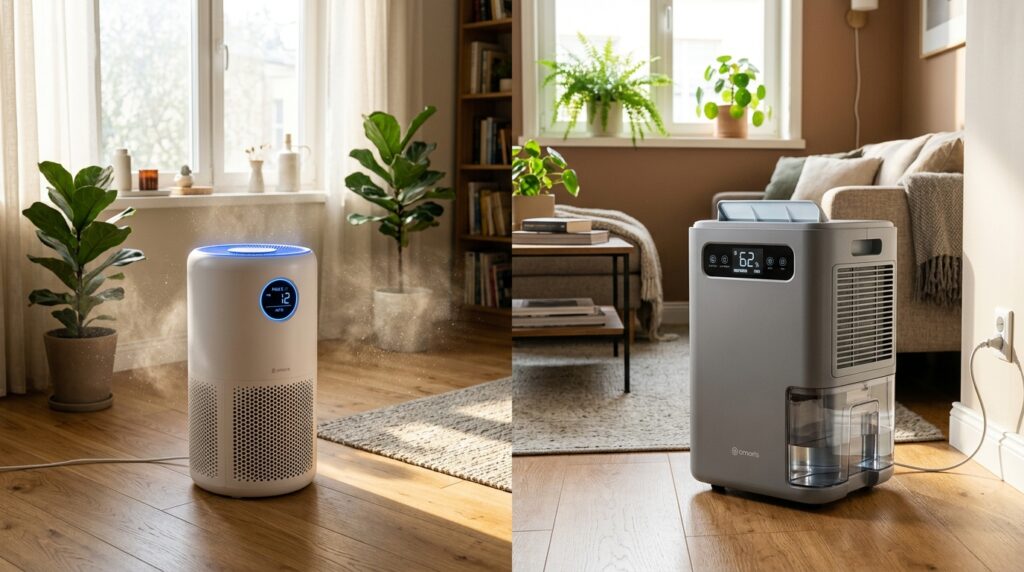
You’re staring at a damp corner and sneezing your head off, wondering if you need to scrub the air or just squeeze the water out of it. The air purification vs dehumidifier debate isn’t just about fancy gadgets; it’s about whether you’re fighting invisible dust bunnies or a literal swamp growing in your drywall. One acts like a high-tech broom for your lungs, while the other stops your basement from feeling like a tropical rainforest.
Stop letting marketing fluff confuse you into buying both when you might only need one. If your eyes are itchy and the dog smells like a wet rug, you’re looking for a filter to trap those particles before they hit your nose. But if your windows are sweating and that musty “old basement” scent is taking over, you’ve got a moisture problem that no HEPA filter can fix. It’s time to cut through the noise and figure out which machine actually earns its spot on your floor.
Key Takeaways
- Choose an air purifier to trap airborne particles like pollen, pet dander, and smoke, but rely on a dehumidifier to remove moisture and prevent mold growth.
- Air purifiers are energy-efficient tools for immediate allergy relief, whereas dehumidifiers have higher operating costs and are essential for protecting your home’s structure from dampness.
- Avoid hybrid two-in-one units in favor of dedicated, standalone appliances to ensure maximum power and efficiency for both filtration and moisture control.
- Identify your specific environmental threat by checking for physical signs: use a purifier for sneezing and itchy eyes, but use a dehumidifier if you notice ‘sweating’ windows or musty odors.
Air Purifier Particle Filtration Vs Dehumidifier Moisture Control
Think of an air purifier as a high tech vacuum for your atmosphere that never stops sweeping. While you are sleeping or working, this machine pulls in air and forces it through dense HEPA filters to trap microscopic troublemakers like smoke, pollen, and pet dander. It is your first line of defense against the invisible particles that make you sneeze or irritate your lungs during wildfire season. If your goal is to stop breathing in dust and allergens, you need a device that focuses on mechanical filtration rather than moisture.
A dehumidifier plays an entirely different game by acting as a moisture magnet to keep your home bone dry. Instead of hunting for dust, it pulls excess water vapor out of the air to stop mold and mildew before they even have a chance to take root. High humidity is the primary fuel for biological growth and dust mite infestations, so drying out the room is a proactive strike against structural damage and musty smells. You are essentially shifting the environment from a swampy breeding ground to a crisp, controlled space where mold cannot survive.
Choosing between these two depends on whether you are fighting floating debris or creeping dampness in your living space. An air purifier will keep your surfaces cleaner and your breath easier, but it will not do a single thing to stop a damp basement from growing fungi. Conversely, a dehumidifier protects your walls and furniture from rot but leaves the pollen and smoke right where they are. For those serious about emergency preparedness and total home health, using these two appliances in tandem creates a comprehensive shield against almost every common indoor air threat.
Choosing For Allergy Relief Vs Mold Prevention
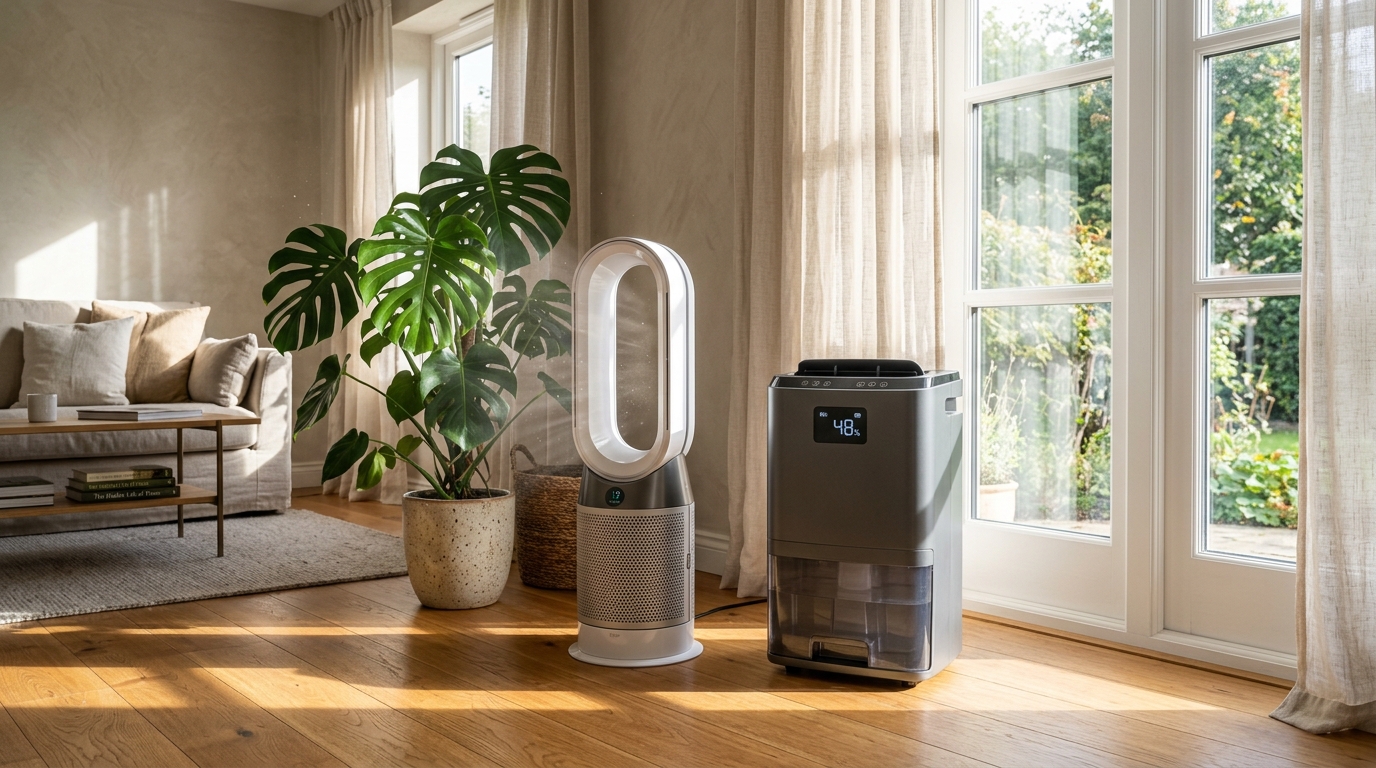
If you are waking up with a stuffy nose and itchy eyes, your battle is likely with airborne particles that a HEPA filter is designed to trap. These devices act like high tech nets, snatching pollen, pet dander, and smoke right out of the breeze before they can hit your lungs. You need this level of filtration if your goal is immediate allergy relief from the invisible debris floating around your living room. It is a straightforward solution for cleaning what is already there, but it does not change the environment that allows some triggers to thrive in the first place.
Controlling the moisture in your home is a completely different strategy that focuses on stopping biological growth before it starts. When your indoor humidity climbs above fifty percent, you are essentially rolling out a red carpet for mold spores and dust mites to multiply. A dehumidifier strips that excess water from the air, making your home a desert for the pests that love damp corners and musty basements. While it won’t catch a floating cat hair, it is your best defense against the structural damage and health risks associated with long term mildew.
Choosing between these two appliances comes down to whether you are reacting to a current irritant or preventing a future breakout. You might find that a high ticket air purifier for mold spores is your best friend during allergy season, but it cannot stop a damp wall from turning green. On the flip side, a dehumidifier protects your home’s bones and keeps the air feeling crisp rather than heavy and swampy. For the ultimate home setup, many savvy owners realize that these tools work best as a tag team to keep the air both clean and dry.
Energy Costs And Maintenance Differences For Each Device
Running an air purifier 24/7 is surprisingly easy on your wallet because these machines are essentially just high tech fans. Since they do not have to heat or cool anything, a standard HEPA unit usually pulls about the same amount of electricity as a traditional light bulb. You can expect to pay anywhere from five to fifteen dollars a month in power costs depending on your local rates. The real “gotcha” with air purifiers is the filter replacement schedule, which can cost you fifty to one hundred dollars every six months. If you skip those filter swaps, you are basically just spinning a fan and doing nothing for your air quality.
Dehumidifiers are a completely different beast when it comes to your monthly utility statement. These devices use compressors and cooling coils to pull moisture out of the air, which is an energy intensive process that can spike your power bill by twenty to fifty dollars a month. They are heavy hitters for mold prevention, but that protection comes with a higher price tag than a simple purifier. Maintenance is also more hands on since you have to dump a heavy water bucket daily or set up a permanent drain hose to avoid overflows. While you do not have to buy expensive HEPA filters for most dehumidifiers, the mechanical parts are more prone to wearing out over time.
Choosing between these two depends on whether you are fighting invisible particles or actual water damage risks. If you are prepping your home for long term air safety, you have to budget for the recurring cost of filters versus the constant draw of a compressor. Air purifiers provide a predictable and low energy way to keep your lungs clear of dust and smoke. Dehumidifiers act as the heavy duty defense against structural rot and biological growth in damp environments. Invest in the device that solves your specific environmental threat without ignoring the long term operating costs that show up on your monthly bill.
Combining Purification And Dehumidification For Maximum Air Quality
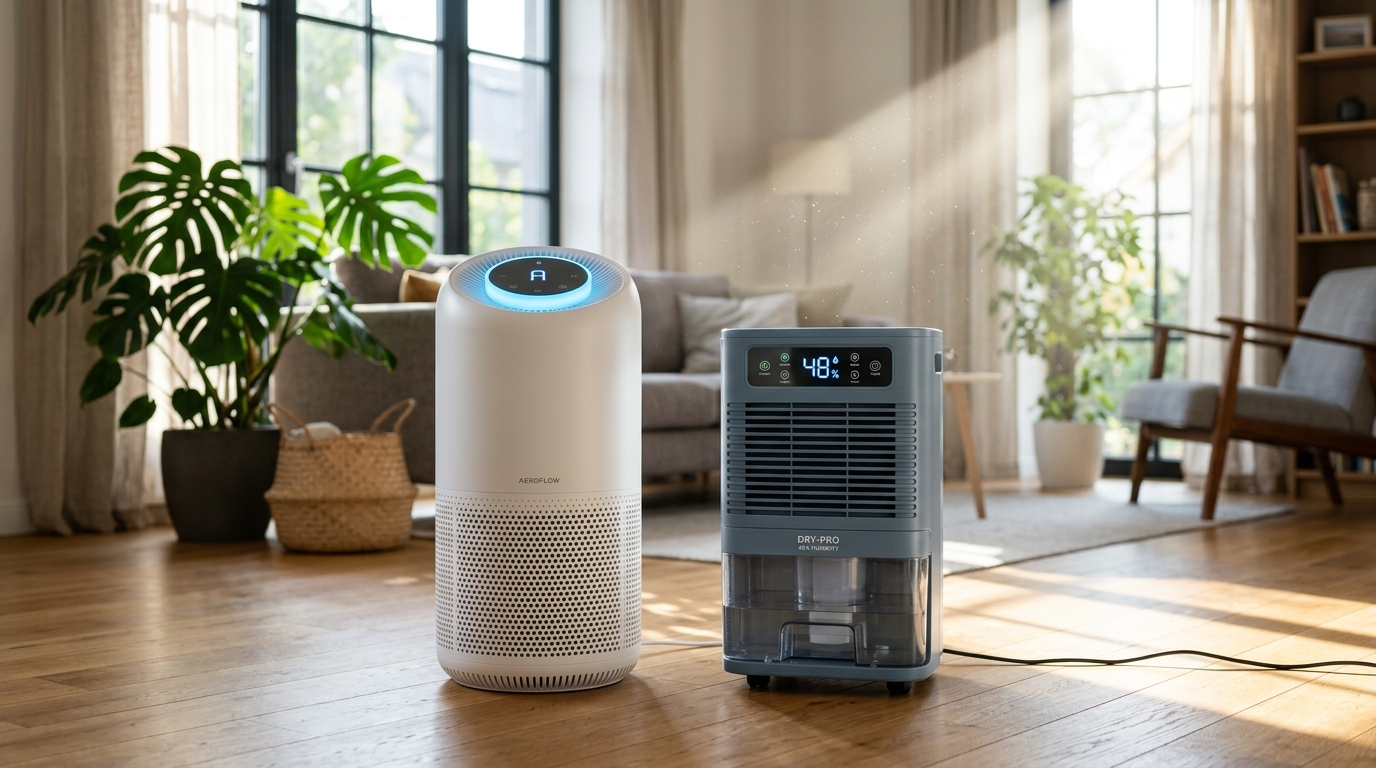
Deciding between a two-in-one hybrid or a dedicated tag-team setup comes down to how much control you actually want over your environment. Hybrid models might look sleek on your counter, but they often act as a jack of all trades and a master of none. If you are dealing with a serious mold threat or heavy allergens, a combo unit usually lacks the heavy-duty compressor power and the thick HEPA surface area needed to do both jobs effectively. You might save a few bucks upfront, but you risk underperforming in both categories when the humidity spikes or the pollen count explodes.
Investing in separate, high-quality units is almost always the smarter move for your long-term health and your wallet. This strategy allows you to place your dehumidifier in the dampest corner of the basement while your air purifier sits exactly where you breathe in the bedroom. You get the full strength of a dedicated motor for moisture removal and the precision of a medical-grade filter for particles without one system compromising the other. When one part eventually wears out, you only have to replace one machine instead of tossing an expensive, broken hybrid into the landfill.
Your final choice should be dictated by the specific “enemy” in your home, whether that is rising dampness or floating dust. If your walls are sweating and the air feels heavy, prioritize a beefy dehumidifier first to stop mold before it even starts. For those of you in dry but dusty climates, a standalone purifier is your best friend for keeping your lungs clear. Real air quality management is not about finding a magic gadget that does it all, it is about choosing the right tool for the specific mess you are trying to clean up.
Choosing Your Weapon: Particles vs. Humidity
Choosing between an air purifier and a dehumidifier comes down to identifying the specific enemy hiding in your home’s atmosphere. If you are battling invisible particles like dust, pet dander, or smoke that trigger your allergies, an air purifier is your primary line of defense. These machines act like a high tech broom for your air, sucking in contaminants and trapping them in dense filters so you can breathe easier. You should invest in purification when your goal is to eliminate airborne irritants that a standard vacuum simply cannot catch. It is the ultimate tool for maintaining a clean, breathable environment for your family during allergy season or wildfire outbreaks.
On the flip side, a dehumidifier is your heavy hitter for moisture control and structural protection. High humidity is the secret fuel for mold growth and dust mite infestations, which can ruin your walls and your health simultaneously. By pulling excess water vapor out of the air, these units dry out damp basements and eliminate that funky, musty smell that signals a brewing biological problem. You need this appliance if your windows are sweating or if you want to prevent a costly mold remediation nightmare before it starts. Just as you might calculate the real cost of other essential utilities, you must weigh the energy use of these devices against the protection they provide. It is less about scrubbing the air and more about changing the environment so pests and fungi cannot survive.
The smartest strategy for total home protection often involves using both tools as a tag team to cover all your bases. While an air purifier cleans the air you are currently breathing, a dehumidifier ensures the air does not become a breeding ground for new threats. You can run them in tandem to create a fortress against both allergens and rot, especially in climates where the air is both dirty and damp. Don’t let marketing fluff confuse you into thinking one can do the job of the other. Just as you would research water filter types to ensure your drinking supply is safe from parasites, you must evaluate your home’s specific needs, check your humidity levels, and pick the gear that actually solves your problem instead of just moving air around.
Frequently Asked Questions
1. Do I need an air purifier or a dehumidifier for my allergies?
If you are sneezing from pollen, pet dander, or dust, an air purifier is your best friend because it traps those particles in a filter. However, if your allergies are triggered by mold or dust mites, a dehumidifier is the real hero since it kills their ability to grow by drying out the air.
2. Can a dehumidifier actually clean the air in my room?
Not really, because its only job is to pull water out of the sky to stop your house from feeling like a swamp. It won’t do a thing about smoke or dog hair, so don’t expect it to act like a vacuum for your atmosphere.
3. Will an air purifier help get rid of that musty basement smell?
An air purifier might mask the scent for a minute, but it won’t fix the damp drywall causing the stink. You need a dehumidifier to suck out the moisture that is feeding the mold and mildew smells in the first place.
4. Is it okay to run both machines in the same room at the same time?
You absolutely can, and in a damp, dusty basement, it is actually a smart move. One machine scrubs the floating junk out of the air while the other keeps the walls dry so new mold doesn’t start a colony.
5. How do I know if my house is too humid?
Check your windows for fog or sweat and keep an eye out for peeling wallpaper or black spots in the corners. If the air feels heavy and your skin feels sticky even when it isn’t hot, your humidity is way too high.
6. Which one is better for getting rid of pet odors?
An air purifier is the winner here because it uses filters to grab the stinky dander and fur floating around. A dehumidifier only helps if your dog smells like a wet rug because your house is literally too damp.