
A crypto portfolio tracker comparison can save you hours or leave you dealing with missing balances, messy imports, and misleading pricing. The right app should bring your holdings together, track performance clearly, and support the wallets, exchanges, and assets you actually use. The wrong one creates more work while promising effortless control.
You’re here to find the truth behind the feature lists. We’ll separate useful tools from marketing noise, compare free limits, automation, DeFi support, alerts, mobile apps, and tax-friendly records, and flag integration claims that can be difficult to compare. By the end, you’ll know which type of tracker fits your portfolio, instead of paying for features you’ll never use.
Key Takeaways
- Choose a tracker based on the exchanges, wallets, blockchains, DeFi protocols, and assets you actually use—not on provider-reported integration totals, which are defined inconsistently.
- Prioritize reliable automated syncing, complete transaction histories, accurate transfers and cost basis, and exportable records; manual updates alone quickly become stale and error-prone.
- Match the tool to your needs: broad aggregators suit active multi-account investors, cross-asset apps suit users tracking stocks and crypto together, dedicated tax platforms suit reporting, wallet-focused tools suit DeFi, and local-first software suits privacy-conscious users.
- Treat security and pricing as essential decision factors. Use read-only connections and two-factor authentication, avoid trading or withdrawal permissions, test imports before subscribing, and verify plan limits, data policies, and export options.
Introduction To Crypto Portfolio Tracker Comparison
A crypto portfolio tracker comparison matters because your assets rarely sit in one neat account. You may hold coins on several exchanges, move tokens between personal wallets, use multiple blockchains, and keep stocks or funds in separate investment accounts. The right tracker pulls that scattered information into one clear view, helping you check your total balance, spot changes, and understand where your money is actually invested. It should also make security a priority, with read-only connections, strong account protection, and clear control over your data.
This comparison reflects information available on August 31, 2026, so treat pricing and feature details as a snapshot, not a permanent promise. Integration totals are reported by providers and are not directly comparable because one platform may count exchanges, wallets, blockchains, protocols, or individual connectors in different ways. As you compare options, focus on the details that affect daily use: supported accounts, automated syncing, DeFi coverage, alerts, tax tools, analytics, mobile access, and subscription limits. Prices and feature caps can also change by country, app store, taxes, promotions, and billing cycle, so check the current plan before you commit.
Crypto Tracker Coverage And Data Imports
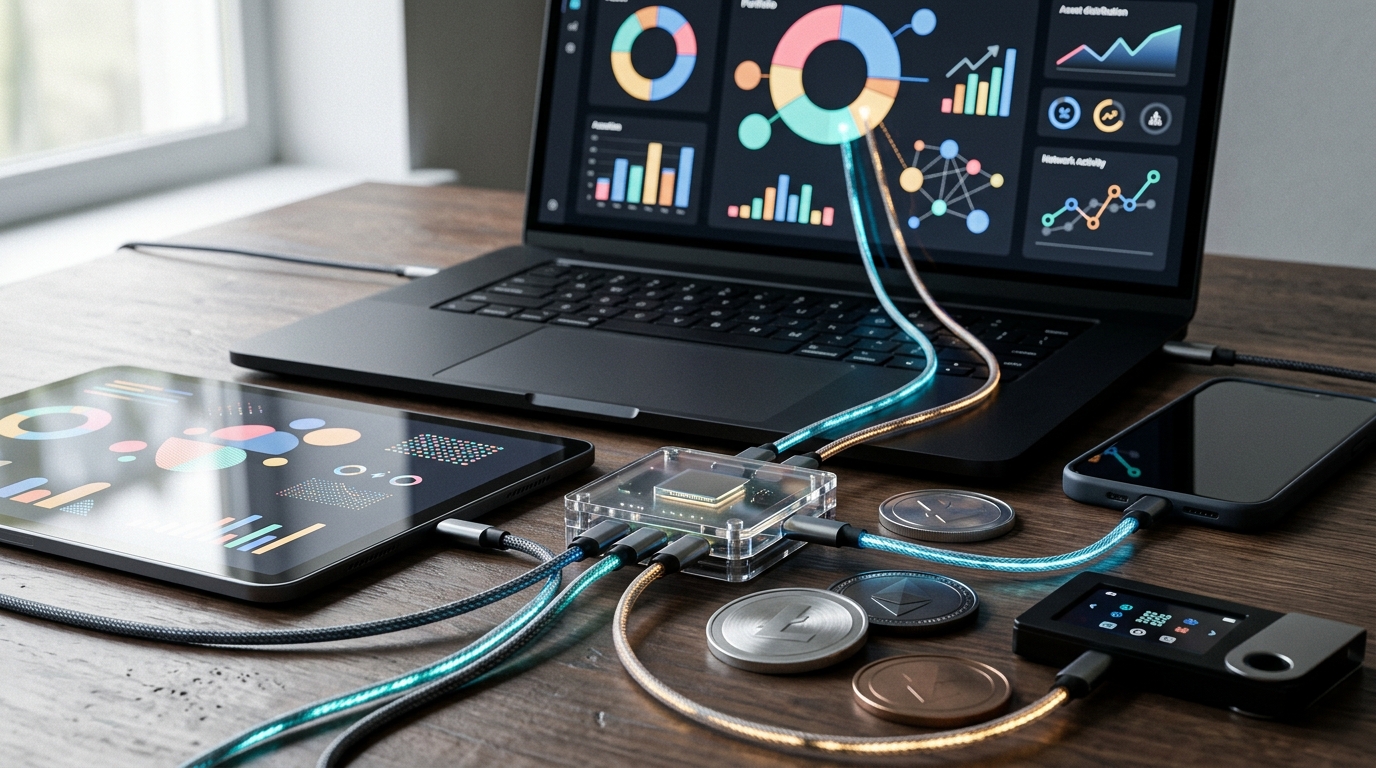
In a crypto portfolio tracker comparison, do not stop at the biggest integration number. Check whether the tracker connects to your exchanges, follows wallet addresses across the blockchains you use, and imports complete transaction histories instead of showing only current balances. Reported integration counts are not directly comparable because one provider may count exchanges, wallets, blockchains, protocols, or individual connectors as separate integrations. A “wallet integration” might mean simple address tracking, while another service may include token transfers, fees, staking, and smart-contract activity. Verify support for your actual accounts before treating a large number as proof of better coverage.
DeFi and NFT support can vary just as sharply. Some trackers display balances from popular lending, staking, and liquidity platforms, while others miss deposited assets or label complex transactions incorrectly. NFT visibility may be limited to collection names and estimated values, with no reliable cost basis or sales history. Look for clear records of deposits, withdrawals, rewards, swaps, and network fees if you want useful performance or tax data. Broader blockchain coverage matters too, because a tracker that handles one major network well may still leave newer or less common chains incomplete.
Automated imports are usually more useful than manually updating balances because they keep transactions, prices, fees, and cost basis closer to reality. Exchange connections using read-only access and public wallet addresses can reduce repetitive data entry, although you should still review failed syncs and unexpected transactions. Manual entry remains helpful for unsupported assets, cash holdings, private transfers, gifts, or corrections that an import cannot identify. Relying on manual balance updates alone creates stale records and makes small errors easy to miss, especially when you trade often. A strong tracker gives you both dependable automation and simple editing tools when the data needs fixing.
Crypto Aggregators, Multi-Asset Apps, And Free Trackers
A broad crypto portfolio aggregator is the stronger choice when you want more than a simple balance log. These tools may connect with many exchanges and wallets, support DeFi tracking, and add alerts, analytics, mobile apps, and AI features. The exact integration count depends on how each provider defines a connection. You can usually connect accounts through read-only access, but you should still review permissions and enable two-factor authentication wherever available. Paid subscription tiers make more sense for active investors who need automation, deeper analysis, or a larger number of connected accounts. If you only track a few holdings, the extra cost may be hard to justify.
A cross-asset tracker takes a cleaner approach, letting you follow crypto alongside stocks, ETFs, funds, and other investments in one mobile app. Its interface may be easier to scan than a feature-heavy crypto dashboard, but free plans can limit you to a small number of assets, so larger portfolios may require a paid tier. Basic free portfolio tools remain useful for manual entries, watchlists, and price alerts. The trade-off is clear: basic trackers generally offer weaker exchange and wallet automation, reconciliation, and tax-ready records. Choose a broad aggregator for coverage and automation, a polished multi-asset app for a combined investment view, or a free tracker if simplicity matters more than hands-off management.
Taxes DeFi And Privacy Tools
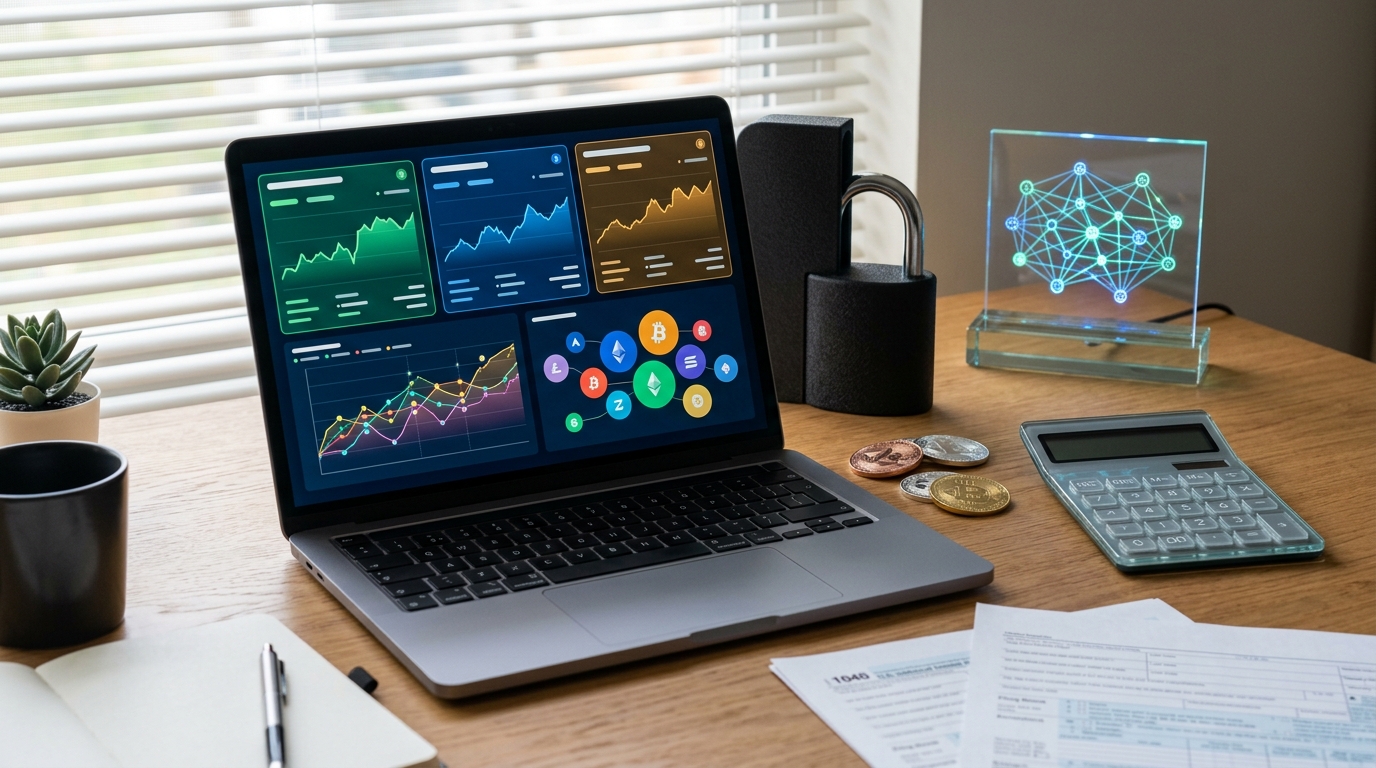
Dedicated crypto tax platforms are the stronger picks when tax reporting is the main reason you need a portfolio tracker. They focus on matching transfers, calculating cost basis, and turning messy transaction histories into tax-ready reports. That automation can save you hours, but only if you connect every exchange, wallet, and chain you use, then review missing or misclassified transactions. Compare supported integrations, transaction limits, report formats, and subscription tiers before paying, because the cheapest plan may not cover an active portfolio.
A wallet-focused tracker makes more sense when your portfolio lives on-chain and you want a native view of DeFi, staking, and NFTs. Its convenience comes from connecting wallets rather than manually entering every position, although complex protocols can still produce incomplete or confusing data. For stronger privacy, open-source, local-first portfolio software takes a different path by keeping more of your financial data under your control. You give up some polished cloud automation, so choose a wallet-focused tracker for ease and DeFi visibility, or local software when transparency, local storage, and reduced data sharing matter most.
Pricing Security And Automation
Judge a crypto portfolio tracker by what it actually saves you, not by the length of its feature list. A free plan may cover manual entries, basic watchlists, and price alerts, while paid tiers often add more assets, exchange and wallet connections, tax-ready reports, advanced analytics, and priority support. Check the limits closely, especially the number of portfolios, transactions, alerts, and connected accounts. AI tools can help explain performance or spot unusual changes, but they are conveniences, not financial advice or a substitute for reviewing the underlying data.
Security should outrank sleek design when you compare portfolio trackers. Look for two-factor authentication, strong encryption, clear data-retention rules, and read-only connections that let the app view balances and transactions without placing trades or moving funds. Never grant withdrawal, trading, or transfer permissions when a tracker only needs account visibility. Also check where your data is stored, whether the provider shares it, and whether you can delete your account without leaving sensitive connection details behind.
Automation is valuable only when you can verify its work. Before subscribing, test whether the tracker imports transactions accurately, handles transfers between your own wallets, refreshes balances reliably, and flags missing or duplicated activity. Export options matter because your records should not be trapped inside one service, so look for downloadable CSV, spreadsheet, or tax-report files. The strongest choice is the plan that gives you dependable automation and useful alerts while keeping permissions narrow, costs predictable, and your data portable.
Conclusion To Crypto Portfolio Tracker Comparison
The best choice in a crypto portfolio tracker comparison depends on how you manage your investments today. A broad aggregation platform suits you if you want exchange, wallet, DeFi, alerts, analytics, and automated syncing in one place, while a cross-asset tracker makes more sense if you follow crypto alongside stocks, ETFs, and funds. For a small or simple portfolio, a free manual tool may be all you need, but it can require more work and may not reconcile transactions for tax purposes. Investors focused on reporting should choose a dedicated tax platform, while DeFi users need support for wallets, protocols, and on-chain activity. Privacy-conscious users may prefer software that keeps data locally rather than sending every portfolio detail to a cloud service.
Before you pay for any plan, test your real exchange and wallet imports instead of trusting an integration list at face value. Confirm that prices, balances, transaction history, and supported networks appear correctly, since providers count integrations in different ways and pricing can change by country, taxes, promotions, or billing cycle. Review API permissions, two-factor authentication, login alerts, data storage, and any option to disable trading access. Then compare free limits, automation features, alert tools, tax exports, and subscription tiers against the way you actually invest. The right tracker is not the one with the loudest feature list, but the one that saves you time without creating new security, pricing, or accuracy problems.
Choose Your Crypto Portfolio Tracker
The right crypto portfolio tracker depends on how much of your portfolio you want to automate. Compare exchange and wallet integrations, but remember that reported integration counts are not directly comparable because providers may count connectors, blockchains, protocols, or individual services differently. Security should come first, so look for read-only connections, strong account protection, and clear data policies. Then check whether automation, DeFi tracking, alerts, tax reports, and performance analytics justify the subscription cost.
A free tracker can work well for a small portfolio, manual updates, watchlists, and basic price alerts, while active investors may need broader coverage and reliable transaction syncing. Do not choose based on a flashy feature list alone. Test the interface, confirm supported assets, and check the limits on each pricing tier before paying. If crypto signals are also part of your strategy, explore independent crypto signal service reviews to make more informed decisions. A careful comparison helps you choose software that fits your habits, protects your data, and gives you useful information without paying for tools you will never use.
Frequently Asked Questions
1. What is a crypto portfolio tracker?
A crypto portfolio tracker brings your exchange accounts and personal wallets into one view. It shows your total balance, asset allocation, gains, losses, and portfolio changes without forcing you to check every account separately. The best tools reduce manual work instead of creating another spreadsheet to maintain.
2. What should you compare when choosing a crypto portfolio tracker?
Start with the accounts, wallets, blockchains, and assets you actually use. Then compare automatic syncing, DeFi support, pricing, alerts, tax records, analytics, mobile access, and security controls. Ignore impressive integration totals until you confirm that your specific connections work reliably.
3. Are free crypto portfolio trackers good enough?
A free tracker can work well if you hold a small number of assets and need only basic balance tracking. Free plans often limit connected accounts, refresh speed, alerts, transaction history, or advanced reports. Check the exact caps before you move your data, because a low starting price can turn into a subscription once your portfolio grows.
4. How do crypto portfolio trackers connect to exchanges and wallets?
Exchange accounts usually connect through read-only API keys, while personal wallets connect through public wallet addresses. Read-only access lets a tracker view balances and transactions without giving it permission to trade or withdraw funds. Never share a seed phrase or private key, and review every permission before connecting an account.
5. Can a crypto portfolio tracker handle DeFi and multiple blockchains?
Some trackers support DeFi protocols, staking, liquidity pools, NFTs, and activity across several networks, but coverage varies sharply. A platform may show a wallet balance while missing smart-contract positions, rewards, transfers, or unusual tokens. Test your most important wallet and DeFi activity before trusting the tracker as your complete source of truth.
6. How accurate are prices, balances, and performance reports?
Accuracy depends on the data source, connection quality, token coverage, and how the app handles transfers between your own accounts. A tracker can double-count funds, miss a transaction, or use a weak price source, especially with smaller tokens and DeFi positions. Compare its figures with your exchange and wallet records before making investment or tax decisions.
7. Can a crypto portfolio tracker help with taxes?
Many trackers export transaction histories, calculate gains and losses, and create tax-friendly reports. That does not guarantee a correct tax return, because missing transfers, incorrect cost basis, and local tax rules can change the result. Review the records carefully and use a qualified tax professional when the activity is complex.
8. Which crypto portfolio tracker is right for my portfolio?
Choose based on how you hold crypto, not on the longest feature list. A simple investor may need reliable exchange syncing and clear performance charts, while an active user may need broad DeFi coverage, fast updates, detailed history, and strong export tools. Before paying, connect a small set of accounts and confirm that balances, transfers, alerts, and reports behave as promised.