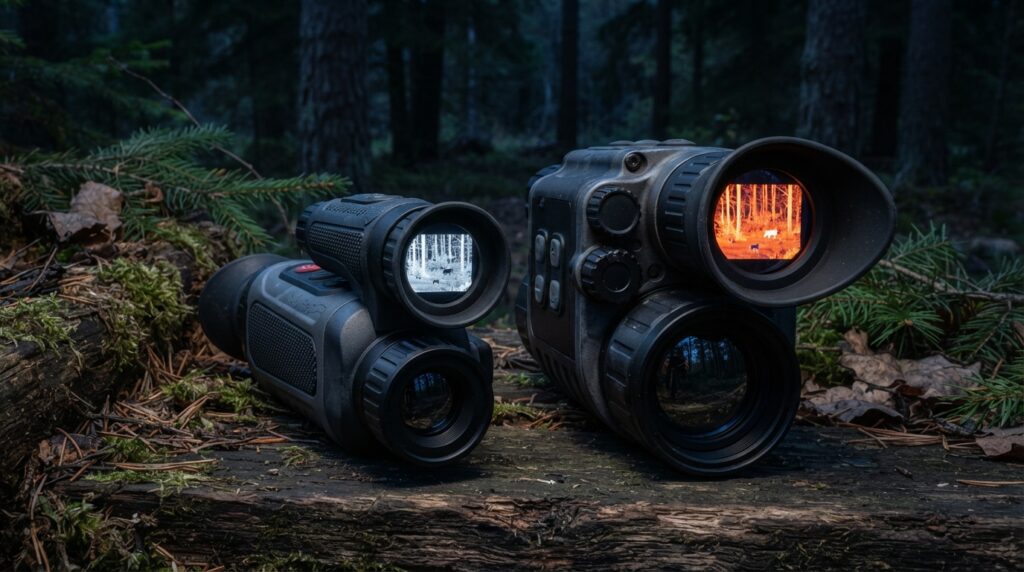
A thermal monocular comparison can save you from buying an expensive gadget that looks impressive on paper but disappoints in the field. You need more than a large sensor number or flashy sales pitch. Image clarity, detection range, battery life, comfort, and controls all matter. The right choice depends on whether you scan wide areas, observe distant subjects, or need a compact viewer for quick, close-range use.
Today’s strongest options offer sharper HD images, better low-contrast performance, wider views, built-in ranging, and smoother image handling. Premium features can drive the price up quickly, though, and not every upgrade is worth the cost. Here’s how to separate real-world value from marketing noise before you spend your money.
Key Takeaways
- Choose a thermal monocular based on your actual use case—wide-field scanning, close-range checks, or long-distance observation—not the biggest specification on the sales page.
- Sensor resolution matters, but lens quality, magnification, sensitivity, image processing, and field of view determine real-world clarity and whether you can recognize a target rather than merely detect heat.
- Thermal excels at detecting heat in darkness and light cover, while night vision usually provides more natural surface detail when ambient light is available; neither technology sees through dense brush, walls, or heavy fog.
- Prioritize practical field performance, including battery life, weight, one-handed controls, stabilization, weather resistance, charging options, and useful features such as recording or a rangefinder, because premium specifications are valuable only when they solve a real need.
Sensor Resolution And Detection Range
A 384×288 thermal sensor can be a sensible choice for close to mid-range viewing, especially when you want a smaller, lighter monocular. A 640×512 sensor gives you a clearer image, smoother digital zoom, and a better chance of spotting useful detail at a distance. HD sensors, such as 1024×768 or 1280×1024, sit at the top end and provide the sharpest view, but they usually cost more and may use more battery. Do not treat resolution as the whole story. Lens quality, image processing, and sensor sensitivity also affect what you actually see. The jump from detection to recognition is where extra pixels start to earn their keep.
Lens size and magnification determine how that detail reaches your eyes. A smaller lens with low magnification usually gives you a wider field of view, making it easier to scan open ground, follow moving animals, or find a target quickly. A larger lens, often paired with higher base magnification, gathers more thermal energy and produces a tighter view that can reveal more detail at longer distances. That narrow view can feel restrictive during a search, so you may prefer a wide lens for scanning and a larger lens for watching a known area. Digital zoom can help, but it cannot create detail that the sensor and lens never captured.
Read claimed detection ranges with a skeptical eye. They usually mean you can notice a heat source, not identify exactly what it is. A manufacturer may list a range of 1,000 meters or more, yet real results depend on the target’s size, temperature, weather, background, and your ability to hold the monocular steady. For practical shopping, compare the full setup instead of chasing the biggest number. Sensor resolution, lens size, base magnification, field of view, and stated range should all make sense together. If you scan broad areas, prioritize a wider field of view. For long-distance observation, favor a higher-resolution sensor and larger lens.
Thermal Versus Night Vision
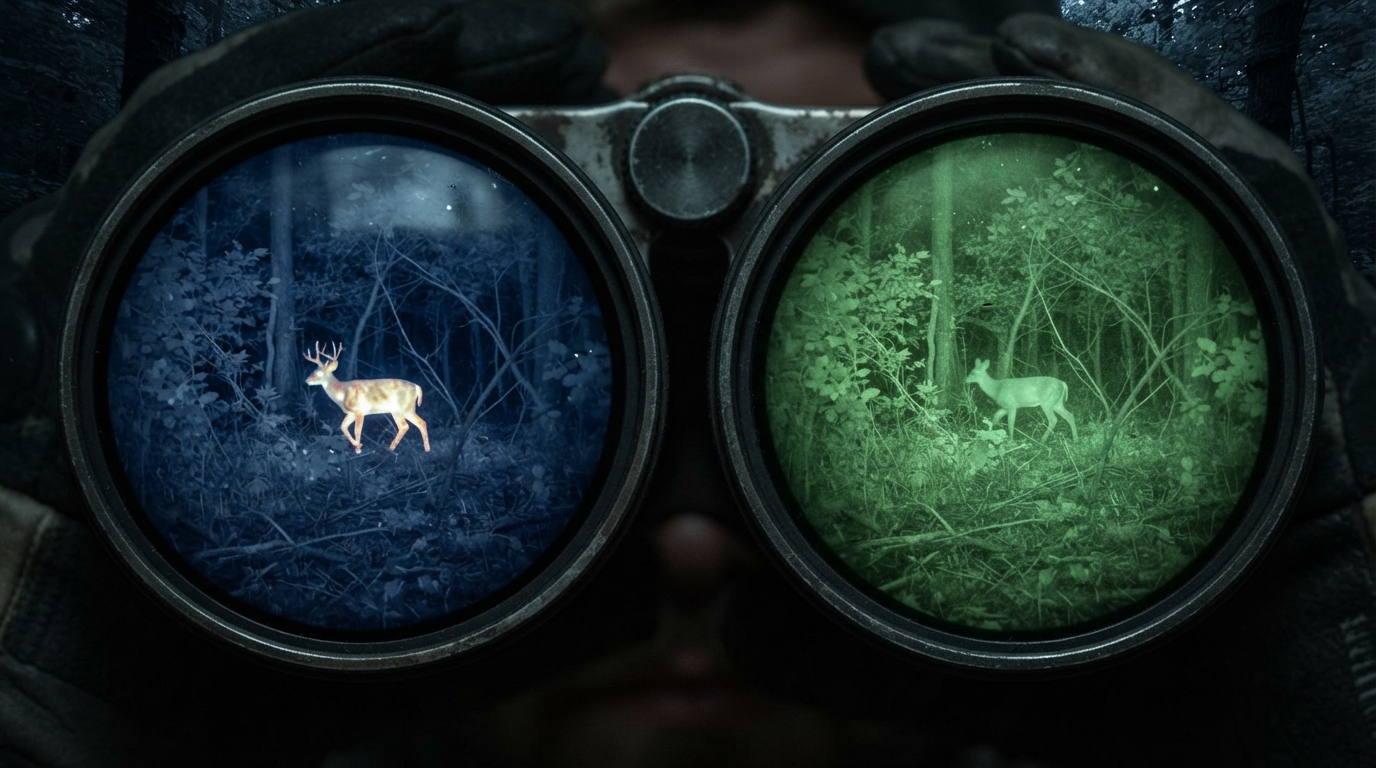
A thermal monocular detects heat differences, while night vision amplifies available light. That gives thermal a clear edge in total darkness, where it can reveal people and animals without moonlight or an infrared illuminator. Night vision often produces a more natural-looking image, so you may recognize faces, clothing, trails, and other fine details more easily when some ambient light is present. In a thermal monocular comparison, think of thermal as the stronger detection tool and night vision as the sharper recognition tool.
Your environment matters as much as the device. Thermal can help you spot warm targets in wooded areas, behind light cover, or against a dark background, but dense vegetation still blocks both technologies. Fog, heavy humidity, and rain can reduce thermal contrast and shorten its useful range. Night vision may struggle even more when there is little light or when moisture reflects infrared illumination. Light rain is usually manageable for either option, but neither device can see through thick fog, walls, or solid brush.
For target identification, thermal shows you where heat is, but it may not tell you exactly what you are seeing, especially at longer distances. A higher-resolution sensor, wider field of view, image stabilization, and built-in ranging can make scanning and distance judgment much easier. Night vision may deliver better visual detail in suitable lighting. Battery life varies by model, magnification, recording, and screen brightness, so check real operating times instead of trusting vague marketing claims. Choose thermal for fast detection, wildlife observation, search tasks, or complete darkness. Choose night vision when image detail, familiar shapes, and longer viewing sessions matter most.
Battery Life And Field Controls
Battery life can decide whether a thermal monocular helps you or becomes dead weight in the field. Compare real-world runtime, not just the maker’s best-case number, and look for replaceable batteries if you spend long nights away from a charger. USB-C charging is convenient in a vehicle or with a power bank, but confirm whether the port supports charging during use. A rugged, weather-resistant body also matters because rain, dust, and cold can expose weak seals quickly. The best one-handed controls let you change zoom, palettes, recording, and brightness without taking your eye away from the display.
Image quality involves more than sensor resolution on a spec sheet. A sharp display, useful refresh rate, and image stabilization can make moving animals easier to track, especially when you scan across rough ground or view from an unsteady position. Onboard recording lets you review findings later, while generous internal storage keeps you from constantly deleting clips in the field. A built-in laser rangefinder can save you from carrying another device, but check its stated range and how quickly you can activate it with one hand. If the controls are buried in menus, impressive hardware will not feel impressive when the action starts.
Your choice should match how you plan to use the monocular, not just how many features appear in the advertisement. For broad-area scanning and longer observation, prioritize a wide field of view, strong battery options, a fast refresh rate, and reliable stabilization. For close-range checks, a compact design, clear display, simple recording, and comfortable one-handed operation may matter more than maximum storage or extreme detection range. Thermal viewing can reveal heat in darkness and light cover, while night vision may provide a more natural scene when enough ambient light is available. Consider whether you need one or both capabilities. Before buying, check the control layout, weather rating, charging method, storage capacity, and battery replacement process.
Thermal Monocular Models Compared
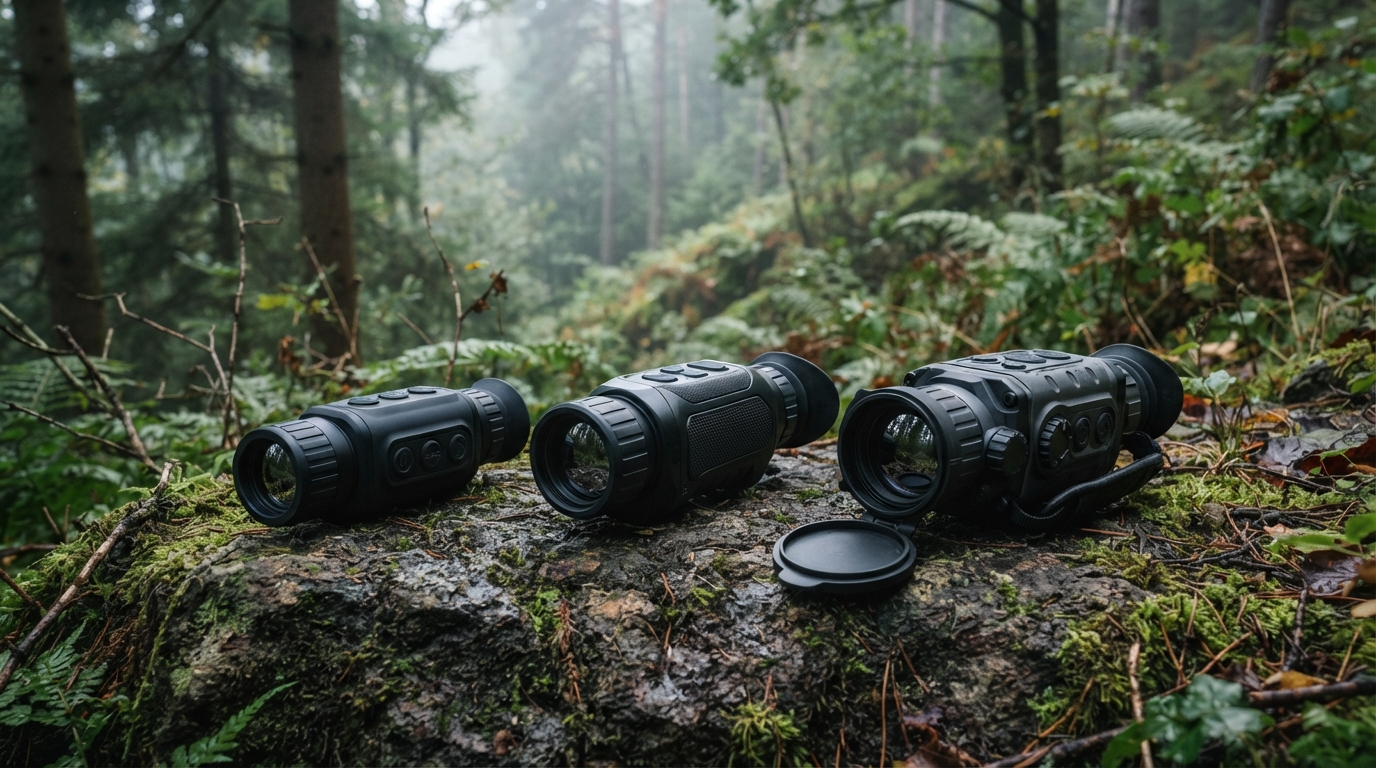
A compact entry-level thermal monocular is a practical choice for close-range scanning, property checks, and occasional outdoor use. These models are usually lighter, easier to carry, and less expensive, but their shorter detection range and smaller sensors show less detail at a distance. A 640-class viewer gives you a sharper image and better target separation, especially in cluttered areas, while an integrated rangefinder helps you judge distance before you act. If you are comparing night vision with thermal, remember that thermal can reveal heat signatures in darkness, brush, and light fog, while night vision often provides a more natural-looking scene.
Premium long-range units are built for users who need more reach, stronger magnification, and steadier images during extended observation. Larger lenses can improve detection distance, but they also add weight, cost, and a narrower view, so they are not automatically better for every job. HD thermal monoculars provide even more image detail, making it easier to identify shapes and follow movement, while low sensitivity ratings can help separate small temperature differences. Battery life still matters because high-resolution screens, recording, stabilization, and ranging can drain power faster than basic viewing.
Wide-field public-safety viewers take a different approach by showing more of the scene at once. That can help with search work, patrols, and fast-moving activity. You give up some long-distance magnification, but you gain better situational awareness and less need to sweep back and forth. Before buying, compare detection range, image clarity, battery runtime, controls, weather resistance, storage, and whether the rangefinder is genuinely useful for your work. For any affiliate recommendation, verify the product details and use only approved direct links. Do not trust bold claims that are not backed by clear specifications.
Choose the Right Thermal Monocular for Your Needs
The right thermal monocular depends on what you need to see and how far away you need to see it. A higher-resolution sensor produces a clearer image and helps you identify details at a distance, while a sensitive sensor, especially one rated below 20 mK, can reveal small temperature differences in fog, brush, or light rain. Lens design matters just as much. A larger lens improves long-range reach, while a wider field of view helps you scan trails, fields, or buildings faster. Do not ignore battery life. A brilliant image is useless when the device shuts down halfway through a search.
Your best choice should match the job, not the biggest number on the sales page. Choose a compact scanner for close-range checks and easy carrying, a long-range observer with a larger lens and strong magnification for distant targets, or a search-and-rescue viewer with a wide view, long runtime, image stabilization, and a built-in laser rangefinder. If you want a thermal alternative to night vision, remember that thermal detects heat rather than reflected light. It can work in darkness and often through light cover, but it will not show the same surface detail as conventional night vision. Before you buy, compare real battery performance, controls, warranty terms, and ranging accuracy.
Frequently Asked Questions
1. What should you compare first when choosing a thermal monocular?
Start with image quality, detection range, battery life, weight, comfort, and control layout. A large sensor number can look impressive, but lens quality, image processing, and sensor sensitivity also shape what you see in real use. Match the monocular to your main task instead of paying for features you will rarely use.
2. Is a 384×288 thermal sensor good enough?
Yes, a 384×288 sensor can be a smart choice for close to mid-range viewing. It is often smaller, lighter, and more affordable than higher-resolution options. Choose it when portability and quick scanning matter more than fine detail at long distances.
3. Is a 640×512 sensor worth the extra cost?
A 640×512 sensor gives you a clearer image, smoother digital zoom, and a better chance of recognizing useful details at longer distances. It makes the most sense when you regularly observe far-off subjects or need more confidence in what you are seeing. If you only scan nearby areas, the price increase may not deliver enough real-world value.
4. Do higher resolution and detection range mean the same thing?
No. Resolution helps you see finer detail, while detection range describes how far away you may notice a heat source. Lens size, magnification, thermal sensitivity, and image processing all affect performance, so do not judge range from resolution alone. The key test is recognition, meaning whether you can identify what you are looking at, not simply notice that something is there.
5. How does lens size affect a thermal monocular?
A smaller lens with lower magnification usually gives you a wider view, which helps you scan open ground and track moving animals. A larger lens gathers more thermal energy and creates a tighter view with more detail at longer distances. The tradeoff is simple: wide lenses help you find things, while larger lenses help you study something you have already located.
6. What field of view should you choose?
Choose a wide field of view if you search large areas, follow movement, or need to locate subjects quickly. A narrower field of view works better when you watch a known area or focus on distant objects. If you are unsure, prioritize a model that balances a useful base view with practical digital zoom instead of chasing the highest magnification.
7. How important are battery life and weight in a thermal monocular?
They matter more than many sales pages admit. A powerful monocular is not useful if it feels tiring to hold or runs out of power before your session ends. Compare expected battery life, charging options, total weight, and grip comfort, especially if you plan to carry or use it for several hours.
8. Are premium thermal monocular features worth paying for?
Only when they solve a problem you actually have. Built-in ranging, smoother image handling, sharper HD views, and stronger low-contrast performance can be valuable, but they can also push the price up quickly. Focus on features that improve your viewing distance, image clarity, or ease of use. Ignore flashy upgrades that add little in the field.