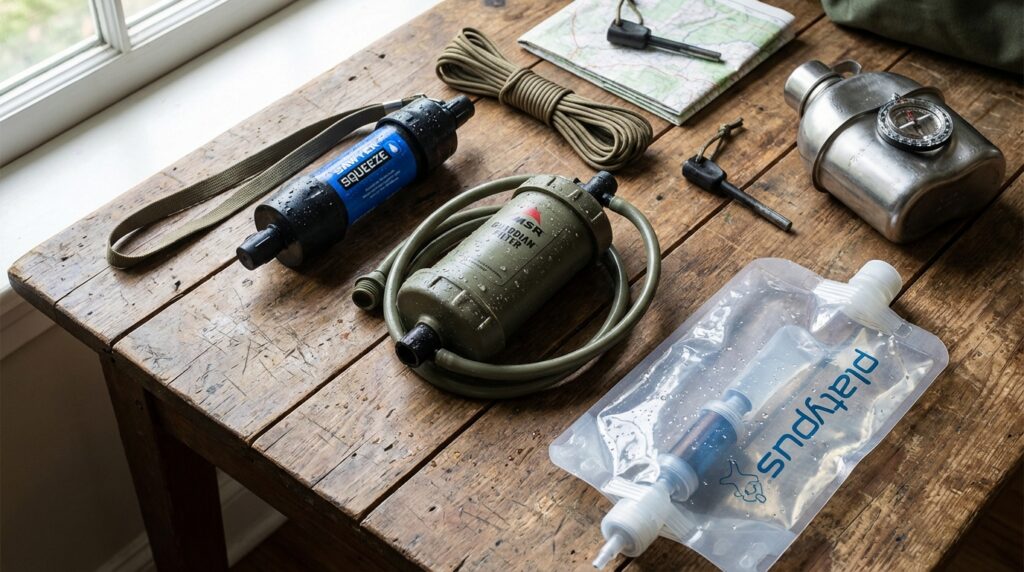
You’re standing by a murky stream with a parched throat, realizing that the crystal-clear water in front of you is actually a cocktail of bacteria and parasites. Marketing teams love to sell you “magic” straws that promise the world, but you need to understand the different survival water filter types before your life actually depends on one. We’ve seen the flashy ads for overpriced gear, yet the truth is that most of these tools rely on just a few core technologies to keep you from getting sick.
Forget the hype about “secret military tech” and focus on what actually works: physical barriers like hollow fibers and ceramic shells that stop pathogens in their tracks. Modern gravity systems are finally ditching the hand-pumping headache, offering high-capacity flow that lasts for years rather than weeks. You deserve a filter that survives the grit of the real world, not just a glossy photoshoot in a backyard. It’s time to cut through the fluff and look at the gear that actually delivers clean water without the nonsense.
Key Takeaways
- Prioritize mechanical filters with an absolute pore size of 0.1 microns to ensure the physical removal of 99.9% of bacteria and protozoa.
- Utilize gravity-fed systems for group hydration or long-term basecamps to eliminate manual labor and reduce mechanical points of failure.
- Incorporate activated carbon or adsorptive technology to neutralize chemical contaminants, heavy metals, and viruses that standard mechanical filters cannot catch.
- Match your filtration hardware to your specific environment, choosing rugged ceramic for longevity or lightweight hollow fiber for high-speed mobility.
Hollow Fiber And Ceramic Mechanical Filters
Hollow fiber and ceramic filters are the heavy hitters of the survival world because they rely on simple physics rather than fickle chemicals. Think of these filters as high-tech microscopic strainers that catch the bad guys before they reach your lips. When you look at a straw or pump system, you are essentially looking at physical barriers with millions of tiny holes designed to let water through while trapping bacteria and protozoa. You do not need a degree in science to see why this works, as it is just a matter of size and surface area. These mechanical systems are your best bet for immediate, on-the-go hydration when you cannot afford to wait for a tablet to dissolve.
The absolute golden rule for choosing one of these tools is checking the pore size, which is usually measured in microns. If a filter has a 0.1 micron rating, it means nothing larger than that can pass through the membrane, effectively blocking 99.9 percent of the nasties that cause stomach issues. You should never settle for a “nominal” rating when you can get an “absolute” rating, because marketing fluff will not save you from a parasite. Ceramic options are fantastic for long-term setups because you can actually scrub the outer layer to unclog it, while hollow fiber tubes offer incredible flow rates for straw and gravity styles.
Choosing between a pump and a straw comes down to how much work you want to do and how many people you are trying to hydrate. Pump filters give you the muscle to pull water from shallow puddles, while straws are the ultimate lightweight backup for your pocket or bug-out bag. You want a system that feels sturdy in your hand and does not require a manual the size of a novel to operate in the dark. We have seen plenty of overhyped gear, but a solid mechanical filter with a tight pore size is one of the few things actually worth your hard-earned cash. Stick to the basics of physical filtration and you will avoid the most common waterborne traps.
Gravity Fed Systems For Large Groups

Gravity-fed systems are the ultimate “set it and forget it” solution when you are managing a group or setting up a permanent basecamp. Instead of spending your afternoon hunched over a stream pumping a handle until your arms ache, you simply fill a high-capacity reservoir and hang it from a sturdy tree branch. These gravity systems use basic physics to push water through the filter membrane, meaning the earth’s gravity does all the heavy lifting while you focus on more important tasks like gathering firewood or securing your perimeter. It is a smart way to work less while ensuring everyone in your party stays hydrated without the constant manual labor associated with smaller portable units.
When you are looking at these hardware options, you will notice they usually feature massive bags that can hold several liters of water at once. This volume is critical for group survival because it creates a central hub for clean water that anyone can access at any time. Most of these setups now utilize advanced hollow fiber membranes that can process thousands of gallons before needing a replacement, which is exactly the kind of longevity you need in a real emergency. You want to look for kits that include easy-to-clean filters and durable hanging straps, as these are the components that will take the most abuse in the field.
The real beauty of the gravity style is how it cuts through the marketing fluff of “high-tech” gadgets that are prone to breaking. By removing moving parts and mechanical pumps, you are eliminating the most common points of failure that leave people stranded with dry canteens. These systems are rugged, straightforward, and built for the reality of long-term outdoor living rather than just a quick weekend hike. While others are struggling with clogged straws or broken plastic handles, you will have a steady flow of purified water ready for cooking, cleaning, and drinking.
Activated Carbon And Adsorptive Purifier Tech
Activated carbon is the heavy hitter you need when your water looks clear but smells like a chemistry set. While basic filters stop the physical gunk, these carbon blocks use a process called adsorption to pull dissolved chemicals and heavy metals right out of the liquid. You can think of it like a chemical magnet that grabs hold of pesticides, herbicides, and chlorine before they ever reach your lips. This technology is essential for anyone prepping in areas where industrial runoff or agricultural spray might be an issue. It turns funky, metallic-tasting water into something that actually tastes like it came from a clean mountain spring.
Adsorptive purifiers take things a step further by using electro-adhesion to trap the microscopic threats that standard filters miss. Most portable filters are great for bacteria, but they are often too porous to catch tiny viruses that can make you seriously ill. These purifiers use a specialized charge to pull those minuscule pathogens out of the flow and lock them away. This is the hardware you want in your kit if you are dealing with stagnant water or urban flooding scenarios. It gives you an extra layer of defense that basic mechanical filters simply cannot provide on their own.
When you are choosing your gear, you will find these technologies packed into various styles like gravity bags, pump systems, or convenient straw filters. Gravity systems are fantastic for basecamps because they do the hard work for you while you set up your tent. Pump styles give you more control and speed when you need to fill a bottle quickly from a shallow puddle. Just as you might rely on a solar generator for home use to keep your electronics running during a blackout, these water systems provide the essential infrastructure needed for long-term self-sufficiency. No matter which style you pick, making sure it has carbon or adsorptive tech ensures you are protected from more than just dirt and bugs.
Match Your Filter to Your Mission
Choosing the right filtration hardware for your bug-out bag comes down to a cold, hard look at your actual survival environment. You do not want to be the person pumping a manual handle for twenty minutes while losing daylight, nor do you want a tiny straw that forces you to lay face-down in a muddy bank. If you are moving solo and fast, a lightweight hollow fiber membrane that screws onto a standard bottle is usually your best bet for speed and convenience. For those hunkering down or traveling with a group, a high-capacity gravity bag is the undisputed king because it lets physics do the heavy lifting while you focus on security.
Do not let flashy marketing or “secret” tech distract you from the reality of maintenance and durability. Ceramic filters are rugged and can be scrubbed clean when they get gunked up, making them a solid long-term choice for a permanent basecamp. However, they are heavy and can crack if you drop them on a rock, which is a massive liability when you are miles from civilization. You need to interrogate your own physical limits and the water sources in your area before committing to a specific style. A filter that works in a clear mountain stream will fail you in a silt-heavy swamp if you do not have the right pre-filter setup.
Ultimately, your gear should be an invisible partner that does its job without a fuss when things go sideways. We have seen too many people buy the cheapest option only to realize it clogs after ten gallons or requires specialized tools to fix. Just as you would research a survival medical kit for your safety, grab a system that matches your pace, whether that is a fast-flow pump for quick refills or a set-and-forget gravity system for the campsite. Make sure you test your chosen hardware before the world catches fire, because the middle of a crisis is the worst time to read an instruction manual. Your survival depends on clean water, so pick the tool that you will actually use when the pressure is on.
Frequently Asked Questions
1. What is a micron rating and why should you care?
Think of a micron rating as the size of the holes in your filter’s net. You need a rating of 0.1 microns or smaller to ensure you are actually catching nasty bacteria and parasites before they hit your glass. Anything larger is just a screen for sand and leaves, not a safety device.
2. Do these filters kill viruses in the water?
Most standard mechanical filters like hollow fiber or ceramic do not remove viruses because those tiny hitchhikers are too small for the pores. If you are in an area with heavy human waste or a known viral threat, you need to pair your filter with a purifier or chemical treatment. Stick to the facts and don’t let a marketing team tell you a basic straw is a magic bullet.
3. How long will a survival filter actually last?
The lifespan depends entirely on how much gunk you are trying to push through it. While some brands claim thousands of gallons, you will see that flow rate drop fast if you don’t backwash it regularly to clear out the trapped sediment. Treat your gear right by cleaning it after every trip or it will clog when you need it most.
4. Are gravity systems better than manual hand pumps?
Gravity systems are the clear winner if you want to save your energy and avoid a forearm workout. You just hang the bag and let physics do the heavy lifting while you set up camp or rest. Pumps are okay for a quick drink, but for real volume, gravity is the superior choice for any serious setup.
5. Can I use these filters to turn salt water into fresh water?
No, these mechanical filters cannot remove salt or chemicals from the ocean. They are designed to trap living organisms like bacteria and protozoa, but salt molecules are far too small to be stopped by hollow fiber or ceramic. You need a specialized desalinator if you are stuck by the sea.
6. How do I know when it is time to throw my filter away?
Your filter will tell you it is finished when the water flow slows to a crawl despite your best efforts to clean it. If you ever drop a ceramic filter and it cracks, toss it immediately because even a tiny fracture lets the bad stuff through. Never risk your health on a compromised piece of gear just to save a few bucks. Understanding the real cost of survival gear means knowing when to invest in quality that won’t fail when your life is on the line. You should also consider a personal survival seed vault for your permanent residence to ensure your family is protected long before an emergency strikes.