Stop treating the best by date on your survival stash like a countdown to a ticking time bomb. The truth about emergency food shelf life is that those stamped dates are often just conservative guesses by manufacturers looking to cover their backs. In reality, your food does not suddenly turn into poison at midnight; its survival depends entirely on how you treat it before the crisis hits.
If you are storing your kits in a sweltering garage or a drafty attic, you are essentially cooking your investment before you ever get to eat it. Temperature is the ultimate dealbreaker, where a simple 18°F spike can literally cut your food’s lifespan in half. To keep your calories potent and your family safe, you need to ignore the marketing fluff and focus on a stable, cool environment that locks in nutrition for the long haul.
Key Takeaways
- The 18-degree rule dictates that for every 18°F increase in temperature, your food’s shelf life is cut in half, turning a 25-year investment into a 5-year liability.
- Garages and attics are the most dangerous storage locations because constant temperature fluctuations compromise packaging seals and oxidize fats.
- Maintain a stable, climate-controlled environment between 50°F and 60°F to preserve the nutritional integrity and flavor of freeze-dried rations.
- Regularly inspect your stash for bloated packaging, loose seals, or metallic odors, as physical integrity is more reliable than a printed ‘best by’ date.
The Impact Of Storage Temperatures On Calorie Longevity
When you drop thousands of dollars on a 25 year food supply, you are essentially buying a caloric insurance policy. However, that 25 year promise on the bucket is not a guarantee if you ignore the 18 degree rule. This rule of thumb dictates that for every 18 degree Fahrenheit increase in temperature, the shelf life of your investment is slashed by half. If you take a kit designed to last two decades at 60 degrees and shove it into a sweltering 96 degree room, you have just traded twenty years of security for a measly five. Heat is a silent thief that aggressively breaks down nutrients and ruins flavor profiles long before the expiration date arrives.
Your garage is likely the most dangerous place in your home for long term food storage because it acts like a thermal rollercoaster. Most people assume a sealed bucket is invincible, but constant temperature fluctuations cause the packaging to expand and contract, which eventually compromises the seal. While a stable 75 degrees is manageable, the extreme highs of a sweltering garage will oxidize fats and turn your emergency stash into a rancid mess. You need to treat these kits like a financial investment rather than just a pile of junk in the shed. Keeping your supply in a temperature controlled basement or a cool closet is the only way to ensure those calories are actually there when you need them.
Professional data confirms that the best by date is really just a conservative estimate for peak quality, but heat can turn it into a hard safety deadline. If you are serious about surviving a long term crisis, you have to prioritize a stable, cool environment between 50 and 60 degrees. This range is the gold standard for preserving both the nutritional integrity and the actual taste of freeze dried meals. Do not let marketing fluff convince you that specialized packaging can overcome the laws of thermodynamics. Protecting your investment means respecting the thermometer and finding a cool, dark corner of your home to house your future meals.
Freeze Dried Versus Canned Goods Expiration Realities
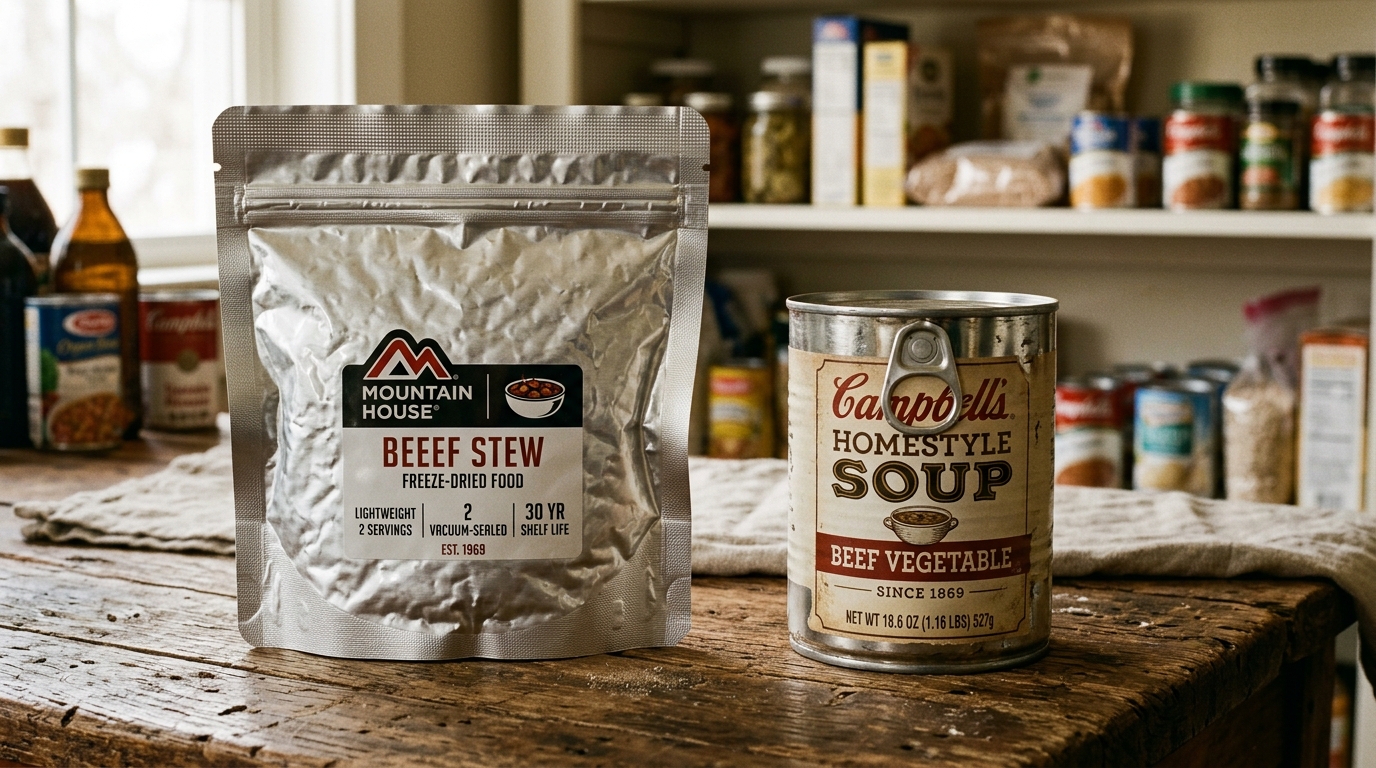
When you are looking at your pantry, those standard grocery store cans might look like reliable anchors, but they are actually short term players in the survival game. Most of these goods carry a best by date of just two to five years, which is a blink of an eye when you are planning for long term security. While the food inside might stay safe to eat past that window, the texture turns to mush and the nutritional value starts to nose dive. You are essentially paying for a ticking clock that requires constant rotation and management. If you do not want to be auditing your cupboards every few months, standard canning is a high maintenance relationship that might leave you hungry when it counts.
Freeze dried kits are the heavy hitters that promise a staggering twenty five to thirty year shelf life, but you have to understand the fine print before you drop your hard earned cash. This longevity is not magic; it is the result of removing nearly all moisture and sealing the food in professional grade Mylar with oxygen absorbers. You are investing in a set it and forget it solution that maintains its crunch, flavor, and vitamins for decades rather than months. This makes freeze dried options the superior choice for anyone who wants to buy their peace of mind once and move on with their life. It is the difference between buying a temporary fix and building a permanent fortress for your family.
The real secret that the slick marketing pages often gloss over is that these twenty five year promises depend entirely on how you treat the product. Temperature is the ultimate deal breaker, as every eighteen degree rise in heat can effectively cut your food’s lifespan in half. If you toss your expensive survival kits in a hot garage or a fluctuating attic, that thirty year investment could rot in less than ten. You need a stable, cool environment between fifty and sixty degrees to ensure those kits actually go the distance. Always remember that packaging integrity is your last line of defense, so keep your stash away from moisture and pests to ensure your investment stays edible for decades to come.
Identifying Degraded Packaging And Spoiled Survival Rations
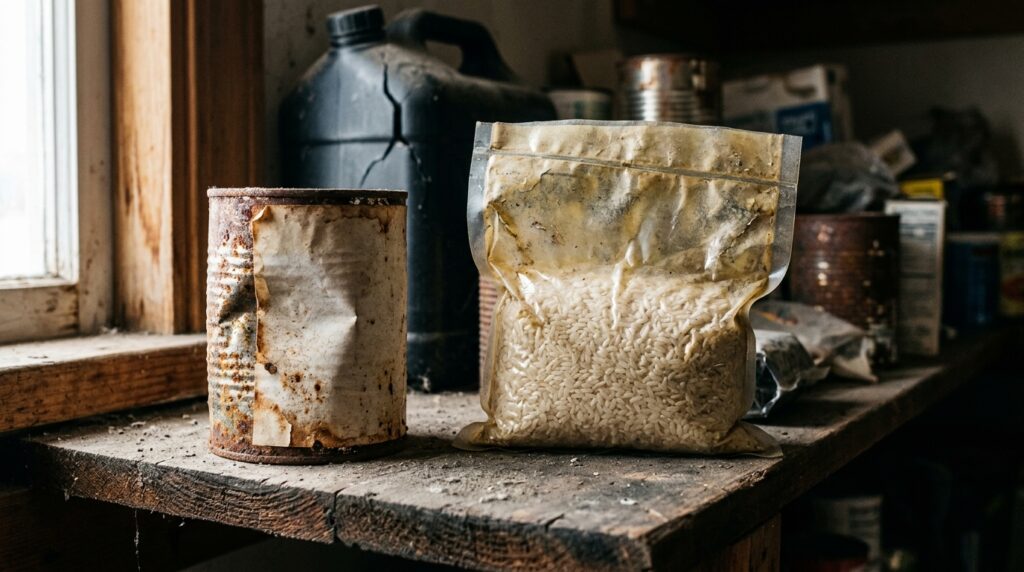
You cannot just glance at a best by date and assume your investment is safe, especially when your family’s survival is on the line. The truth is that even a twenty five year bucket can fail in five years if the seal is compromised or the storage environment is too hot. You need to physically interrogate your food supply by looking for bloated cans or pouches that indicate bacterial gas production. If a vacuum sealed bag feels loose or has lost its brick like hardness, oxygen has likely snuck inside to start the degradation process. Trust your eyes and your hands over a printed label every single time.
Temperature is the silent killer of your emergency rations and it acts much faster than you might think. Recent data shows that for every eighteen degrees the temperature rises, you are effectively cutting your food’s shelf life in half. If you are storing your expensive bulk kits in a hot garage or a fluctuating attic, that twenty five year guarantee is nothing more than a marketing fairy tale. You want to feel for any sticky residue on the packaging which can signal that heat has caused the plastic or foil layers to break down. Keep your stash in a cool, stable environment between fifty and sixty degrees to ensure the quality stays intact.
Oxidation is the enemy of nutrition and flavor, and it leaves behind very specific calling cards if you know where to look. When you open a test sample, check for a stale or metallic odor that suggests the fats in the food have gone rancid. You should also look for any discoloration or dark spots on freeze dried goods which often mean moisture has penetrated the barrier. If the packaging shows signs of pinholes or heavy creasing, the physical integrity is gone and the clock is ticking much faster. Investing in best survival food brands is only half the battle because regular inspection is what actually keeps you prepared.
Heat Kills Your 25-Year Investment
The ultimate reality check for your emergency pantry is that a high price tag does not guarantee a lifetime of safety. You can drop thousands of dollars on a premium 25 year kit, but if you stash those buckets in a sweltering garage, you are essentially flushing your investment down the drain. Recent data confirms that shelf life is a sliding scale rather than a fixed date, and heat is the silent killer of your food supply. For every 18 degree rise in temperature, you are cutting your food’s lifespan in half, meaning that expensive kit might only last five years instead of two decades.
Stop viewing your survival food as a set it and forget it purchase and start treating it like a living inventory. Radical honesty requires admitting that even the best packaging can fail if it is subjected to constant temperature swings or high humidity. You need to interrogate your storage space and ensure it stays between 50 and 60 degrees if you actually want those calories to be there when things go south. The most reliable system is not the one that cost the most, but the one you regularly rotate and monitor for packaging integrity.
Investing in a bulk supply is a smart move for your family’s future, but your job does not end at the checkout page. You have to cut through the marketing fluff and realize that the real cost of survival gear is often tied to how well you maintain it after the purchase. If you keep your stash cool, dry, and stable, you can stretch your dollars much further than the person who buys the flashiest gear and ignores it for a decade. True preparedness is about the discipline of the upkeep, not just the size of the initial transaction.
Frequently Asked Questions
1. Is the Best By date a hard deadline for safety?
Not even close. Manufacturers use those dates as conservative guesses to protect themselves, but your food does not turn into poison the second the clock strikes midnight. As long as you keep your stash away from heat and moisture, most survival food remains safe and edible long after the date on the package.
2. Where is the worst place in my house to store my food?
Keep your buckets out of the garage and the attic. These spots act like thermal rollercoasters that destroy your investment through constant temperature swings. High heat is a silent thief that breaks down nutrients and ruins the flavor of your food way faster than you think.
3. How much does heat actually affect my food’s lifespan?
Follow the 18 degree rule if you want to protect your calories. For every 18 degree Fahrenheit increase in temperature, you are literally cutting the shelf life of your food in half. Storing a twenty year kit in a 96 degree room will turn that two decade security blanket into a measly five year supply.
4. Can I trust the 25-year promise on survival food buckets?
That number is a marketing claim based on perfect conditions, not a guaranteed reality for every home. If you do not provide a stable and cool environment, that 25 year promise is nothing but fluff. You are buying a caloric insurance policy, so treat it like one by keeping it in a climate controlled space.
5. Why do temperature fluctuations matter if the food is sealed?
Constant changes in temperature cause your packaging to expand and contract over and over again. This physical stress eventually compromises the seal and lets in the enemies of freshness. Even a sealed bucket cannot protect your fats from oxidizing if it is trapped in a sweltering environment. Just as you must plan for food, you should evaluate solar generator vs gas options to ensure you have the power needed to maintain a climate-controlled storage area during a blackout.
6. What is the ideal temperature for long term food storage?
Aim for a stable environment around 60 degrees Fahrenheit to maximize your food’s potency. While a steady 75 degrees is manageable, the cooler you go, the longer those nutrients will stay locked in. Consistency is the real secret to making sure your family has high quality fuel when a crisis finally hits. If you are planning for a grid-down scenario, researching a off grid cooking solution will ensure you can safely prepare these stored rations without modern utilities. Do not let marketing hype put your health at risk; just as you must vet your food, you should learn about the survival water filter types that actually work to remove bacteria and parasites in the wild.