
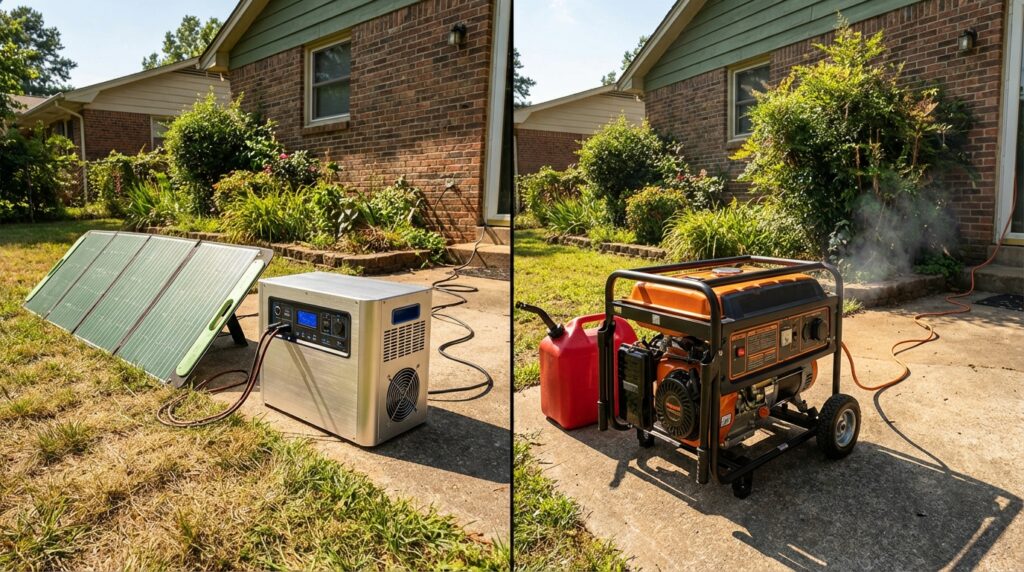
You’re standing in the dark after a storm, weighing the high-stakes choice of a solar generator vs gas to keep your lights on. For years, the loud, grease-stained gas engine was the undisputed king of backup power, but things changed while you weren’t looking. With fuel prices hitting your wallet harder than ever and battery technology finally catching up, that old-school noisy box is starting to look like a relic.
You deserve the truth without the marketing fluff or the sales pitch that ignores your bank account. While gas gives you that raw, immediate punch of power, it demands constant feeding and messy maintenance that eats your weekends. Solar generators have evolved into silent, set-it-and-forget-it workhorses that turn free sunlight into a long-term financial win. Stop guessing and figure out which one actually keeps your family safe without draining your savings.
Key Takeaways
- Solar generators act as a long-term financial investment by eliminating recurring fuel costs, maintenance tasks, and mechanical repairs associated with gas engines.
- Battery-powered stations provide a critical safety advantage by producing zero carbon monoxide, allowing for silent and emission-free operation inside living spaces.
- Gas generators remain the superior choice for raw power and high-wattage appliances, while solar units require intentional energy budgeting based on stored capacity and sunlight availability.
- Renewable power systems offer true energy independence during extended grid failures because they do not rely on vulnerable fuel supply chains or functional gas stations.
Upfront Costs Versus Long Term Fuel Expenses
Choosing between a solar station and a gas generator often comes down to how you prefer to pay for your peace of mind. When you look at high-end LiFePO4 solar units, the initial price tag can give you sticker shock compared to a cheap combustion engine. You are essentially pre-paying for a decade of energy all at once, whereas a gas generator feels like a bargain until you factor in the hidden costs. Think of the solar setup as an investment in your home infrastructure that stops asking for your credit card the moment you plug it in.
The real financial drain of a gas generator starts the second you pull that starter cord and realize you are on the hook for a lifetime of fuel. In a real emergency, gasoline prices skyrocket and supply lines dry up, leaving you with a heavy metal box that is useless without a trip to the pump. Beyond the fuel tax, you have to deal with oil changes, spark plug replacements, and the constant threat of gummed-up carburetors from sitting idle. Solar generators skip this mechanical headache entirely because they have zero moving parts and rely on a fuel source that remains free forever.
Modern LiFePO4 batteries are built to survive thousands of cycles, often lasting ten to fifteen years before you notice any real dip in performance. While the upfront cost is higher, you are buying a silent and indoor-safe tool that requires basically zero maintenance over its entire lifespan. When you crunch the numbers over five years of ownership, the gas generator usually ends up being the more expensive option due to the relentless drip of operating expenses. Investing in solar means you are done spending money the day you bring the unit home, which is a massive win for any smart homeowner.
Indoor Safety And Carbon Monoxide Risks
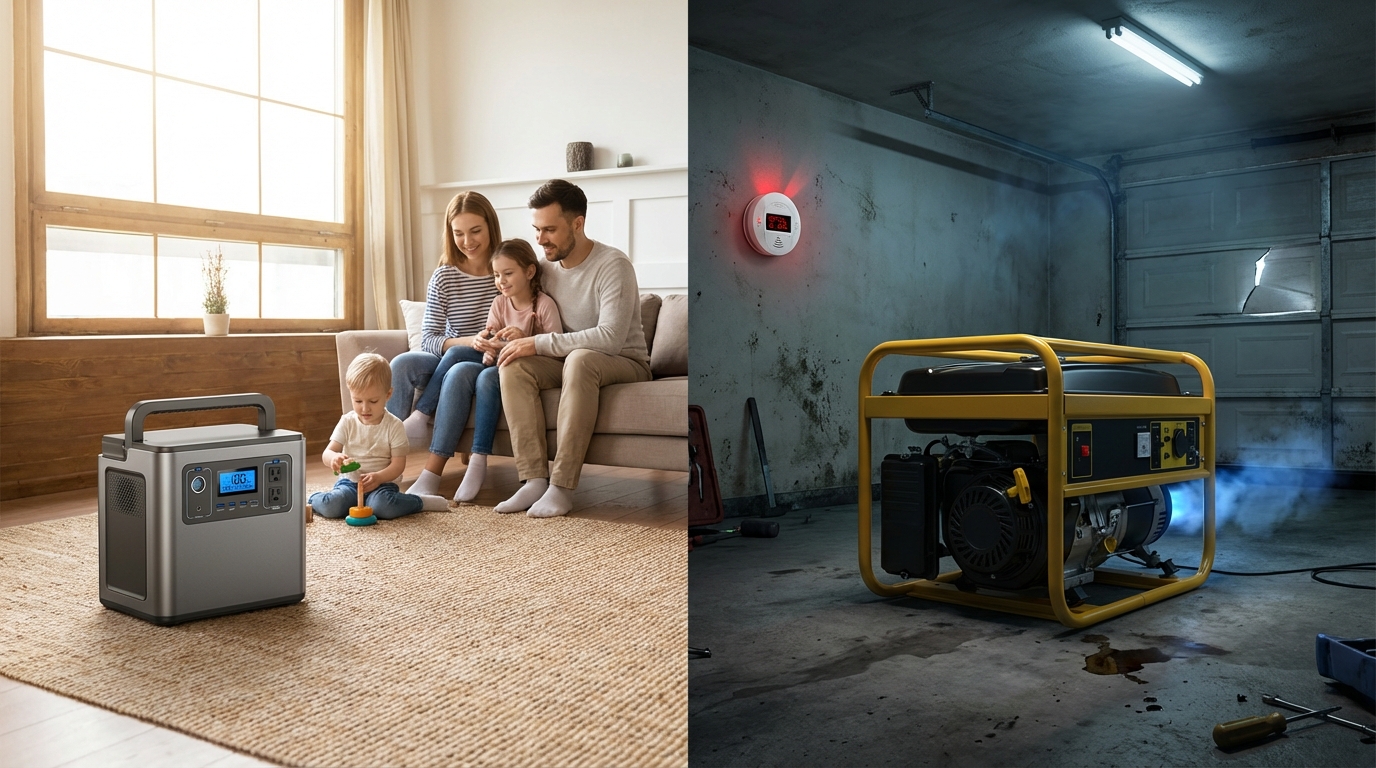
When you are stuck in an apartment during a power outage, your choice of backup energy becomes a matter of life and death. Gas generators are essentially small internal combustion engines that spit out lethal carbon monoxide every second they run. This invisible, odorless killer makes indoor operation an absolute impossibility, forcing you to run long cords through open windows even in freezing weather. If you are living in a tight urban space or a high-rise, a gas unit is basically a non-starter because you simply do not have the ventilated outdoor space required to operate it safely.
Solar generators completely flip the script by offering a silent, emission-free experience that you can keep right next to your bed. Because these units rely on advanced battery technology rather than burning fossil fuels, they produce zero fumes and require no ventilation. You can plug in your phone, your laptop, or even a small medical device without worrying about setting off a carbon monoxide alarm or endangering your family. It is the ultimate peace of mind for anyone who wants to stay powered up without turning their living room into a hazardous exhaust zone.
Choosing solar means you are investing in a system that works with your lifestyle instead of demanding you change it. You won’t have to stockpile dangerous cans of gasoline in your closet or scramble to find a gas station that still has power during a crisis. Instead, you just flip a switch and enjoy instant electricity without the roar of an engine or the stench of fumes. For the modern homeowner or renter, the critical safety advantage of a solar generator for home use makes it the only logical choice for indoor emergency preparedness.
Power Output Limits And Charging Realities
When you pull the cord on a gas generator, you are tapping into raw, immediate punch of muscle that can jumpstart a central AC unit or a massive deep freezer without breaking a sweat. These machines offer a brute force approach to energy where the wattage is limited only by how much fuel you have sitting in your garage. If you need to run a high-draw microwave and a space heater at the same time, gas is the undisputed heavyweight champion of the backyard. However, that power comes with the constant chore of feeding a thirsty engine and dealing with the mechanical stress of moving parts. You are essentially trading the peace of your neighborhood for the ability to ignore your power meter during a blackout.
Solar generators operate on a completely different set of physics that requires you to be much more intentional about your energy budget. While a high-end battery station can certainly keep your refrigerator running for a day or two, it does not have the infinite refill capability of a gas tank if the clouds roll in. You have to play a game of math, balancing how many watts your panels are pulling from the sun against the drain of your appliances. If you are not careful with your consumption, you might find yourself staring at a dead battery screen right when you need it most. It is a cleaner and quieter way to live, but it demands that you respect the limits of your stored capacity.
The reality of current technology is that solar has become a legitimate long-term investment, but it still struggles to match the sheer plug-and-forget convenience of combustion. If your goal is to survive a week-long grid failure with every luxury intact, you will need a massive array of panels that takes up significant space. Gas remains the go-to for raw output because it delivers high wattage on demand regardless of the weather or the time of day. You have to decide if you want the silent, free energy of the sun or the noisy, reliable grunt of an engine. Both strategies have their place, but knowing the hard limits of your wattage is the only way to avoid being left in the dark.
Reliability In Extended Blackouts And Weather
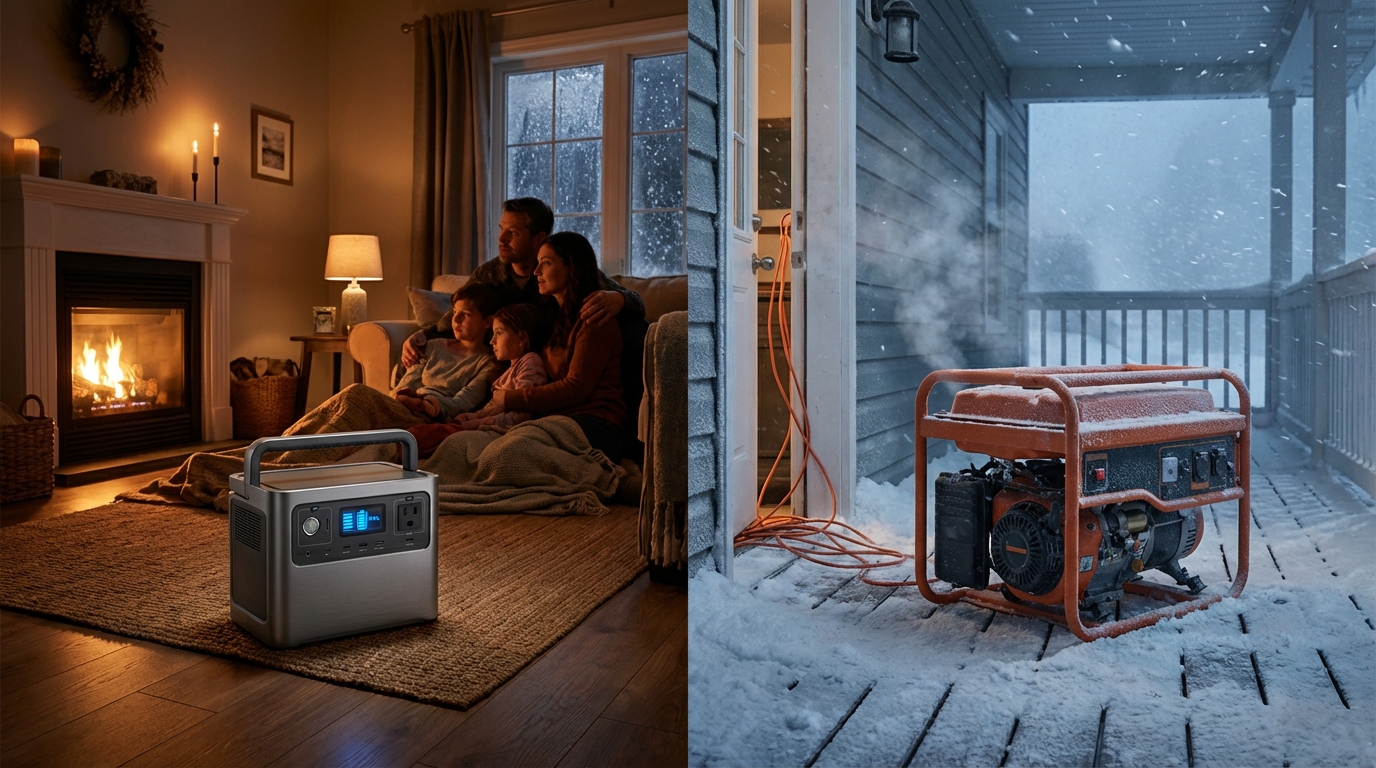
When a massive storm rolls in and the grid goes dark, you need to know exactly where your next watt is coming from. Gas generators are the old-school heavy hitters, but they have a massive Achilles heel that nobody likes to talk about during a crisis. If the local gas station loses power or runs out of fuel due to supply chain chaos, that expensive metal box in your yard becomes a very heavy paperweight. You are stuck waiting in long lines for a resource that might not even be available, leaving you in the dark just when things get serious. It is a stressful cycle of hunting for fuel and hoping the pumps are actually working.
Solar generators flip the script because they turn your home into its own little power plant without needing a single drop of gasoline. Even if the clouds are thick for a few days, modern high-density batteries can store enough juice to keep your essential gear running until the sun peeks out again. You do not have to worry about carbon monoxide poisoning or waking up the entire neighborhood with a roaring engine while you try to sleep. These systems are silent, safe for indoor use, and they keep recharging as long as there is daylight. It gives you a level of independence that a fuel-dependent motor simply cannot match.
Choosing between these two comes down to whether you want to rely on a local gas station or the sky above your house. While gas units offer a quick burst of high energy, they require constant maintenance and a steady supply of flammable liquids to stay alive. Solar setups might take a bit longer to top off during a storm, but they offer a permanent solution that does not cost you a dime in operational fees. You are investing in a off grid power system that works indefinitely, rather than one that expires the moment your fuel can runs dry. For long-term survival and peace of mind, the reliability of a renewable setup is hard to beat.
Upfront Savings vs. Long-Term Freedom
Deciding between a solar generator and a gas unit really comes down to how you want to spend your money over the next ten years. Gas generators are the old-school choice because they are cheap to buy upfront, but they quickly become a headache with constant oil changes, loud noise, and the rising cost of fuel. If you just need raw power for a massive emergency and do not mind hauling heavy gas cans, a traditional unit gets the job done. However, you have to be ready for the maintenance because these machines can be stubborn and finicky if they sit in your garage for too long without use.
Solar generators represent the modern shift toward a set-it-and-forget-it strategy that pays off in the long run. While the initial price tag feels a bit higher, you are essentially prepaying for a decade of free energy without the smell of fumes or the risk of carbon monoxide. These silent power stations are safe enough to keep right next to your bed to keep a CPAP machine or phone running through the night. Since advancements in battery density have made these units more efficient than ever, you are investing in a reliable piece of tech that requires almost zero upkeep. For a deeper look at the latest tech, check out our portable power station comparison to see how the newest models stack up.
Ultimately, your choice should reflect whether you prefer a low entry price or long-term peace of mind. If you want a backup plan that is always ready to go at the push of a button without a trip to the gas station, solar is the clear winner for modern families. You can find high-quality options and detailed breakdowns of the best backup gear in our home energy section. Taking the time to match your specific wattage needs to the right system now ensures your home stays bright when the grid finally decides to go dark.
Frequently Asked Questions
1. Is a solar generator really worth the higher upfront cost?
You are essentially prepaying for a decade of power so you never have to touch your wallet again. While gas looks cheaper at the store, solar stops asking for your credit card the moment you plug it in, making it a smarter long-term investment for your home.
2. What happens if I run out of gas during a long power outage?
If the pumps are closed or the lines are long, your gas generator becomes a useless metal box. Solar generators keep you safe because they rely on free sunlight, which means you have a renewable fuel source that no supply chain crisis can take away from you.
3. How much work goes into maintaining a gas generator?
Gas engines are high-maintenance machines that demand regular oil changes, spark plug swaps, and carburetor cleaning to stay functional. If you want to stop spending your weekends covered in grease, solar is the way to go because it is a silent, set-it-and-forget-it workhorse.
4. Are solar generators powerful enough to replace gas engines?
Modern battery technology has finally caught up, and high-end units can now handle your essential appliances without the noise or fumes. While gas offers a raw punch of power, solar provides a steady and reliable flow that keeps your family safe without the constant roar of an engine.
5. Do solar generators work when the sun isn’t shining?
These units store energy in advanced batteries so you can keep the lights on all through the night. You simply collect the free energy during the day and save it for when you actually need it, which is much easier than hauling heavy fuel cans in the dark. If you are expanding your setup, checking a solar oven price range can help you find more ways to use that free energy for daily tasks.
6. Can I use a solar generator inside my house?
You can absolutely use solar units indoors because they produce zero toxic fumes and operate in complete silence. Gas generators are restricted to the outdoors due to carbon monoxide risks, which makes solar a much more convenient and safer option for your living room.