
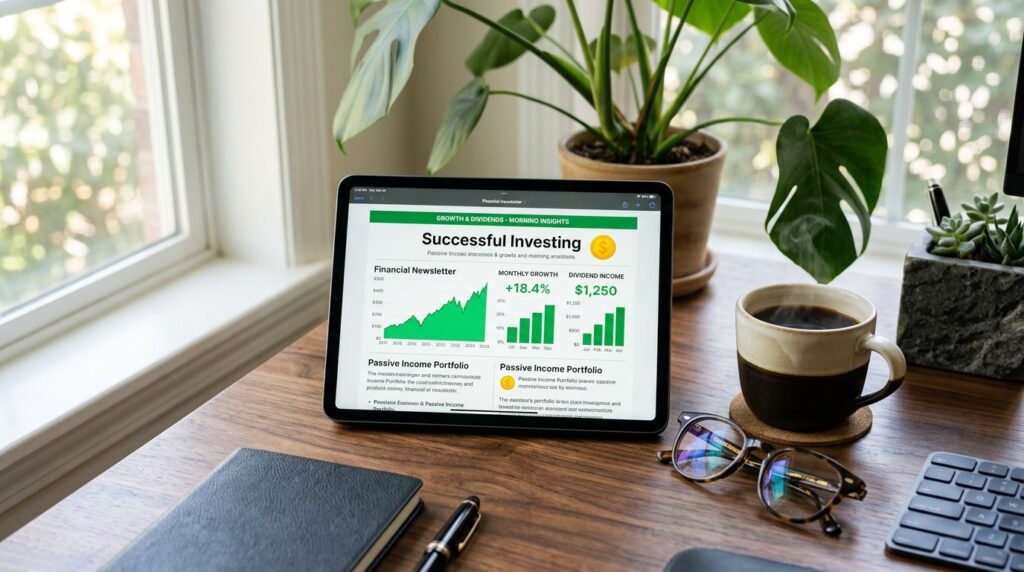
For a decade, dividend investors felt like the forgotten kids at the party while growth stocks grabbed all the glory. That script flipped in 2026, with income strategies finally crushing the broader market and proving that cash flow is king once again. You are likely hunting for the best dividend investing newsletter reviews because you are tired of guessing which yields are real and which are just traps waiting to spring.
We have interrogated the most popular subscriptions on the market to see which ones actually deliver and which are just recycled marketing fluff. You deserve a straight answer about where to put your money without the corporate jargon or empty promises. Stop settling for average returns and start picking the winners that keep your pockets full.
Key Takeaways
- The 2026 market shift has made dividend strategies the dominant force for outperformance, requiring investors to prioritize cash flow and economic moats over high-growth tech speculation.
- Evaluate subscription costs as a percentage of your total dividend income to ensure the expert advice isn’t eroding your net returns compared to a low-cost index fund.
- Avoid the high-yield trap by ignoring flashy marketing and instead interrogating a company’s payout ratio, earnings sustainability, and the newsletter’s real-money track record.
- Select a research service based on transparency and methodology, prioritizing those that offer deep-dive analysis into fair value and clear buy/sell price targets rather than just ticker symbols.
Top Rated Dividend Newsletters For 2026 Market Outperformance
You have likely noticed that the stock market in 2026 has shifted, with dividend strategies finally stepping out of the shadow of high-growth tech stocks. After years of trailing behind, income-focused portfolios are beating the broader market averages, making your choice of investment newsletter more critical than ever. We are tired of seeing flashy sales pages that promise the moon but deliver nothing but outdated spreadsheets and recycled news. You deserve a service that cuts through the noise and identifies companies with real economic moats that can sustain payouts even when the economy gets bumpy.
Choosing the right subscription means looking past the marketing fluff and interrogating the actual data behind the recommendations. We have dissected the top performers to see which ones caught the recent surge in value stocks and which ones were just lucky. Whether you want a data-driven quant model that hunts for momentum or a traditional approach focused on safety and long-term compounding, the right choice depends on your specific goals for 2026 and beyond. We look for transparency in track records and a clear explanation of the risks involved, because a high yield is worthless if the company fundamentals are crumbling beneath your feet.
- Economic Moat Analysis: Look for services that prioritize companies with a competitive edge that protects their profit margins.
- Quant-Based Momentum: Some of the best performers this year use mathematical models to find stocks that are about to break out.
- Real Money Portfolios: We value newsletters where the editors actually put their own cash behind the picks they send to your inbox.
- Dividend Growth Focus: It is not just about the current check, but how much that payout will grow over the next five to ten years.
The reality is that most paid services are just noise, but a few elite options have proven they can help you outperform a basic index fund. You should expect a newsletter to provide more than just a ticker symbol, including deep dives into fair value and clear buy or sell price targets. We are not here to sugarcoat the truth or push a specific agenda, so we only highlight the tools that provide genuine utility for your portfolio. By focusing on services that prioritize radical honesty and rigorous research, you can stop guessing and start building a reliable stream of passive income.
Comparing Subscription Costs Versus Real Money Portfolio Results

You have to ask yourself if that shiny new subscription is actually putting more money in your brokerage account or just draining your wallet every January. It is easy to get swept up in the excitement of exclusive alerts and secret stock lists, but the math has to make sense for your specific portfolio size. If you are paying five hundred dollars a year for a newsletter but only have five thousand dollars invested, you are starting every year with a ten percent loss just to cover the entry fee. We are tired of seeing investors chase high-priced advice that requires a massive capital base just to break even on the subscription cost alone.
The real test comes down to whether these curated picks can consistently beat a simple, low-cost index fund after you subtract those hefty annual fees. In a year like 2026 where dividend strategies are finally showing some muscle, the pressure is on these services to prove they are worth the premium. You need to look past the flashy marketing graphics and focus on the net return, which is what stays in your pocket after all expenses are paid. If a service promises market-beating returns but the subscription eats up half of your dividend checks, you are essentially working for the newsletter publisher instead of making your money work for you.
- Calculate your total annual subscription costs as a percentage of your total dividend income to see the true impact on your yield.
- Compare the net performance of your paid picks against a basic dividend ETF to verify if the expert advice is actually adding value.
- Assess whether the time you spend managing complex alerts from multiple services is worth the potential extra percentage point in returns.
- Ensure the service provides transparent, real-money track record tracking rather than just theoretical models that ignore trading fees and taxes.
We believe in radical honesty when it comes to your hard-earned cash, and that means admitting that sometimes the simplest path is the most profitable. High-energy sales pages love to talk about triple-digit gains, but they rarely mention how many small portfolios get crushed by recurring billing cycles. You should interrogate every line item in your investment budget with the same intensity you use to pick stocks. If the math does not result in a significant boost to your bottom line, it might be time to determine if a trading newsletter cost is actually justified for your strategy.
Identifying Red Flags In Dividend Research Sales Pitches
You have probably seen those flashy sales pages promising a secret dividend stock that will pay your mortgage or retire you in six months. These marketing machines are designed to trigger your fear of missing out, often using high-pressure countdown timers and bold claims of triple-digit gains. As a skeptical insider, you need to look past the hype and interrogate the actual data they are presenting. Many of these newsletters cherry-pick their best historical performers while quietly burying the recommendations that went bust. If a sales pitch focuses more on a lifestyle of luxury than on the boring mechanics of balance sheets, you are likely looking at day trading scams rather than a serious research tool.
The most dangerous lure in the dividend world is the high-yield trap, which many lower-tier newsletters use to grab your attention. A double-digit yield might look like a gold mine, but it often signals a company in deep trouble or a dividend that is about to be slashed. You should be wary of any service that screams about high payouts without explaining the payout ratio or the sustainability of the cash flow. Marketing gurus love to highlight the income today while ignoring the fact that your principal could evaporate tomorrow. Use this checklist to spot the common tricks used to dress up bad investments:
- Aggressive use of secret or hidden stock tickers to create artificial mystery.
- Focusing entirely on trailing yields while ignoring declining company earnings.
- Vague performance charts that do not include the impact of losing trades.
- Promises of guaranteed income that ignore standard market risks and volatility.
When you are reviewing these paid subscription services, always check the fine print regarding their refund policies and risk-free trials. Some of the most aggressive marketers make it incredibly difficult to cancel, hiding the phone number or requiring a long back-and-forth email chain. Transparency is the ultimate green flag, so if a newsletter is not upfront about its failures and its methodology, it does not deserve your hard-earned money. We want to see gritty, honest research that tells you when to stay away from a popular stock just as loudly as it tells you when to buy. Real authority comes from protecting your capital, not just chasing the biggest check in the mail.
The Real Winners Among Dividend Newsletters
Building a portfolio that can actually survive a market meltdown requires more than just picking stocks with high yields. You need a strategy that prioritizes long-term safety and real-world results over flashy marketing promises. While the first half of 2026 has proven that dividend strategies can finally outpace the broader market, you must stay vigilant against services that hide their fees or inflate their success rates. We have interrogated the top players and found that the best options are those providing transparent data and a clear focus on economic moats. You deserve a newsletter that tells you exactly when to buy and, more importantly, when to walk away from a value trap.
The truth is that most investors fail because they get distracted by short-term volatility instead of focusing on consistent cash flow. You need a reliable source that cuts through the noise and treats your hard-earned money with the respect it deserves. We have seen plenty of services claim to have the secret sauce, but only a few actually deliver a portfolio that you can hold forever without losing sleep. By choosing a service that aligns with your specific goals for income or growth, you can stop guessing and start building a legacy. It is all about finding that sweet spot between high-energy momentum and the steady reliability of defensive dividend giants.
Now that you have the facts on which newsletters are worth your time, make sure every other part of your financial strategy is just as solid. If you are looking to protect your capital in other volatile markets, you should learn how to avoid common trading signal service mistakes that drain your account. Our comprehensive guide is designed to help you spot the red flags before they cost you a fortune. Take the next step in securing your financial future by discovering why most passive income streams fail in 2026 and how we can help you handle paid investment advice with total confidence. You should also evaluate the real value of any educational resources you use to ensure they provide a genuine return on your time and capital.
Frequently Asked Questions
1. Why are dividend newsletters suddenly outperforming growth strategies in 2026?
The market script flipped because investors finally got tired of chasing empty promises and started demanding real cash flow. While tech stocks cooled off, income strategies stepped up to crush the broader market by focusing on companies with actual economic moats. You are seeing a return to sanity where tangible payouts matter more than flashy projections.
2. How do I know if a dividend newsletter is just recycled marketing fluff?
You have to look past the shiny sales pages and interrogate the actual data behind their recommendations. We dissect these services to see if they are using outdated spreadsheets or if they actually caught the recent surge in value stocks. If a newsletter cannot explain the why behind a pick without using corporate jargon, it is probably just fluff.
3. What is the biggest red flag to look for in a dividend investment review?
Beware of any service that promises high yields without explaining the risk of a yield trap. We have seen every secret hack out there, and the biggest danger is a newsletter that ignores safety just to show you a big number. If the refund policy is shady or the interface looks like it was built in 1995, keep your money in your pocket.
4. Should I choose a data-driven quant model or a traditional compounding approach?
The right choice depends on whether you want to hunt for momentum or play the long game with safety. Quant models are great for catching quick shifts in the 2026 market, while traditional approaches focus on companies that can sustain payouts when things get bumpy. Both work, but you need to pick the one that aligns with your specific goals for the year.
5. Are these dividend newsletters worth the subscription price?
A good newsletter pays for itself by helping you avoid expensive mistakes and identifying winners that keep your pockets full. We are tired of seeing people settle for average returns because they were too skeptical to invest in expert research. When you find a service that cuts through the noise, the edge you get over the rest of the market is massive.
6. How can I tell if a dividend yield is real or a trap?
Real yields are backed by solid earnings and companies that actually produce something the world needs. We interrogate the cash flow to ensure the company is not just borrowing money to pay shareholders. If the yield looks too good to be true and the newsletter does not mention the payout ratio, you are likely looking at a trap.