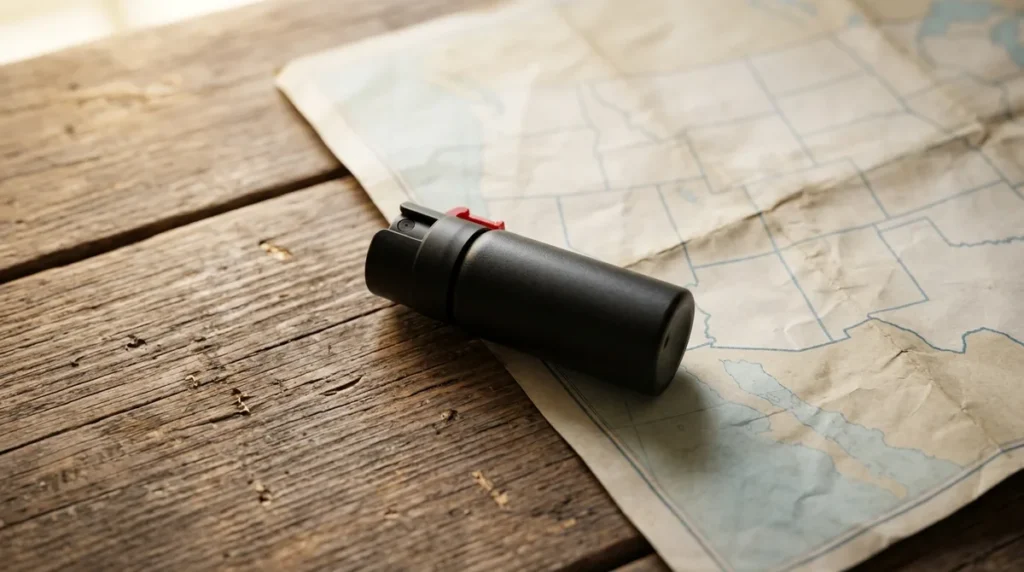
Pepper spray is not banned by federal law, but pepper spray laws by state decide whether you can actually carry one where you live. Under the federal chemical-weapons chapter, an individual self-defense device is not prohibited. Sounds like the end of the story, right? It isn’t. California caps self-defense aerosol spray at 2.5 ounces, and New Jersey allows only one pocket-sized device, and only for adults with no criminal conviction. Federal law leaves the real rules to each state, and those rules control who can possess a spray, how big the canister can be, where it can be sold, and when you can use it.
The differences can be sharp. California allows self-defense aerosol tear-gas spray only up to 2.5 ounces. New Jersey allows one pocket-sized device with no more than three-quarters of an ounce of qualifying chemical substance, and only for adults with no criminal conviction. Massachusetts runs a permit system that can reach younger teens, with a $25 fee and a permit that lasts three years. Cross one state line with the wrong canister and you can be on the wrong side of the law without changing a thing about yourself.
So before you buy, carry, or travel with pepper spray, check your own state’s rules first. The details below will show you exactly what to look for.
Key Takeaways
- Your address needs its own check, because this guide covers only selected states, not all 50.
- Michigan caps oleoresin capsicum content at 18%, so check that percentage on the label before you buy.
- In New Jersey, a 17-year-old cannot legally possess a pocket-sized self-defense spray, no matter how clean the record.
- New York sellers must keep a purchase form for five years after each sale.
- Michigan allows protective use of pepper spray only in situations that would justify physical force.
Is Pepper Spray Legal in All 50 States?
Pepper spray is not banned by federal law, but whether you can carry it depends on the state you are in. Federal law does not prohibit individual self-defense devices such as pepper spray or chemical mace, so owning one is not a federal crime.
Here is the catch. That federal carve-out does not replace state law. Your state still decides who can possess a spray, how big the canister can be, where it can be sold, and when you are allowed to use it. Federal law sets the baseline, and your state adds the rules that actually matter when a police officer pulls you over.
Is there one list that covers every state? Not in this guide. It covers selected states, not all 50, so treat the examples as proof of how states handle the same device differently, not as an answer key for your address.
Even the industry charts admit their limits. ASP, Inc. publishes a state-law chart that warns its pepper-spray information may be incomplete and may change over time. The chart also says it is not authoritative legal guidance. When a company selling these products says that about its own chart, take the warning seriously.
Why does this matter so much? Because the rules can flip the moment you cross a border. New York sets its own limits on who can possess and sell these devices, and Michigan sets its own limits on when you can use one. A spray that is perfectly legal in your home state can become a problem on a road trip, a move, or a visit to a friend across the line.
What Do State Pepper Spray Laws Actually Control?
State pepper spray laws control four things: who can possess a device, how big it can be and what it can contain, where and how it can be sold, and when you can use it. Ask those same four questions about any state and you will know exactly what to check.
Who can possess one? Age and criminal history are the first filters. New York’s possession exemption leaves out anyone under 18 and anyone with specified felony or assault convictions, so a teenager there may fall outside the exemption no matter what the device is.
Massachusetts takes a different route. Its permit system lets a local licensing authority issue permits to eligible applicants ages 15 to 17, and to applicants ages 12 to 14 when a parent or guardian gives written permission.
How big, and what’s inside? Size is its own question. New York’s exemption covers only a pocket-sized device, so a large canister falls outside it. Michigan looks at the contents, allowing a self-defense spray or foam device with no more than 18% oleoresin capsicum. A product can be legal in one state and too strong for another.
Where and how can you buy it? New York treats the sale itself as regulated. Sellers must follow 10 NYCRR Part 54 and 9 NYCRR Part 474, and the seller keeps a purchase form for five years. That means the store, not only you, may hold a record of your purchase.
Massachusetts updated its rules recently. A 2024 law rewrote the state’s pepper spray sections, including the provisions on sales to and permits for people under 18.
- Michigan makes selling a self-defense spray to a minor a misdemeanor.
- The penalty can reach 90 days in jail, a fine of up to $500, or both.
- New York requires a purchase form that the seller keeps for five years.
When can you use it? Michigan allows reasonable protective use of a spray, but only in circumstances that would justify physical force. Owning a device does not give you permission to use it in any situation. The real question is whether the moment itself would justify defending yourself.
Who Can Legally Carry Pepper Spray?
In the states covered here, your age and your criminal record decide who can legally carry pepper spray. Check those two filters before you look at size, brand, or price.
New Jersey is the strictest of the three. Under New Jersey’s self-defense statute, you may possess one pocket-sized device only if you are at least 18 and have no criminal conviction. A 17-year-old is out, no matter how clean the record.
New York takes a different route to a similar place. Its possession exemption leaves out anyone under 18 and anyone with specified felony or assault convictions. Being an adult is not enough by itself, so grown-ups still need to check their record before assuming they qualify.
Massachusetts is the one state here that opens a door for younger teens. A local licensing authority can issue a self-defense-spray permit to eligible applicants ages 15 to 17. Applicants ages 12 to 14 can qualify too, but only if a parent or guardian gives written permission, and the permit rules in Chapter 140 set that framework.
Now the cost, in plain terms. The permit fee is $25, and one permit lasts three years. The licensing authority must approve or deny a completed application within 40 days. Send in a full, correct application the first time.
Massachusetts rewrote these rules in 2024. Chapter 135 of the Acts of 2024 changed the provisions on sales to and permits for people under 18, so an older article may describe rules that no longer apply.
Before you buy or carry, teens and parents should check these things first:
– Exact age on the day you buy or carry the device. – Criminal record, including any felony or assault conviction, since New York and New Jersey both use record-based limits. – Where you will go, because a state where you are allowed to carry can sit right next to one where you are not. – Permit status in Massachusetts, including the $25 fee, the three-year term, and written parent permission for ages 12 to 14.
How Big Can a Pepper Spray Canister Be?
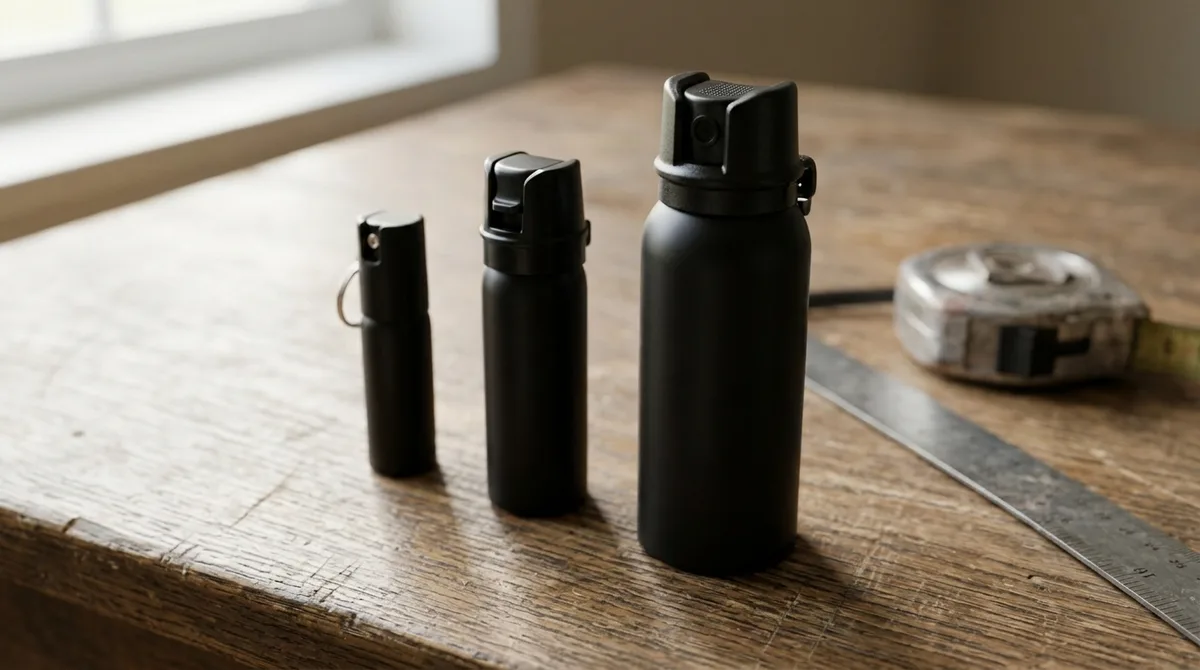
There is no single answer, because each state measures size in its own way. In the states covered here, the law looks at total weight, the amount of chemical inside, or the shape of the device itself.
Start with California. Penal Code § 22810 allows aerosol tear-gas spray for self-defense only if it weighs no more than 2.5 ounces. The California POST training materials summarize that rule, but the statute carries other restrictions too, so weight is only one piece of the picture.
New Jersey works differently. It cares less about the whole can and more about what is inside it. You may possess one pocket-sized device holding no more than three-quarters of an ounce of qualifying chemical substance. A canister can look modest on the shelf and still hold more than that, so the number that matters is the amount of chemical, not the size of the package.
New York takes a third approach and focuses on the shape and purpose of the device. Under New York law, an eligible self-defense spray is a pocket-sized device. The label on the box does not change that definition. If the device is not pocket-sized, the label cannot rescue it.
Why does this trip up so many buyers? A product listing will not tell you which of these tests applies to your address. That big-value pack that looks like a steal might only be a steal in a state with looser limits.
So how do you check before you click “buy”? Try these steps:
– Read the net weight. Look for the weight in ounces on the packaging or listing, and compare it to California’s 2.5-ounce ceiling. – Find the chemical content. Check how much of the qualifying substance the device holds, and measure it against New Jersey’s three-quarters of an ounce. – Ask whether it’s pocket-sized. If you live in New York, a device that is too big to fit in a pocket falls outside the definition, no matter how it is marketed. – Think about where you’ll go. A canister that is legal at home can be illegal in the next state over, so check the rules for every place you plan to carry it.
Can You Buy Pepper Spray in Michigan or New York?
Buying pepper spray in Michigan or New York is not as simple as grabbing a can off the shelf. Each state sets its own sales rules, and the seller has to follow them.
In New York, a quick, no-questions purchase is not the model. The seller keeps the paperwork, and that changes what a sale means for you.
Michigan focuses on who gets the device. Selling a self-defense spray or foam device to a minor is a misdemeanor, punishable by up to 90 days’ imprisonment, a fine of up to $500, or both. That puts real pressure on the person behind the counter, and it means a teen who looks old enough is still a minor under the law.
Here is the trap. A store can stock a spray and still be wrong about whether you can buy it, carry it, or take it across a state line. The shelf tells you what the retailer has. It does not tell you what your state allows.
Stores also set limits of their own. A retailer may refuse a sale for its own reasons, and a store that sells you a device does not make the sale legal under your state’s rules. If the store is willing, that is not the same as the law being on your side.
Before you pay, run a quick check:
– Your age on the day of purchase. In Michigan, a sale to a minor is a crime for the seller, so expect questions. – The device’s size and contents. New York covers only pocket-sized devices, and Michigan caps the oleoresin capsicum content. – Your next destination. A spray you bought legally in Michigan can still be a problem in a state with stricter limits.
If any answer makes you pause, stop and check the rules before you hand over your money.
When Is Using Pepper Spray Legal?
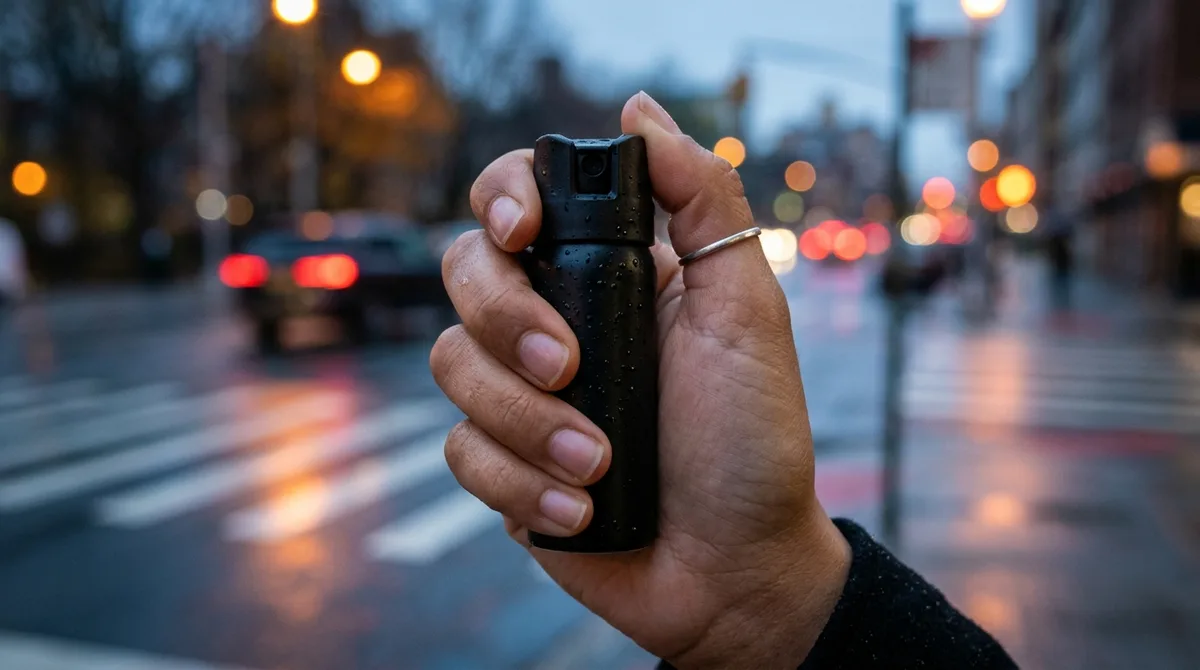
Using pepper spray is a separate question from carrying it, and it depends on the situation you are in. A legal device in your bag does not make every use of it legal. The rules on use are where many people get caught out.
Think of it as two gates. The first is possession: are you allowed to have the device at all? The second is use: when you actually spray someone, was the situation serious enough to justify defending yourself? You can pass the first gate and still fail the second. Spraying someone during an argument you started, or when nobody was really threatening you, is the kind of moment that can get you in trouble even if the can itself is perfectly legal.
Michigan’s use rule also comes with a strength limit. The device can contain no more than 18% oleoresin capsicum. Check the label for that percentage before you buy. A product that sounds tougher is not automatically a better choice, and a stronger formula does not give you more room to use it.
Most people will not have time to run a legal checklist in the middle of a scary moment, so know the questions ahead of time:
– Is someone threatening you or another person right now? – Could you walk away, move to a safe place, or call for help instead? – Would a reasonable person in your position feel that defending yourself was necessary?
If the honest answer to the first question is no, or the answer to the second is yes, pause. The law looks at the situation you were in, not the can in your pocket. Knowing that before you need it is the calm, practical step that keeps a defensive tool from becoming a legal problem.
Check Your State Before You Carry
Start with the state you live in right now. Search your state’s name with “pepper spray statute” or “self-defense spray law,” and read the actual text, not a shop’s summary. Look for the four things covered above: who can possess the device, its size and contents, the sales rules, and when you can use it. If the wording is confusing, your state police or attorney general’s website is a better bet than a product page.
Next, write down your own facts. Note your exact age on the day you plan to carry, whether you have any felony or assault conviction, and whether the device is for a teen. Those answers decide which rules apply to you, and they are the questions a seller or officer may ask.
Then map your route. List every state you’ll drive through, visit, or move to in the next year, and check each one before you pack the canister. A device that was fine at home can become a problem two states later.
Finally, make the call before you buy. If a model sits close to a limit on size, contents, or age, skip it and choose one that clears every state on your list. Checking the paperwork first is the cheapest protection you will ever buy.
Frequently Asked Questions
1. Can I bring pepper spray on a plane?
Air travel adds its own rules on top of state law, and a spray that is legal at home may not clear airport security. Check the airline’s and the security checkpoint’s current rules before you pack, and leave the canister at home if you are unsure.
2. Is mace legal where pepper spray is restricted?
Mace is a brand name that many people use for any defensive spray, so a mace-brand canister follows the same state rules as pepper spray. What counts is the device’s weight, its chemical content, whether it is pocket-sized, and who is holding it, not the name on the label. Check the actual contents on the package before you assume a different name gets different treatment.
3. Can I buy pepper spray at a big-box store?
Whether a big-box chain stocks pepper spray depends on the store and on your state’s rules. Store policy can add limits beyond the law, so a clerk may ask for ID or refuse a sale you are legally allowed to make. Check the store’s online listing or call ahead before you make a trip.
4. What should I do if my state’s law changes after I buy my spray?
Keep your receipt and the product label, then look up the current statute text on your state legislature’s website. Laws change, so a rule you read last year may no longer apply to you. If your spray no longer fits the rules, store it at home rather than carrying it until you know what the current law allows.