A walking pad comparison can save you from buying a sleek-looking machine that wobbles, roars, or barely fits your stride. Prices range from about $200 to more than $2,000, but the biggest differences usually involve belt size, stability, noise, weight capacity, incline, and support after the sale. The right choice depends less on flashy speed claims and more on how and how often you plan to use it.
Do you need a compact pad for occasional steps or a sturdy machine that can handle hours beneath your desk? We cut through the marketing noise and focus on the details you will notice every day, including cramped belts, weak warranties, and machines that are difficult to move. You will get a clearer picture of what is worth your money before you bring one home.
Key Takeaways
- Prioritize belt size, stability, noise, and weight capacity over flashy speed claims. A comfortable, stable belt and sufficient capacity matter most for safe, reliable daily use.
- Match the walking pad to your actual routine and space. Compact models suit occasional walking, while hours of desk use or light jogging require a sturdier, wider, better-cooled machine with appropriate storage dimensions.
- Verify real-world noise, folded size, machine weight, incline, and continuous-use limits before buying. Marketing terms like “quiet” and “compact” do not guarantee comfortable office use or easy storage.
- Evaluate long-term value through warranty coverage, return terms, customer support, maintenance requirements, and replacement-part availability. No ClickBank-listed walking pad with complete specifications is verified here, so confirm all product details on the current listing before purchasing.
Walking Pad Comparison At A Glance
| Verified ClickBank-listed product | Price | Walking speed | Running speed | Belt dimensions | Weight capacity | Incline | Folded size | Machine weight | Warranty | Intended use |
|---|---|---|---|---|---|---|---|---|---|---|
| No listing confirmed from the supplied data | Not verified | Not verified | Not verified | Not verified | Not verified | Not verified | Not verified | Not verified | Not verified | Not verified |
A useful walking pad comparison starts with verified facts, not polished sales copy. The supplied market information does not confirm a ClickBank-listed product with complete specifications, so filling this table with guessed prices or features would mislead you. Before you buy, check the current listing for belt length, top speed, noise claims, weight limit, warranty terms, and return rules. Those details matter more than a dramatic discount banner, especially if you plan to walk for hours while working. Prices and availability can change, so treat any figure shown on a product page as current only when you check it.
For general shopping context, non-ClickBank market models can show the range of features available today, from compact walking-only machines to heavier units built for light running and frequent use. Use those models only as benchmarks for speed, storage, stability, durability, and incline, not as affiliate reviews or recommendations. A short belt may save space but feel cramped, while a heavier frame usually offers better stability and less movement underfoot. You should also compare folded dimensions with your actual storage area and look for independent noise feedback, because the word “quiet” means little without a real-world reference. Once a ClickBank listing is verified, its individual evaluation should replace these broad benchmarks with confirmed details.
Belt Size, Stability, And Weight Limits
A walking pad’s belt size directly affects how natural and secure your stride feels. A short or narrow deck can force you to shorten your steps, watch your feet, or make constant corrections to stay centered. That becomes more noticeable if you are tall, have a longer stride, or plan to jog instead of simply walking. For comfortable use, compare the actual walking surface, not the machine’s outside dimensions or headline speed.
Stability matters just as much as belt length. A solid frame should stay planted when you step, while a weak frame may wobble, shift, or feel shaky as you pick up the pace. Pay attention to the motor’s feel, too. Smooth, steady power is more useful than a flashy top-speed claim that the machine struggles to maintain. A walking pad built mainly for slow desk walking may feel fine under 3 mph but become uncomfortable or loud when you jog.
Your weight is another detail you cannot afford to skim. The stated maximum user weight is a limit, not a target, so extra capacity usually means the frame and motor will feel less strained during daily use. Look for a deck that gives you room to walk without clipping the front or sides, especially if more than one person will use it. In this walking pad comparison, belt dimensions, frame stability, motor response, and weight limits tell you far more about real comfort and durability than an impressive speed number.
Noise, Storage, And Daily Office Use
A walking pad comparison should treat noise claims as a starting point, not a guarantee. A low decibel number may measure motor hum in a quiet room, while real use also includes belt movement, footfalls, and vibration through the floor. On hard flooring, that vibration can travel to the room below even when the machine sounds quiet beside your desk. A thicker mat can reduce rattling and floor noise, but it will not fix a loose belt or strained motor. If you share walls or work during calls, look for user reports that describe actual office use, not just a lab-style sound rating.
Storage matters just as much once the workday ends. Folding models can slide under a bed or stand against a wall, but check the folded height and total weight before trusting the sales pitch. Transport wheels help, yet a machine weighing 50 pounds or more can still be annoying to move around a crowded office. Measure the space beneath your desk, including the height of the walking pad and room for your feet to move naturally. A compact design saves space, but its shorter belt may feel cramped if you take long steps.
Daily workload separates a convenient walking pad from a machine that can survive office duty. A budget model may handle occasional 20- to 30-minute walks, while several hours of daily use demands better cooling, stronger parts, a stable deck, and a clear maintenance schedule. Check the stated weight limit, warranty, belt width, and whether the warranty covers continuous or commercial-style use. Also watch for motor heat, belt hesitation, and rising noise during longer sessions, because those are practical warning signs that a machine is being pushed too hard. The best choice is not simply the quietest or smallest model. It is the one that fits your storage space and can handle your real walking routine.
Speed, Incline, And Long-Term Value
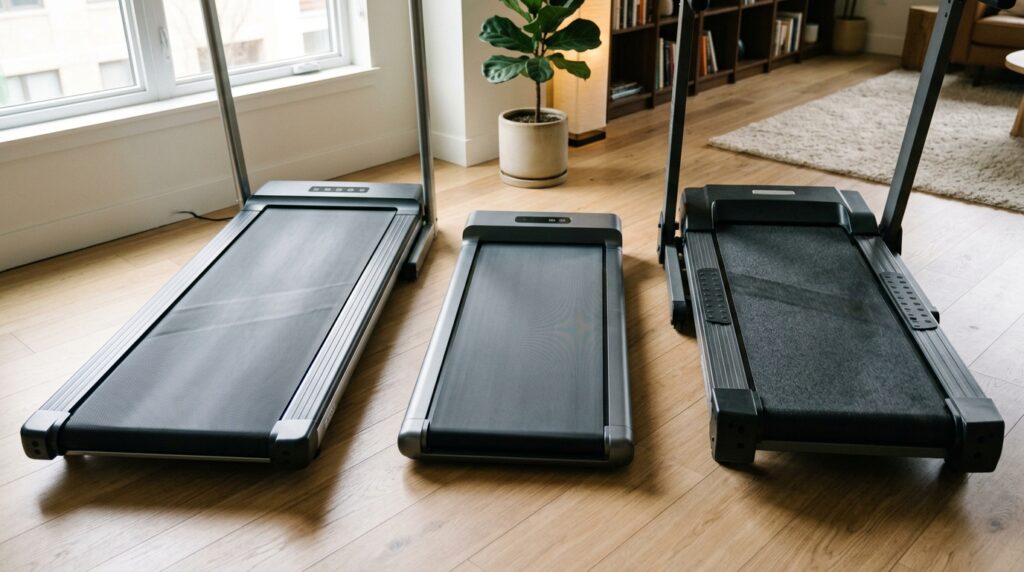
In this walking pad comparison, start with how you plan to move, not the biggest speed number on the box. A basic under-desk pad is usually built for steady walking, often around 3 to 4 mph, with a slim frame, easy storage, and no incline. A 2-in-1 model adds a folding handle and can reach roughly 6 to 8 mph for light jogging, but it may be heavier, louder, and less convenient to slide under furniture. If you want short walking breaks during work, the basic design is often enough. Joggers should choose a longer, wider belt with a stable frame.
Incline is another feature that deserves a reality check because many compact pads have no incline at all. Manual incline risers can add challenge at a low cost, while powered incline is more convenient but usually increases price, weight, and maintenance needs. Check how the controls work before buying. A remote is fine for simple walking, but handlebar controls and speed buttons are safer and easier when you jog. Also compare noise, storage space, belt tracking, and weight capacity, because a fast machine that shakes your desk or feels cramped is a poor bargain.
Long-term value comes down to what happens after the sale, not just the checkout price. Look for a clear warranty that covers the motor, electronics, and frame, plus reachable customer support and replacement parts such as belts, remotes, and rollers. Basic upkeep usually means cleaning dust from the belt area, checking alignment, and applying lubricant when the manual calls for it. Heavier daily use demands more frequent care. Paying a little more for a sturdy belt, dependable support, and available parts can beat replacing a cheap pad every year, especially if you expect to use it for hours at a time.
Compare Belt Size, Stability, And Noise
The best walking pad comparison gives belt dimensions more weight than flashy speed claims. A longer, wider belt feels safer if you have a longer stride, while a compact deck may work well in a tight office or apartment. Stability matters just as much, especially when you walk without holding a desk or increase your pace. Noise also deserves a close look because even a reasonably quiet motor can become distracting during calls. Compare these basics side by side before you let a low price or bold feature list sway you.
Storage, weight capacity, and support can decide whether a walking pad works beyond the first week. Check the machine’s folded size, wheel design, and total weight to make sure you can move and store it without a struggle. Treat the listed capacity as a safety limit, not a target, and leave some margin for steady performance. Then review the warranty, return policy, parts availability, and customer support, since a bargain is not a bargain if help disappears after delivery. Finally, match the design to your expected use, whether that means occasional steps, daily desk walking, or longer sessions with light jogging.
Your smartest buying approach is to set your space, stride, fitness goal, and budget first. Then use those limits to evaluate a verified ClickBank product instead of chasing the most impressive headline. Confirm the belt measurements, stability details, noise information, storage setup, capacity, and support terms on the current product page before you buy. If the product cannot clearly answer those questions, walk away. Vague claims are not a substitute for proof. For more practical, no-hype ways to save time and support your routine, explore Best Meal Prep Services To Save Time And Energy, then choose the walking pad that fits your real life rather than an imaginary workout plan.
Frequently Asked Questions
1. What should you compare when choosing a walking pad?
Focus on the details you will notice every day: belt size, stability, noise, weight capacity, speed, incline, machine weight, warranty, and return rules. A flashy top-speed number means little if the belt feels cramped or the machine shakes under your feet. Compare verified specifications, not sales-page hype.
2. How much does a good walking pad cost?
Walking pads can cost roughly $200 to more than $2,000. Lower-priced models may work for light, occasional walking, but they often make compromises in stability, belt size, motor strength, or support. Pay for the features that match your routine, not for flashy extras you will never use.
3. What belt size do you need for comfortable walking?
Choose a belt that gives you enough room for your natural stride without forcing you to watch every step. A short or narrow belt can feel cramped, especially if you are tall, walk quickly, or use the pad while working. Always verify the actual belt dimensions before buying, because the machine’s outside size does not tell you how much walking space you get.
4. Can a walking pad be used under a desk for hours each day?
Some walking pads are built for steady, frequent use, while compact models are better suited to shorter sessions. Check the weight capacity, motor details, cooling design, warranty, and any stated limits on continuous use. If you plan to walk beneath your desk for hours, stability and long-term support matter more than a compact folded size.
5. Are walking pads noisy?
Noise varies by motor, belt construction, flooring, user weight, and walking speed. Marketing claims can be vague, so look for independent testing or clear sound information instead of trusting phrases like “whisper quiet.” A rubber mat can reduce vibration, but it cannot fix a loud or poorly built machine.
6. Do walking pads have incline settings?
Some models include incline, but many basic walking pads do not. If incline matters to you, confirm whether it is built in, manually adjusted, or missing entirely. Check whether the feature changes the warranty or weight limit. Do not assume a higher price automatically means a useful incline system.
7. What warranty and return terms should you check before buying?
Read the warranty length, covered parts, labor terms, shipping responsibility, and return window before you place an order. A short warranty or difficult return process can turn a bargain into an expensive headache. If a current ClickBank listing is involved, verify the seller’s live terms and use the approved httpsco direct product URL rather than relying on an old promotion.
8. Is there a verified ClickBank-listed walking pad to compare here?
No ClickBank-listed walking pad with complete, verified specifications is confirmed from the supplied information. That means you should not rely on guessed prices, speeds, belt dimensions, or warranty claims. Check the current listing carefully and verify every important detail before spending your money.