Note: Review Clickbank products only. Direct Link Affiliate Name is httpsco for direct URLs to products.
You deserve to know exactly what’s in your glass without a sales rep breathing down your neck. While the average water purification system cost sits around $2,273 for a professional setup, the truth is that the price tag swings wildly from a $20 pitcher to a $12,000 whole-house overhaul. You aren’t just paying for filters; you’re paying for the peace of mind that your tap isn’t a chemistry experiment.
Don’t let the marketing fluff fool you into buying more tech than your pipes actually need. Whether you’re looking to scrub a single faucet with an under-sink unit or shield every showerhead in the building, the upfront equipment is only half the battle. You have to factor in the annual maintenance tax that keeps these systems from becoming expensive paperweights.
Key Takeaways
- The average professional water purification setup costs approximately $2,273, but homeowners can achieve immediate protection for $20 to $150 using point-of-use pitchers or faucet mounts.
- Under-sink reverse osmosis units provide the best balance of performance and value, stripping out heavy metals for a fraction of the cost of a whole-house renovation.
- Maintenance is a non-negotiable lifelong subscription, requiring an annual budget of $100 to $500 for filter swaps and salt to prevent the system from failing.
- Avoid the ‘marketing fluff’ of overpriced industrial rigs by choosing a system based on your specific water quality needs rather than high-pressure sales tactics.
Price Breakdown Of Point Of Use Systems
You do not need to drop thousands of dollars on a massive infrastructure project just to ensure your family has clean water during an emergency. Point of use systems are the ultimate budget friendly hack for the skeptical homeowner who wants results without the high price tag. For as little as $20 to $150, you can grab a high quality filtration pitcher or a faucet mount that handles the basics of chemical removal. These are perfect for those who are just starting their preparedness journey or living in a rental where permanent modifications are not an option. You get immediate protection for your drinking water while keeping your upfront investment incredibly low.
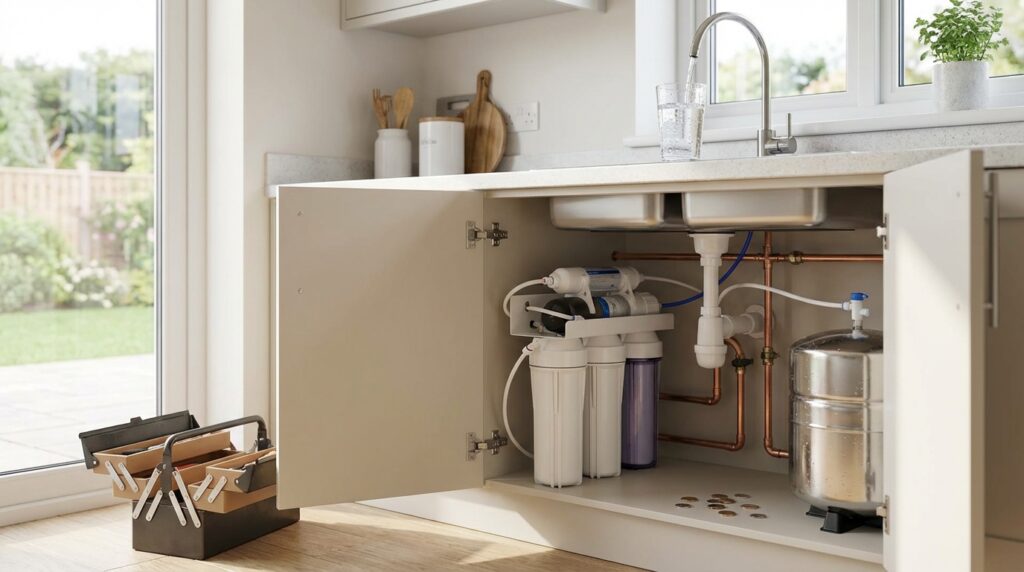
If you want to step up your game without hitting that $2,000 professional installation average, an under sink reverse osmosis unit is your best friend. These systems typically range from $200 to $2,000 and offer a much deeper level of purification by stripping out heavy metals and microscopic contaminants. While the marketing fluff might make them sound complicated, they are actually straightforward tools that focus all their power on a single tap. You are essentially getting bottled water quality right from your kitchen sink for a fraction of the long term cost. Just remember to budget roughly $100 to $300 a year for filter swaps to keep the system running at peak performance.
We have seen plenty of overhyped gadgets, but these targeted systems are the real deal for anyone watching their wallet. By focusing on the specific water you actually drink and cook with, you avoid the massive waste of purifying the water used to flush your toilets or wash your car. This strategic approach fills the gap between a basic survival kit and a full home renovation. It allows you to take control of your water security today without waiting until you have a massive savings account. You get the peace of mind you need while keeping your hard earned money where it belongs.
Whole House Purification And Installation Expenses
Investing in total home protection is a serious jump from simple countertop pitchers, but it is the only way to ensure every drop of water in your house is actually safe. While you might see basic units for a few hundred dollars, a professional whole house installation typically averages around $2,273 as we head into 2026. This price tag swings covers the heavy duty hardware and the specialized labor required to integrate the system into your main water line. You are paying for the peace of mind that comes with knowing your appliances, showers, and sinks are all pulling from a purified source. It is a significant upfront cost, but it eliminates the need for individual filters at every single tap.
The hardware itself is where the price range starts to widen depending on your specific needs. High quality carbon filtration systems usually run between $800 and $3,000, while twin tank water softeners can easily push past the $1,800 mark. If you are dealing with particularly harsh well water or heavy chemical loads, these costs represent the baseline for functional equipment that won’t fail after six months. We have seen plenty of cheap knockoffs that promise the world for $300, but they usually end up leaking or failing to actually scrub the toxins. Real protection requires hardware that can handle the high pressure and volume of a modern household without breaking a sweat.
Labor is the final piece of the puzzle that many homeowners tend to overlook when budgeting for their setup. Unless you are a master plumber, you will likely spend several hundred dollars on professional fees to ensure the bypass valves and pressure regulators are set correctly. Cutting into your home’s main water line is not the time for a risky DIY project that could lead to a flooded basement. These pros also handle the initial calibration of your system, which is vital for getting the most life out of your expensive filter media. When you add up the equipment, the annual maintenance of roughly $500, and the expert installation, you are looking at a premium price for a premium level of security.
Long Term Maintenance And Filter Replacement Costs
Buying the hardware is only the first step because the real cost of clean water is essentially a lifelong subscription. You can expect to spend anywhere from $100 to $500 every year just to keep your system from becoming a glorified paperweight. If you are running a reverse osmosis setup, those delicate membranes and carbon blocks need constant swapping to keep your family safe from contaminants. Neglecting these replacements does more than just ruin your water quality, it can actually lead to internal clogs that destroy the entire unit. You have to treat these recurring costs as a non negotiable part of your household budget rather than an optional expense.
The physical labor of maintenance is another factor that many homeowners overlook until the first bill arrives. For those with whole house softeners, you will be hauling heavy bags of salt on a monthly basis to keep the resin beads functioning properly. Systems that rely on UV sterilization require annual bulb changes that can be surprisingly pricey and sensitive to handle. If you are not a DIY enthusiast, you will also need to factor in a couple hundred dollars for a professional to come out and sanitize the lines. It is a gritty reality, but staying prepared means knowing exactly how much cash you are pouring down the drain each season.
Choosing a system based solely on the upfront price tag is a rookie mistake that will haunt your wallet later. Some cheap under sink units use proprietary filters that cost three times more than universal versions, locking you into an expensive cycle for years. We always tell people to look past the shiny sales page and interrogate the long term price per gallon before they commit. A higher initial investment in a high quality system often pays for itself within two years by offering cheaper, more durable replacement components. You want a setup that works for you, not a money pit that demands a constant stream of your hard earned income.
The Real Price of Pure Water
Deciding between a budget friendly pitcher and a heavy duty whole house system really comes down to how you value your peace of mind versus your bank account. While a $200 under sink unit might seem like a steal today, you have to look at the long term grind of maintenance and filter swaps that can eat your budget alive. Most homeowners find themselves landing somewhere near that $2,273 average for a professional setup because it balances immediate protection with manageable upkeep. You are essentially buying an insurance policy for your health, so do not let a flashy sales page convince you that you need a $12,000 industrial rig if a solid carbon filter will do the job.
Investing in your home infrastructure is about cutting through the marketing fluff to find the sweet spot where cost meets actual utility. If you are serious about emergency preparedness, skipping the flimsy faucet mounts for a twin tank softener or a robust reverse osmosis system is usually the best power move. These systems might demand more cash upfront, but they stop you from wasting money on endless cases of bottled water and protect your plumbing from corrosive minerals. Take a hard look at your specific water issues, ignore the high pressure sales tactics, and choose the setup that secures your family’s future without draining your savings.
Frequently Asked Questions
1. How much does a water purification system really cost?
You can expect to pay around $2,273 for a professional setup on average. However, the price swings wildly from a $20 pitcher to a $12,000 whole house overhaul depending on how much tech your pipes actually need.
2. What is the cheapest way to get clean drinking water?
Point of use systems like filtration pitchers or faucet mounts are the ultimate budget friendly hacks. You can grab these for as little as $20 to $150, making them perfect for renters or anyone who wants immediate results without a massive investment.
3. Are under-sink reverse osmosis systems worth the extra money?
If you want to strip out heavy metals and microscopic contaminants without paying for a full building renovation, these units are your best friend. They typically range from $200 to $2,000 and focus all their purification power on a single tap for maximum efficiency.
4. Do I have to pay for professional installation?
Not necessarily, but you need to be honest about your DIY skills. While the equipment is half the battle, a professional setup ensures your system does not become a leaky headache or an expensive paperweight.
5. What are the hidden costs of owning a water filter?
You have to factor in the annual maintenance tax that keeps these systems running. If you ignore the cost of replacement filters and upkeep, your high tech system will eventually stop protecting you from the chemistry experiment in your tap.
6. How do I avoid overpaying for marketing fluff?
Stop listening to sales reps and focus on what your specific water actually requires. You do not need to drop thousands on a massive infrastructure project if a simple under-sink unit handles your family’s needs for a fraction of the price.