
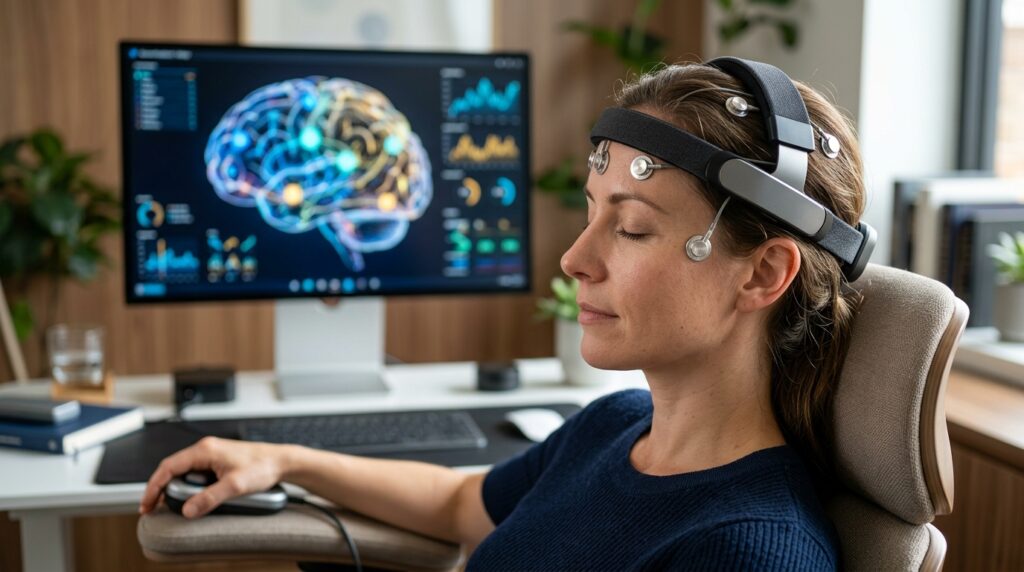
You’ve probably seen the glowing testimonials claiming you can rewire your brain for focus or calm, but then you hit the wall of reality: the price tag. Figuring out the actual neurofeedback training cost feels like trying to solve a puzzle while wearing a blindfold. Between the initial brain maps that can run you up to $1,500 and those individual sessions that chew through your bank account at $250 a pop, the mental clarity promise starts looking like a luxury line item.
We’re cutting through the marketing fluff to see if these high-end clinical sessions are actually worth your hard-earned cash or just a fancy way to overpay for tech. You deserve to know exactly where your money goes, whether you’re paying for a doctor’s office view or actual results for your brain. It’s time to stop guessing and start looking at the real numbers behind the hardware and the hype.
Key Takeaways
- Professional neurofeedback requires a significant upfront investment, with QEEG brain mapping costing between $300 and $1,500 to create a customized cognitive roadmap.
- Clinical training sessions typically cost $80 to $250 each, leading to a total program investment that can range from $2,000 to $10,000 for a full 20-to-40 session protocol.
- At-home neurofeedback equipment offers a more cost-effective alternative to clinical visits, allowing users to bypass recurring per-session fees and own their mental optimization hardware.
- Neurofeedback acts as a permanent hardware upgrade for the brain, providing lasting results that can eventually eliminate the need for recurring monthly expenditures on supplements and nootropics.
Breaking Down In-Clinic Assessment And QEEG Mapping Costs
You are likely used to spending forty dollars on a bottle of nootropics and calling it a day, but stepping into a professional clinic is a different beast entirely. Before you even sit down for your first real training session, you are hit with the QEEG brain mapping fee which can range anywhere from $300 to $1,500. This is not just a fancy intake form. It involves a technician placing a cap on your head to record your brain waves in real time. While the price tag feels like a punch to the gut, this data is what the pros use to build your custom roadmap. You are essentially paying for a high definition scan of your cognitive strengths and weaknesses.
Think of this initial assessment as the diagnostic fee you pay a master mechanic before they touch your engine. You are paying for the expertise of a specialist who can translate raw electrical signals into a plan that actually changes your brain. It is easy to feel skeptical when you see a four digit bill for a single consultation, but this phase determines whether your training will be a precision strike or a shot in the dark. Most clinics argue that without this expensive map, you are just guessing with your gray matter. It is a steep barrier to entry that makes your favorite supplements look like pocket change.
The reality of these professional fees is that they separate the casual biohackers from those ready for a serious overhaul. You are paying for medical grade equipment and years of clinical experience that you simply cannot get from a smart drug or a basic headband. While the upfront cost is aggressive, it covers the professional oversight required to ensure you are not accidentally sabotaging your health or training your brain into a state of anxiety or brain fog. You have to decide if that level of certainty is worth the premium price or if you would rather stick to cheaper alternatives. It is a massive investment in your mental infrastructure that demands a clear look at your budget before you get started.
Comparing Per-Session Fees For In-Office Vs At-Home Training
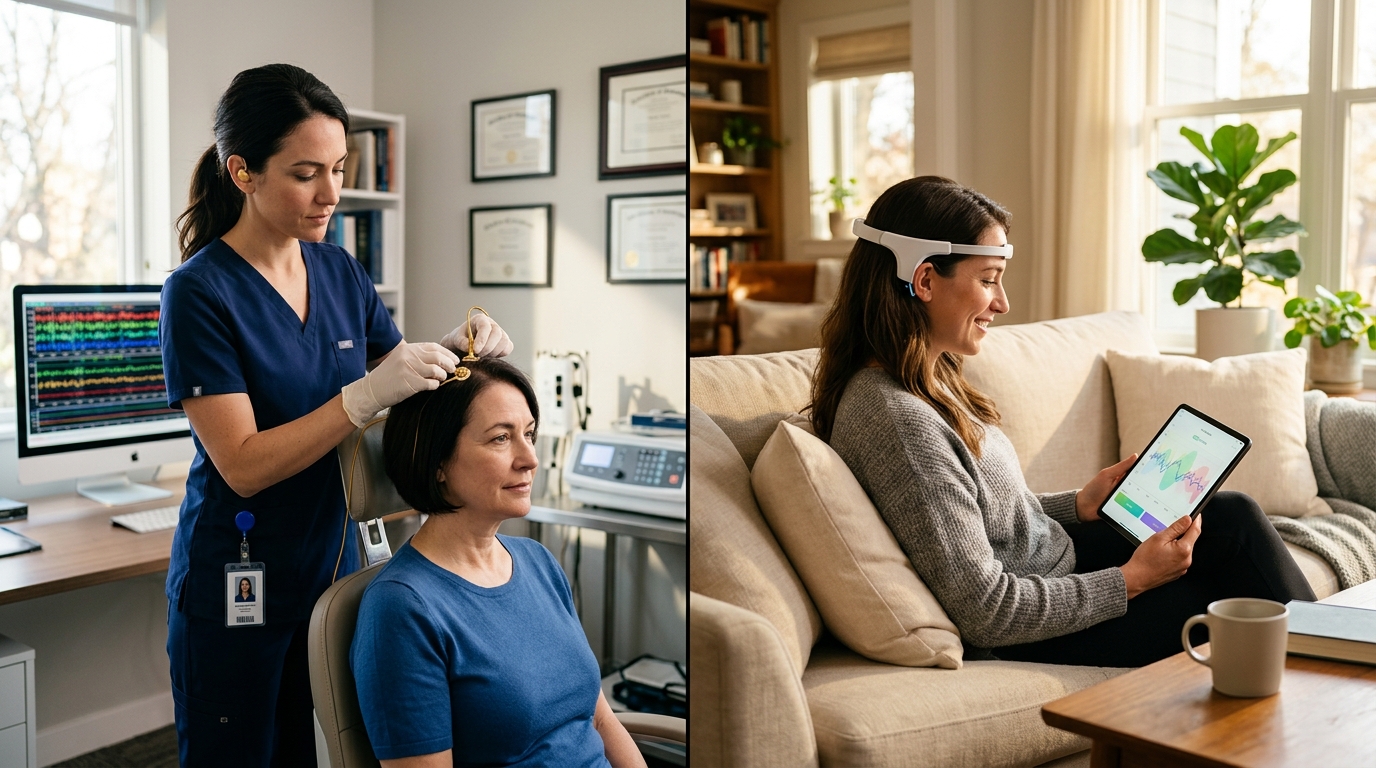
When you walk into a high-end clinic for neurofeedback, you are paying for the therapist’s expertise and the fancy office space as much as the technology itself. Individual clinical training sessions can easily run you anywhere from $80 to $250, and that is after you have already dropped up to $1,500 just for the initial brain map. If you are looking at a standard protocol of forty sessions, the math starts to look pretty ugly for your bank account. You are essentially trading a massive pile of cash for the convenience of having a professional hold your hand through the process. It is a premium service for a premium price, but for many, that weekly bill becomes a major barrier to actually finishing the treatment.
The game changes completely when you look at the long-term savings of setting up a training station in your own living room. While the upfront cost of a quality at-home neurofeedback equipment and software might feel like a gut punch, it usually pays for itself after just a dozen sessions. You get to skip the commute and the scheduling headaches while owning the equipment for life, which is a massive win for your wallet. Instead of paying a professional every single time you want to level up your brain power, you make a one-time investment and train whenever you want. This DIY approach bridges the gap for people who want elite cognitive results without the soul-crushing clinical price tag.
Choosing between the two comes down to whether you value professional supervision or pure financial efficiency. If you have the discipline to follow a protocol at home, you can save thousands of dollars that would otherwise go toward a clinic’s overhead costs. Most people find that the freedom of unlimited sessions at home far outweighs the perks of sitting in a doctor’s office once a week. You are essentially taking the power back into your own hands and treating your brain optimization like a long-term asset rather than a recurring subscription. It is the smarter move for anyone who is tired of watching their savings disappear into per-session fees.
Total Program Investment For Lasting Cognitive Results
Let’s talk about the real numbers because you’re probably tired of the price available upon request games that most clinics play. For a standard protocol of 20 to 40 sessions, you are looking at an initial brain mapping fee between $300 and $1,500 followed by session rates that typically land between $80 and $250 each. When you do the math, the total investment for a full program usually bottoms out around $2,000 on the low end and can climb toward $10,000 for high-end clinical supervision. It sounds like a massive hit to the wallet upfront, but we need to look at this through the lens of long-term value rather than a one-time sticker shock.
Stop and think about what you currently spend on that monthly brain pill subscription or those endless cycles of high-end nootropics that promise focus in a bottle. Most of those powders and capsules are just recurring monthly bills that stop working the second you stop swallowing them. Neurofeedback is a different beast entirely because it is designed to physically rewire your brain’s electrical patterns for lasting change. Instead of a lifetime of monthly payments for a temporary chemical boost, you are paying for a permanent upgrade to your internal hardware.
Investing in a full protocol is essentially a play to fire your supplement provider and take back control of your cognitive baseline. While the initial thousands of dollars feel heavy, the neurofeedback training cost per year plummets once you realize you aren’t chasing the next quick fix every thirty days. You have to decide if you want to keep renting your focus through monthly subscriptions or if you want to own your brain power outright. When you compare a decade of supplement costs against a single successful neurofeedback program, the math actually starts to favor the tech every single time.
The Real Price of Rewiring Your Brain
Deciding whether to drop thousands on neurofeedback or stick to your favorite bottle of nootropics really comes down to how much you value long term brain rewiring versus a quick daily spark. If you have the extra cash for a QEEG map and dozens of clinical sessions, the personalized data is undeniably cool, but it is a massive financial commitment for most people. You are looking at a price tag that could easily fund a lifetime supply of high quality brain boosters just to get your foot in the door. For the average person trying to sharpen their focus without draining a savings account, the steep entry cost of professional training can feel like a major barrier.
The reality is that while neurofeedback offers a high tech approach to mental performance, the sheer cost often outweighs the immediate gains for the casual user. You can achieve impressive cognitive clarity and memory support using executive functioning nootropics that cost a fraction of a single office visit. Unless you are dealing with a complex condition that requires medical supervision, spending hundreds of dollars per hour might be overkill for your daily goals. Much like asking is microbiome testing worth it for your gut health, you have to weigh the clinical data against the high price of entry. It is often smarter to start with affordable, proven cognitive enhancers and see how your brain responds before committing to a four figure investment in biohacking your healthspan and longevity.
Ultimately, your brain deserves an upgrade, but you should not have to go broke to achieve it. High quality nootropics provide a reliable and accessible way to level up your mental game without the stress of recurring clinical fees. While the science behind brain wave training is fascinating, the practical results for your wallet and your productivity often lean toward consistent, affordable supplementation. Stick with what works for your lifestyle and your budget so you can focus on actually using your brain power instead of worrying about how to pay for it.
Frequently Asked Questions
1. Why is the initial brain map so expensive?
You are paying for a high definition scan of your brain waves and the expert analysis required to build your custom roadmap. This QEEG mapping usually costs between $300 and $1,500 because it requires specialized equipment and a technician to translate your raw electrical signals into a plan that actually works.
2. How much should I expect to pay for each training session?
Individual sessions generally cost around $250 each when you go to a professional clinic. These costs add up quickly because you are paying for the office overhead, the expensive hardware, and the specialist’s time to monitor your progress.
3. Is neurofeedback a one-time expense?
Absolutely not, and anyone telling you otherwise is selling snake oil. You generally need a series of sessions to see lasting results, which means you should budget for the long haul rather than a single visit.
4. Can I avoid these high clinic fees by training at home?
Home systems are becoming a popular way to cut out the middleman and save thousands on office visits. While you still have to buy the hardware, you avoid the $250 per hour specialist fees that make clinical training feel like a luxury line item.
5. What exactly am I paying for during a clinical session?
You are paying for the use of medical grade sensors and the expertise of a professional who adjusts your protocol in real time. It is basically the difference between working out alone and hiring a high end personal trainer for your brain.
6. Is the high price tag actually worth the investment?
It depends on whether you value the hand holding of a doctor or prefer to take control of your own data. We are cutting through the fluff to show you that while the tech is real, you should only pay for results and not just a fancy office view.