

You’re scrolling through social media when a self-proclaimed expert promises a 90% win rate, but your bank account tells a much darker story. The truth is that most traders fall into a trap of common trading signal mistakes by blindly following automated alerts that vanish the moment they hit a loss. In a fast-moving market, these signals are often issued too late, forcing you to buy the peak while the professionals are already moving on to the next play.
Recent audits show that nearly 74% of these hyped-up signals do not even include a safety net like a stop-loss, leaving your entire portfolio exposed to a single bad move. These groups thrive on selective reporting, deleting their failures and inflating their wins to keep you hooked on a dream that does not exist. You deserve to know why these guaranteed wins keep failing and how to spot the red flags before you click buy on another losing trade.
Key Takeaways
- Most signal providers manipulate their performance data through selective reporting, often deleting losing trades to maintain a fake 90% win rate while actual success rates frequently hover below 50%.
- Entering trades without a pre-defined stop-loss exposes your entire portfolio to catastrophic losses, yet nearly 74% of popular signals fail to include these essential risk controls.
- Retail traders are frequently used as ‘exit liquidity’ because over two-thirds of signals are issued after the price has already spiked, forcing you to buy the peak while professionals are exiting.
- Automated signal crowding and high-pressure notifications trigger emotional, impulsive entries that ignore market context and lead to buying at the worst possible prices.
Fake Win Rates And Selective Reporting Scams
You are likely seeing 90% win rate claims plastered all over your social feeds, but the reality behind those screenshots is often a calculated lie. Many social media groups use a deceptive tactic called selective reporting where they simply delete every losing trade from their history to make their channel look like a gold mine. Recent audits of these popular groups show that while they market impossible success rates, their actual win rates often hover below 50 percent once you account for the missing losses. They rely on your fear of missing out to distract you from the fact that a clean-looking feed is usually just a heavily edited one.
Entering a trade based on these signals often feels like chasing a ghost because the providers frequently post their alerts after the price has already moved. Research indicates that nearly 70 percent of signals are issued after the initial price expansion, leaving you to buy the peak while the expert is already looking to exit. This lag time, combined with a lack of clear stop-loss instructions, creates a recipe for disaster where you take all the risk for a fraction of the promised reward. You deserve a strategy that respects your capital instead of treating your account like a sacrificial lamb for someone else’s marketing campaign.
Before you trust another flashy chart, remember that true trading success is built on transparency and rigorous risk management rather than disappearing messages. You can find vetted tools and reliable strategies that do not rely on smoke and mirrors by checking out the high-quality options available through httpsco. These resources focus on giving you the actual data you need to make informed decisions without the hype or the hidden losses. Stop letting gurus gatekeep your success with edited screenshots and start using professional-grade tools that actually put your interests first.
The Danger Of Missing Stop Loss Controls
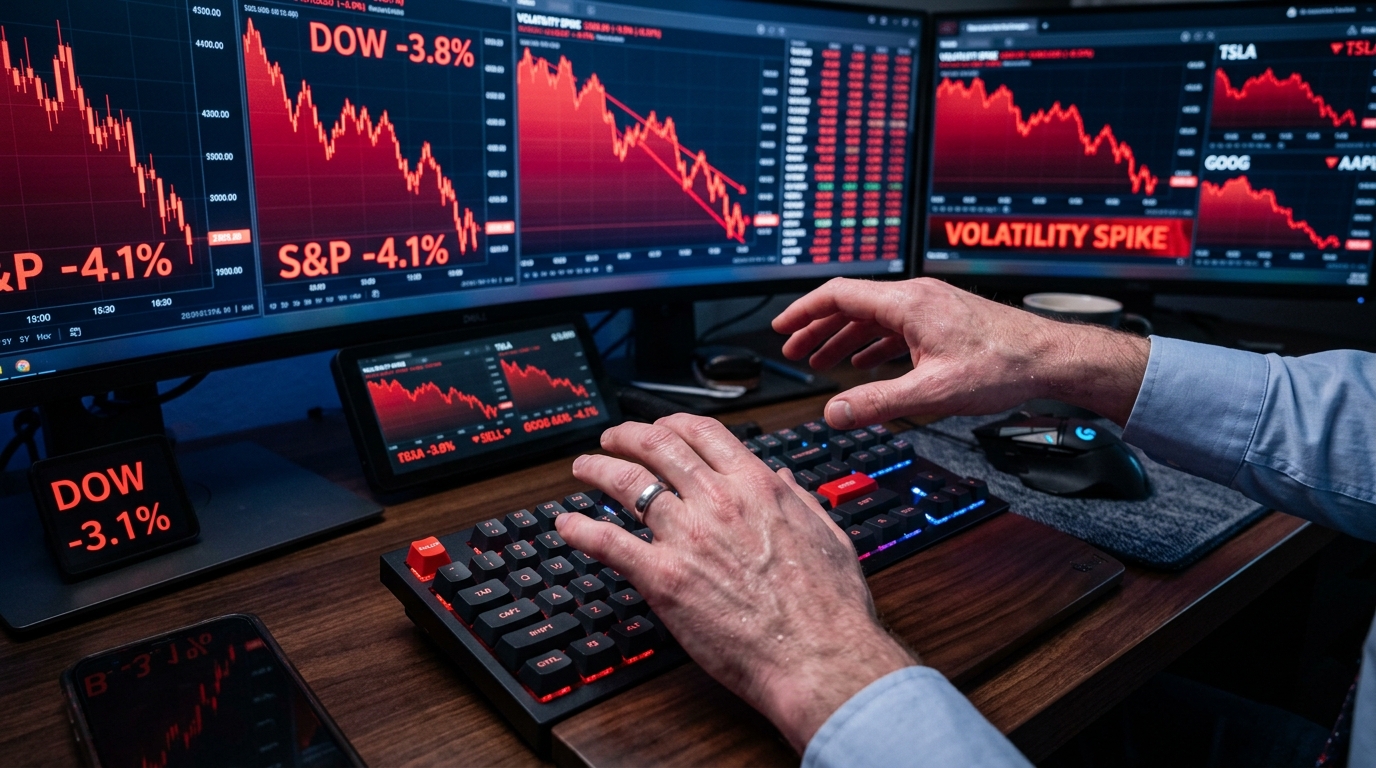
Entering a trade based on a signal without a pre-defined stop loss is like jumping out of a plane and hoping you find a parachute on the way down. While signal providers love to brag about their massive gains, recent data shows that nearly three quarters of these signals completely ignore risk controls at the point of entry. This leaves your entire account balance vulnerable to a single market spike or a sudden news event that goes the wrong way. Without a hard exit point set in advance, you are not trading, you are simply gambling with the hope that the price eventually returns to your entry. You need to remember that hope is not a strategy, especially when a lack of exit planning is the fastest way to blow your account.
The reality of the modern signal market is that many groups engage in selective reporting to make their results look much better than they actually are. Investigations have found that win rates are often inflating their wins by almost twenty percent because losing trades are simply deleted or ignored. When you follow a signal that lacks a stop loss, you are essentially giving the provider a free pass to hide their failures while you sit on a mounting loss. These providers know that as long as a trade is technically open, they do not have to report it as a loss on their public track record. You cannot afford to be the collateral damage for someone else’s marketing facade, so you must insist on knowing your exit before you ever hit the buy button.
To fix this dangerous habit, you must take full control of your risk management regardless of what the signal says or implies. If a signal arrives in your inbox or chat app without a clear stop loss price, you should either calculate one yourself based on recent support levels or skip the trade entirely. Professional traders focus on how much they can lose before they ever dream about how much they might win. You can use tools and vetted services that prioritize capital preservation to ensure you stay in the game for the long haul. Protecting your downside is the only way to survive market volatility, so make a firm rule to never enter a position without a protective exit already in place.
How AI Crowding Destroys Signal Profitability
The biggest trap you can fall into right now is thinking that a popular automated trading bots is your golden ticket to easy money. When thousands of other traders are plugged into the exact same algorithm, the market reacts before you even have a chance to click a button. This crowding effect means that by the time a signal hits your phone, the big move has already happened and you are left chasing the tail end of a trend. You end up entering trades at the worst possible prices while the early movers are already taking their profits off the table. It is a mathematical reality that when everyone uses the same data to make the same move, the profit margin for the average retail trader quickly evaporates.
Most of these flashy signal groups you see on social media are masters of manipulation rather than masters of the market. They love to brag about massive win rates, but those numbers are usually inflated by deleting losing trades or ignoring the fact that most followers missed the entry. In fact, research shows that over two thirds of these signals are issued only after the price has already spiked, leaving you to hold the bag. You are essentially paying for the privilege of being the exit liquidity for people who got in earlier than you. Without a unique edge or a signal that is not being shouted from every corner of the internet, you are just following a crowd right off a cliff.
If you want to actually see your account grow, you have to stop trusting every bot that promises a ninety percent success rate. Most of these services lack basic risk controls like stop losses, which means one bad trade can wipe out weeks of small gains. You need a vetted source that focuses on quality over quantity and does not just recycle the same tired patterns everyone else is watching. Genuine profitability comes from finding signals that provide a real head start instead of a lagging notification. It is time to stop being a part of the herd and start looking for a service that actually respects your capital and your time.
Emotional Traps Of Urgent Entry Notifications
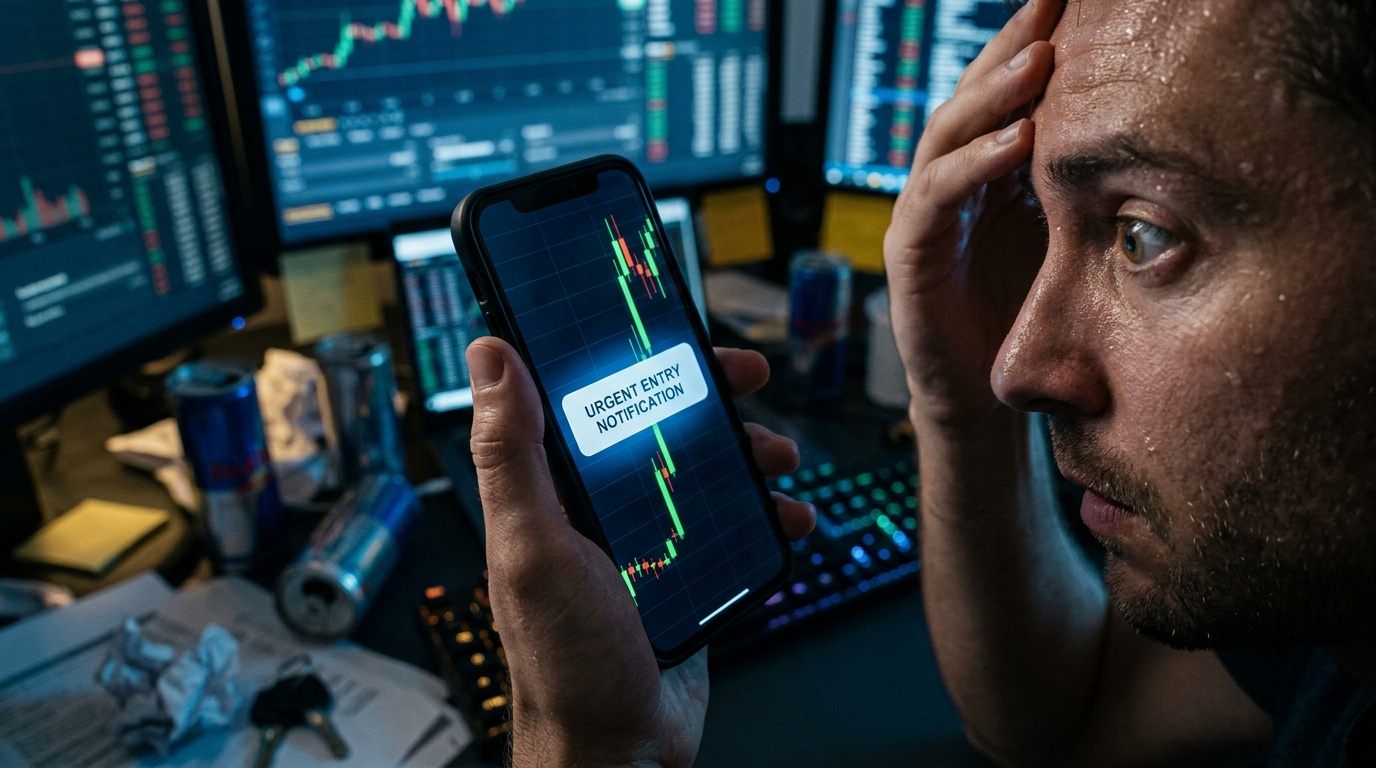
The moment your phone buzzes with an urgent entry notification, your brain likely shifts into a state of high alert that shuts down your logical thinking. These alerts are designed to trigger a fear of missing out, forcing you to click buy before you even look at a chart. You have to realize that by the time a signal reaches your screen, the initial price move has often already happened. Chasing these fast moving candles usually means you are entering at the worst possible price while the professional traders are already looking for the exit. Staying disciplined means recognizing that a missed trade is always better than a forced mistake that drains your account balance.
Most signal providers rely on high pressure tactics because they know you will not notice the lack of a stop loss if you are in a rush. Research shows that a staggering majority of these high-pressure notifications are issued after the price expansion, which leaves you holding the bag during the inevitable retracement. You are essentially being used as exit liquidity for those who got in early while you scramble to keep up with the notification. To maintain your edge, you must treat every alert as a suggestion rather than an order. Taking five minutes to breathe and verify the setup against your own rules will save you from the emotional trap of impulsive trading.
Maintaining your discipline under pressure requires a shift in how you view the market opportunities presented by social media and messaging apps. If a signal group is deleting their losing trades or ignoring their bad calls, their urgency is nothing more than a marketing facade to keep you subscribed. You should never feel pressured to jump into a position just because a notification sounds loud or looks official. True professional trading is methodical, not a frantic race against a blinking screen. By slowing down your execution process, you reclaim control over your capital and avoid the systemic risks that plague the average signal follower. Before trusting any provider, it is vital to look for signal service reviews that offer verified accuracy and transparent data.
Stop Chasing Hype and Demand Transparency
The trading world is a digital minefield where flashy social media groups and black box models promise riches but often deliver empty accounts. You have seen the data, and it is clear that many signal providers are simply playing a numbers game by hiding their losses and lagging behind the actual market moves. Success in this environment requires you to stop chasing hype and start demanding radical transparency from anyone claiming to lead your trades. You deserve a partner who provides clear stop-loss levels and honest win rates rather than selective reporting designed to trick your eyes.
Protecting your capital means moving past the noise of social media alerts and focusing on a strategy that prioritizes risk management over fame. The shrinking lifespan of profitable signals means you cannot afford to enter trades late or follow groups that refuse to provide independent audits of their performance. Real trading is about consistency and protecting your downside, not gambling on unverified signals that lack basic safety controls. When you treat your trading like a business, you naturally start to filter out the scammers who are just looking for their next subscription fee.
Navigating these waters is much easier when you have a roadmap to identify the red flags before they cost you a single dollar. To learn more about how to protect your portfolio, we invite you to discover our guide on How To Avoid Common Trading Signal Service Mistakes That Drain Your Account. This resource is designed to help you separate the legitimate experts from the marketing wizards so you can trade with confidence. Understanding the real value of professional guidance is the next step toward becoming a smarter trader by exploring our comprehensive breakdown of the industry’s biggest traps today. You should also consider what you should actually pay for these services to ensure you are getting a fair deal for the data provided.
Frequently Asked Questions
1. How can I tell if a provider is faking their win rate?
Look for a clean, perfect history with zero losses. If a provider is not showing their losing trades or if they delete posts when a trade goes south, they are manipulating the data to trick you. Real trading always involves losses, so a 90 percent win rate is almost always a scam.
2. Why do I always seem to buy at the price peak?
You are likely dealing with signal lag. Most providers send alerts after the price has already jumped, which means you are buying the top while they are preparing to exit. If you are constantly chasing the move, the signal was issued too late to be profitable.
3. Is it safe to use a signal that does not have a stop-loss?
Absolutely not. Operating without a stop-loss is like driving a car without brakes. It leaves your entire account exposed to a single market crash, which is why nearly 74 percent of hyped-up signals are dangerous traps for your money.
4. What should I look for before joining a signal group?
Demand to see a third-party audit or a verified track record that includes every single loss. You need to verify that the signals include clear entry points and exit strategies before you ever put your capital at risk. If they only show screenshots of wins, walk away.
5. Why are automated alerts failing so often lately?
Many of these bots are programmed to chase momentum rather than predict it. They often trigger alerts at the end of a price expansion, forcing you into a position just as the market is about to reverse. Blindly following an algorithm without understanding the context is a recipe for a drained bank account.
6. How can I protect my portfolio from these common mistakes?
Stop treating signals like a magic button and start using them as a secondary tool. Always verify the trend yourself and ensure every trade has a safety net in place. If a deal looks too good to be true, it is usually because someone is trying to sell you a dream that does not exist.