Let’s be real: the world feels unpredictable lately, and your pantry probably isn’t ready for a week-long blackout. Whether it’s shifting weather patterns or supply chain hiccups, the demand for emergency food supply kits is exploding. You aren’t here for fear-mongering or fancy marketing fluff; you just want to know if these buckets of survival food actually taste like dinner or salted cardboard.
We’ve waded through the hype and dissected the biggest names on Clickbank to find out what’s actually worth your hard-earned cash. It’s time to cut through the noise of government stockpiling and flashy sales pages to see which kits offer genuine nutrition versus just empty calories. You deserve a solution that keeps your family fed without draining your savings on a box of glorified crackers.
Key Takeaways
- The 25-year shelf life is a best-case scenario that only holds true if kits are stored in climate-controlled environments away from heat, light, and moisture.
- Prioritize kits with high protein and nutrient density over those padded with empty calories like sugary drink mixes and starchy fillers.
- High-quality packaging featuring heavy-duty Mylar bags and medical-grade oxygen absorbers is essential to prevent food degradation and spoilage.
- Rotate your survival food stock every five to seven years to ensure the meals remain palatable and retain their essential vitamin content.
Comparing Shelf Life Claims vs Reality
Marketing teams love to plaster a bold 25 year sticker on every emergency food bucket, but that number is not a guarantee of freshness. Most of these kits utilize freeze dried technology, which involves flash freezing food and removing moisture through a vacuum process. This method preserves the cellular structure and nutritional value far better than traditional canning or dehydrating. However, the stability of those nutrients relies entirely on the integrity of the oxygen absorbers and the strength of the poly-liner bags inside the bucket. If the seal fails even slightly, your long term investment starts degrading the moment it hits your pantry shelf.
You have to remember that heat and light are the ultimate enemies of your survival stockpile. While a manufacturer might claim a multi-decade shelf life, those tests are usually conducted in climate controlled labs kept at a constant 60 degrees. If you store your buckets in a hot garage or a damp basement, you are effectively cutting that 25 year promise in half. Temperature fluctuations cause the packaging to expand and contract, which can eventually lead to microscopic pinholes in the foil. True preparedness means monitoring your storage environment just as much as the labels on the containers.
Cutting through the marketing fluff reveals that calories are easy to preserve, but vitamins are incredibly fragile. Even if a meal is technically edible after two decades, the essential minerals you need for high stress survival situations might have vanished long ago. We recommend that you rotate your survival food stock every five to seven years regardless of what the flashy sales page tells you. It is better to eat your investment while it tastes like actual food rather than waiting for a crisis to discover your kit has turned into flavorless dust. Keeping a critical eye on these claims ensures you are actually protected when the supply chain falters.
Balancing High Calorie Counts and Nutrition
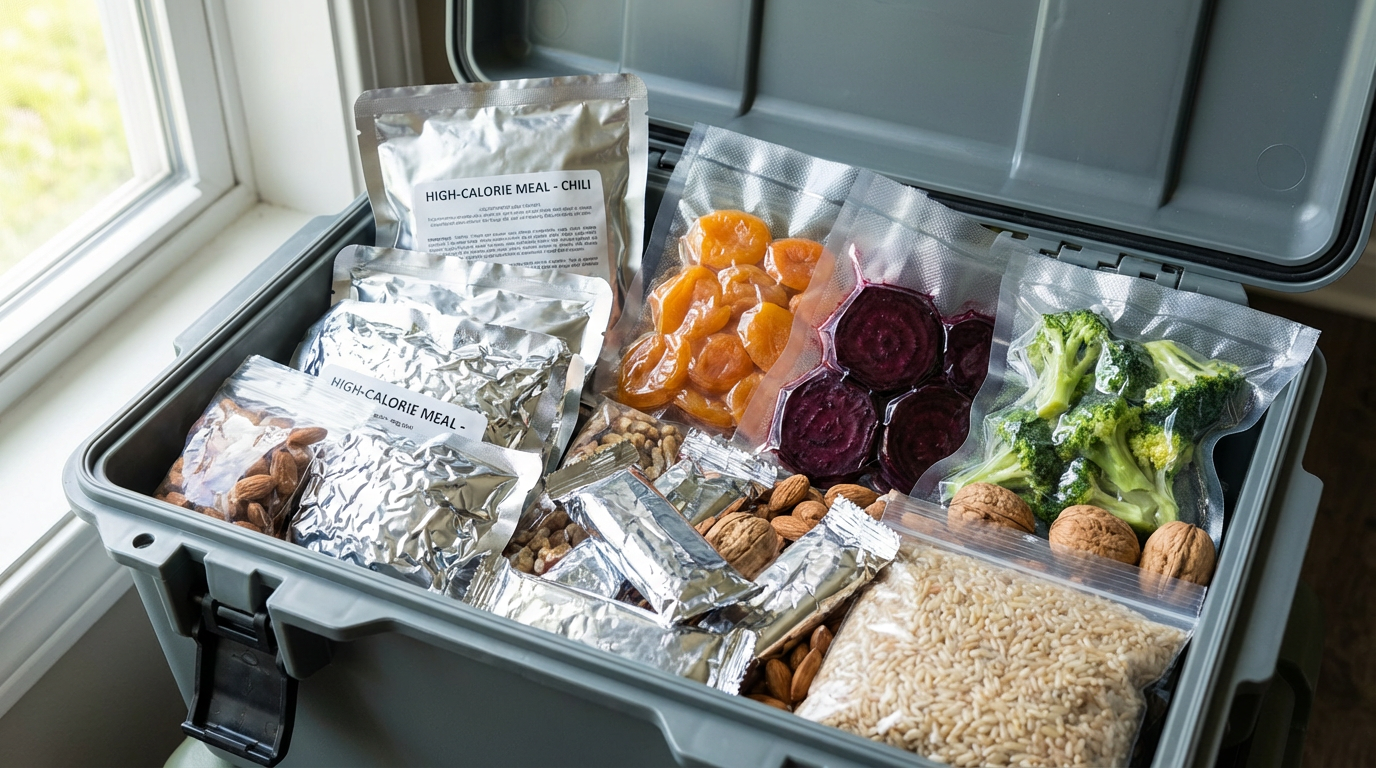
When you start shopping for survival food, it is easy to get blinded by the massive calorie counts plastered on the front of the buckets. Many manufacturers pad these numbers by stuffing their kits with sugary drink mixes, white rice, and starchy fillers that offer very little actual nutrition. You might feel full for an hour, but your body will quickly crash when it realizes it is missing the essential proteins and fats needed for high-stress situations. We have looked past the flashy labels to find that many of these budget kits are basically just salt and carbs in disguise. You deserve a stash that provides sustained energy rather than a temporary sugar high that leaves you sluggish.
True preparedness requires a deep look into the macronutrient profile of every meal you set aside for your family. A high-quality kit should balance complex carbohydrates with lean proteins and healthy fats to keep your brain sharp and your muscles functioning. We often see brands boasting about a twenty-year shelf life while ignoring the fact that their ingredients are mostly sodium-heavy preservatives. If you are relying on this food during a real crisis, your health becomes your most valuable asset. Do not settle for empty calories that will leave you feeling depleted when you need to be at your absolute best.
The secret to choosing the right supply is ignoring the marketing fluff and interrogating the actual ingredient list on the back of the package. You want to see recognizable whole foods and a diverse range of high protein and nutrient density rather than a long list of chemical stabilizers and thickeners. Some of the top-tier products found on platforms like Clickbank actually prioritize freeze-dried meats and vegetables over cheap grain fillers. By spending a few extra minutes comparing the nutritional density per serving, you can ensure your investment actually protects your well-being. It is about buying real fuel that sustains life, not just a bucket of expensive salt and flour.
Essential Features of Durable Survival Packaging
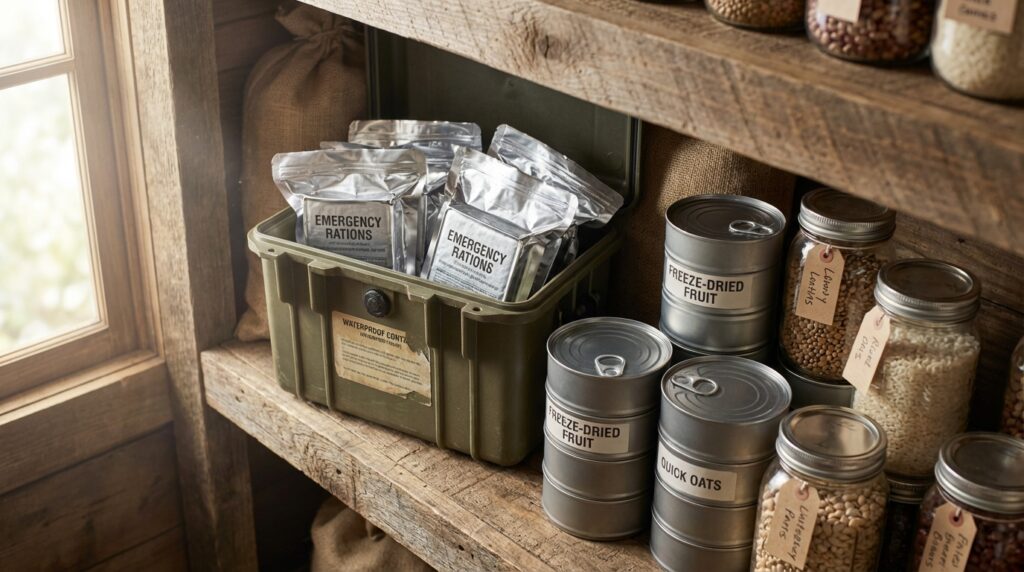
When you are investing your hard-earned money into long-term survival rations, the packaging is just as critical as the calories inside. Most people do not realize that oxygen and moisture are the primary enemies of food quality, leading to rancidity and mold long before the expiration date hits. High-quality emergency food supply kits rely on heavy-duty Mylar bags which act as a metallic shield against the outside world. These layers prevent light and air from degrading the nutritional value of your meals over several decades. Without this industrial-grade barrier, you are essentially just buying expensive groceries that will spoil in a few years.
The real magic happens when manufacturers pair those thick Mylar layers with medical-grade oxygen absorbers tucked inside the pouch. These little packets are not just for show because they actively strip out the remaining oxygen to create a vacuum-sealed environment. By removing the air, you effectively kill off any potential for pest growth and stop oxidative damage in its tracks. It is the difference between opening a fresh, nutritious meal in ten years or finding a dusty, inedible mess when you need it most. Always check the mil thickness of the bags before you commit to a high-ticket survival kit purchase.
You should also look for packaging that can withstand the physical rigors of a chaotic evacuation or a flooded basement. Durable survival packaging needs to be puncture-resistant and flexible enough to handle temperature swings without cracking. If a bag tears easily or the seal fails under pressure, the entire investment is compromised regardless of how good the food tastes. We have seen plenty of flashy marketing that hides cheap, thin plastic under a premium price tag. Stick to brands that prioritize these structural features so your family stays fed when the supply chain finally snaps.
Cutting Through the Survivalist Marketing Hype
Choosing the right emergency food supply kit doesn’t require falling for high pressure tactics or doom and gloom marketing found on most survivalist websites. You need to look past the flashy camouflage packaging and focus on the cold, hard data regarding shelf life and actual nutritional density. Many overpriced kits are packed with empty calories and cheap fillers like sugary drink mixes that won’t sustain your family during a real crisis. Instead of buying into the hype, prioritize products that offer transparent ingredient lists and verified caloric counts. Your goal is to find a reliable balance between long term stability and food that your family will actually be willing to eat when things get tough.
Building a pantry that lasts shouldn’t feel like a high stakes gamble with your hard earned money. We have interrogated the market to find options that skip the survivalist gimmicks while delivering genuine value and high quality freeze dried components. You can find dependable, nutrient dense kits through trusted platforms like Clickbank by visiting httpsco for direct access to top rated supplies. Don’t let the marketing fluff distract you from the essential metrics of protein content and easy preparation. By staying skeptical and focusing on objective comparisons, you can secure a kit that provides true peace of mind without overpaying for a brand name.
Frequently Asked Questions
1. Do these emergency food kits actually last for 25 years?
That 25 year sticker is a best case scenario based on perfect laboratory conditions. If you store your buckets in a hot garage or a damp basement, you are effectively cutting that lifespan in half. Keep your stash in a cool, dry, and dark place if you want it to actually be edible when you need it.
2. Is freeze dried food better than standard canned goods?
Freeze drying is the gold standard because it locks in the nutritional value and original texture without using a mountain of preservatives. Unlike heavy cans that take up space and expire quickly, these lightweight pouches are easier to store and provide genuine fuel for your body. It is the difference between eating a real meal and surviving on salty mush.
3. How can I tell if a survival food brand is just selling empty calories?
You have to look past the flashy labels and check the actual protein and calorie counts per serving. Many budget brands fill their buckets with sugary drink mixes and cheap crackers to pad the numbers. Real survival requires nutrient dense meals that provide sustained energy, not just a temporary stomach filler that leaves you crashing an hour later.
4. Are these kits worth the high price tag?
You are paying for convenience and the peace of mind that comes with a professionally sealed, long term solution. While you could DIY a pantry, these kits use specialized oxygen absorbers and industrial poly liners that are hard to replicate at home. We recommend checking out the top rated options on httpsco to ensure you are getting the most nutrition for every dollar spent.
5. What is the biggest threat to my food supply once I buy it?
Heat and moisture are the two silent killers that will ruin your investment faster than anything else. Even the best seal can fail if the temperature swings wildly, causing the packaging to expand and contract. Treat your food buckets like a high stakes investment and keep them in a climate controlled area of your home.
6. Can I rely on these kits for my entire family during a long term crisis?
These kits are an excellent foundation, but you should always supplement them with extra water and comfort items. Make sure you calculate the daily caloric needs for every family member rather than just counting the number of servings listed on the bucket. A serving size for a child is very different from what a grown adult needs to stay functional during a blackout.