

You’ve seen the flashy ads featuring private jets and secret indicators that promise to turn your laptop into an ATM. The reality is that the industry is a minefield of overhyped promises, and falling for common day trading course mistakes can drain your bank account before you even place your first real trade. Most of these high-priced programs sell you dreams while ignoring the boring, essential stuff that actually keeps you in the game.
We’re cutting through the marketing fluff to show you what’s really happening behind those polished sales pages. While gurus brag about proprietary formulas, the truth is that successful trading usually comes down to simple tools and rock-solid discipline. You deserve to know which features are worth your time and which ones are just expensive distractions designed to keep you clicking.
Key Takeaways
- Proprietary indicators and secret formulas are almost always repackaged versions of free, basic tools like RSI or moving averages designed to justify high course price tags.
- Relying on Discord signal groups prevents you from developing your own market intuition and often turns you into ‘exit liquidity’ for the leader who has already entered the trade.
- Risk management and position sizing are the most critical components of trading, yet they are frequently ignored by gurus in favor of flashy profit screenshots and high win-rate claims.
- Skipping the paper trading phase to trade live capital is a recipe for failure; you must prove your strategy in a simulated environment before risking real money.
Chasing Secret Indicators And Proprietary Trading Formulas
You are likely being hunted by flashy sales pages promising a proprietary indicator that acts like a GPS for the financial markets. These gurus love to wrap basic concepts in mysterious names to make you feel like you are buying an exclusive key to a hidden vault. In reality, that secret formula is almost always just a repackaged version of free tools like Relative Strength Index or simple moving averages. You do not need to drop thousands of dollars for a rebranded version of information that has been public for decades. Save your money and stop looking for a magic pill because the market does not care about fancy, trademarked names.
The hard truth is that if someone actually discovered a perfect, automated trading machine, they would not be selling it to you for a few hundred bucks on the internet. Successful trading is built on disciplined execution and boring risk management rather than a hidden algorithm. Most high ticket courses just take foundational price action principles and put a shiny new coat of paint on them to justify the price tag. You are paying for the marketing budget of the influencer, not a breakthrough in financial science. Focus on mastering the basics of supply and demand instead of chasing a ghost in the machine.
Market dynamics are constantly shifting, and a rigid formula that works today will likely fail when volatility spikes or interest rates change. These proprietary indicators often rely on backtested data that looks great on paper but falls apart in a live environment. When you buy into a secret strategy, you are tethering your success to someone else’s black box instead of developing your own intuition. True edge comes from understanding how the market breathes, not from a colored dot appearing on your chart. Real traders know that the secret is that there is no secret, only hard work and consistent habits.
The Danger Of Blindly Following Discord Signal Groups

Relying on a Discord signal group is like trying to learn how to drive by sitting in the passenger seat while someone else holds the wheel. You might feel like you are part of the action, but you are not actually developing the muscle memory or the intuition needed to survive on your own. When a guru drops a buy alert, you are often the last person to enter the party, which means the big players are already looking for the exit. This dependency creates a dangerous cycle where your account balance is tied to someone else’s screen instead of your own brain. If that group disappears tomorrow, you will be left with an empty toolkit and no idea how to find a trade.
The brutal reality of real-time alerts is that by the time you see the notification, read the price, and open your brokerage app, the profitable move is usually over. You end up chasing the price higher and buying at a point where the risk is far too great for the potential reward. Most signal providers are trading with massive accounts and lightning fast connections that you simply cannot match from your phone. This delay turns a winning strategy for the leader into a losing trade for the followers. You are essentially paying a monthly fee to be someone else’s exit liquidity while convinced you are getting an inside edge.
True trading success comes from understanding market structure and price action so you can make your own decisions without waiting for a ping on your phone. Blindly following a group prevents you from asking the important questions about why a trade is being taken or where the stop loss should actually go. You need to focus on education that teaches you to read the charts yourself rather than just mimicking a stranger’s moves. High ticket courses that lean heavily on these live rooms are often just masking a lack of real substance in their curriculum. Invest your time in learning the mechanics of the market so you can stop being a follower and start being a professional.
Neglecting Risk Management For Flashy Profit Screenshots
High-ticket trading courses love to lure you in with flashy screenshots of six-figure profits and luxury cars, but they rarely show you the hundreds of blown accounts hidden behind the scenes. It is easy to get blinded by the potential for a massive payday while completely ignoring the boring rules that actually keep you in the game. Most low-quality programs spend all their time on entry signals, telling you exactly when to buy so you feel that rush of excitement. They skip over the unsexy parts of trading, like position sizing and risk-to-reward ratios, because those topics do not sell courses. If you are only looking at the upside, you are essentially gambling with your hard-earned savings instead of building a real business.
You need to remember that survival is the only goal during your first year of trading, and that requires a bulletproof stop-loss strategy. A flashy sales page might promise a ninety percent win rate, but even one massive loss can wipe out weeks of progress if you do not know how to manage your risk. Successful traders are not the ones who make the most money in a single day, but the ones who have the discipline to walk away when a trade goes against them. High-energy marketing often replaces sound financial logic with hype, leaving you vulnerable to market volatility that can drain your account in minutes. Stop chasing the dream of an overnight fortune and start focusing on the defensive moves that protect your capital from unnecessary ruin.
The reality is that eighty-eight percent of successful traders prioritize risk management over finding the perfect secret indicator. When you buy into a program that glosses over exit strategies, you are paying for an incomplete education that sets you up for failure. You should interrogate every strategy by asking what happens when the trade goes wrong, rather than just focusing on the profit potential. Real trading is about disciplined execution and staying small enough to trade another day regardless of a single bad outcome. Do not let a guru’s curated lifestyle distract you from the technical reality that position sizing is the only thing standing between you and a total loss.
Skipping The Paper Trading Phase With Real Capital
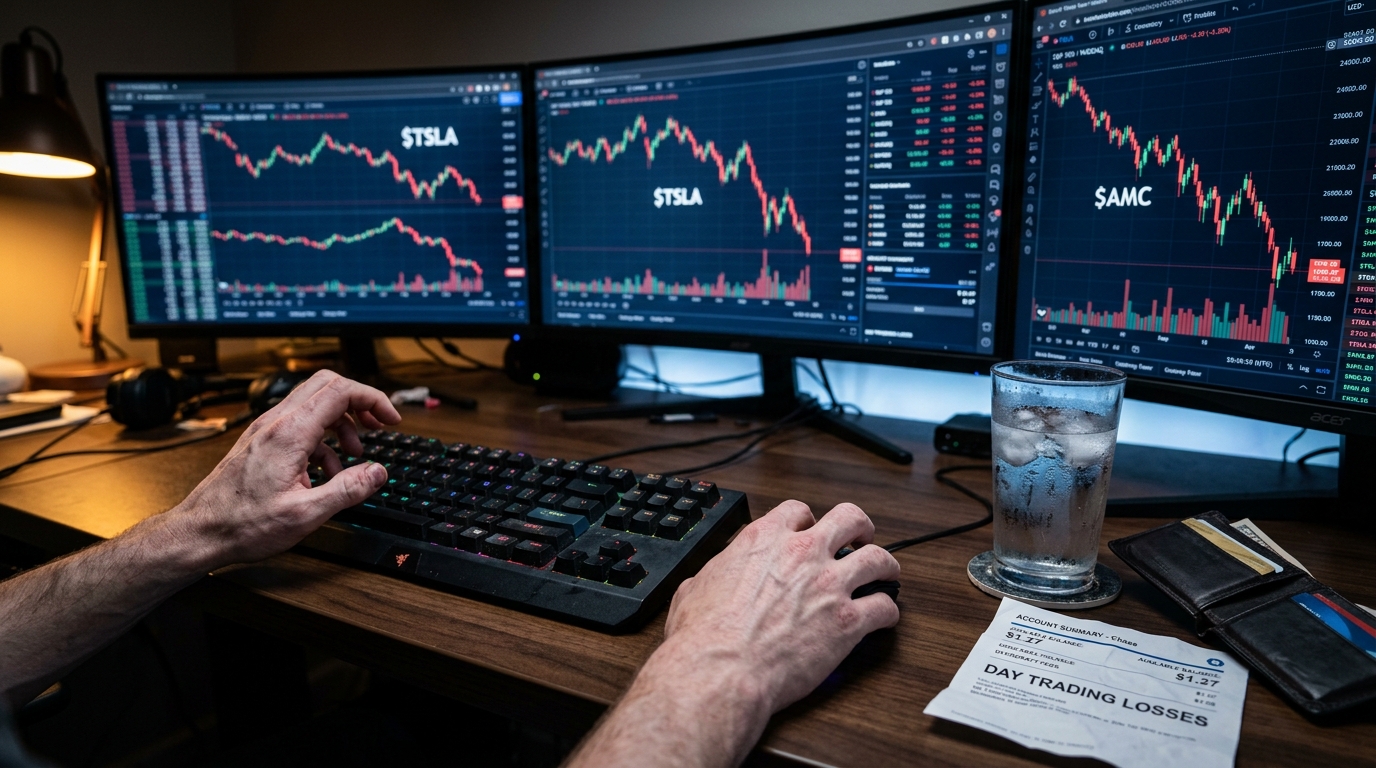
You might feel an itch to jump straight into the live markets after watching a few flashy course videos, but that is exactly what the gurus want you to do. Many high-ticket programs gloss over the paper trading phase because it does not provide the instant gratification that keeps you hooked on their get rich quick narrative. When you skip the simulation phase, you are essentially paying for your education with your own life savings instead of using the house’s fake money. This mistake turns you into a liquidity provider for the pros who are more than happy to take your capital while you are still learning where the buy button is. Real success takes time, and rushing into live trades before you have proven your strategy in a safe environment is a recipe for failure; you must prove your strategy in a simulated environment before risking real money.
Simulated trading is the only place where you can make catastrophic mistakes without losing a single dime of your hard earned cash. Most course sellers push you toward live accounts because it makes their secret indicators feel more high stakes and exciting, even if those tools are just basic free metrics in a fancy wrapper. You need to spend at least a few months clicking buttons and managing emotions in a paper account to see if your strategy actually holds up during different market cycles. If you cannot turn a profit with fake money, there is absolutely no chance you will do it when your real rent money is on the line. Stop being the exit strategy for experienced traders and start treating this like a business by practicing in the sandbox first.
The harsh reality is that about ninety percent of new traders fail, and a huge chunk of those losses happen in the first thirty days. By refusing to skip the paper trading phase, you are giving yourself the breathing room to master position sizing and risk management without the crushing stress of a shrinking bank account. These courses often fail to mention that your brain reacts differently to a loss when real money is involved, which usually leads to revenge trading and even bigger disasters. Use the simulation to build your confidence and refine your discipline so that you are actually ready when the time comes to go live. Taking the slow road might feel boring, but it is the only way to ensure you actually have an account left to trade by the end of the year.
Stop Being a Target for Trading Scams
Equipping yourself with these Skeptical Insider tools means you can finally stop being a target for every flashy sales page that hits your inbox. You now understand that the secret sauce isn’t found in a hidden indicator or a proprietary formula, but in the boring stuff like discipline and risk management. Instead of falling for the trap of overnight riches, you can focus on mastering price action and position sizing. These are the real skills that keep you in the game when the market gets volatile. You are no longer the gullible buyer looking for a shortcut, but a smart investor building a foundation that actually lasts.
The multi-billion dollar trading education industry thrives on people who ignore the red flags we just covered. Most high-ticket programs are designed to sell you an emotion rather than a repeatable strategy, often neglecting the exit signals that save your bank account. By prioritizing stop-loss orders and using free resources to learn the basics, you have already outpaced the majority of beginners. You have the power to walk away from any offer that smells like hype or promises a secret hack. True success comes from sorting the real mentors from the noise and keeping your capital safe while you learn the ropes.
Now that you can spot a bad investment from a mile away, it is time to take control of your financial education. Focus your energy on practicing with paper trading and studying well-documented principles that do not require a thousand-dollar entry fee. Remember that the best traders are the ones who survived the longest by refusing to chase shadows. You have the toolkit to filter out the noise and focus on what truly moves the needle. Keep your eyes open, stay skeptical, and treat your trading journey like the serious business it is meant to be.
Frequently Asked Questions
1. What are proprietary indicators and are they worth the money?
Proprietary indicators are usually just basic, free tools like the RSI or moving averages with a fancy name and a high price tag. You do not need to spend thousands of dollars on a rebranded version of public information. The market does not care about trademarked names, so save your cash for your actual trades.
2. Why do gurus sell these courses if they are so successful?
If someone actually found a magic button to print money, they would not be selling it to you for a few hundred dollars. Most of these gurus make more money selling dreams and shiny courses than they do from actual trading. You are often paying for their marketing budget rather than a real path to wealth.
3. Can a high-priced course guarantee my success?
No course can guarantee success because trading depends on your personal discipline and risk management. High ticket programs often focus on flashy distractions to justify their cost while ignoring the boring essentials. Success comes from mastering simple price action, not from buying an expensive secret formula.
4. What should I look for in a legitimate trading education?
Look for programs that focus on risk management and psychology rather than promising overnight riches. A good course teaches you how to protect your capital instead of just showing you how to spend it on flashy indicators. Avoid anything that sounds like a get rich quick scheme because those are almost always traps.
5. Is it possible to learn day trading using only free tools?
You can absolutely learn everything you need using free resources and basic charting software. The foundational principles of the market are public knowledge and do not require a proprietary algorithm to understand. Focus on learning how price moves and keep your strategy simple.
6. What is the biggest mistake new traders make when buying a course?
The biggest mistake is believing that a high price tag equals high quality or a shortcut to profits. Many beginners fall for polished sales pages and private jet photos instead of looking for actual real value in the curriculum. Stop chasing the magic pill and start focusing on the trading path actually works for your long-term goals. You should also consider if a trading newsletter cost is justified before committing your capital to recurring fees. Before joining any group, it is wise to check signal service reviews to ensure you aren’t just becoming exit liquidity for a guru.