

You’ve seen the flashy ads with the supercars and the “secret” algorithms, but you’re smarter than that. You know that real success in the markets requires a roadmap, yet the sheer range of trading mentorship costs can make your head spin. Whether it’s a couple hundred bucks for a video series or fifteen grand for a private coach, you’re looking for the truth about what your money actually buys.
We’ve dissected the market to cut through the fluff and marketing noise that usually surrounds these price tags. You deserve to know if that four-figure investment is a fast track to freedom or just a fancy way to fund someone else’s lifestyle. It’s time to look past the sales pitches and get into the gritty reality of what professional guidance should really cost you in 2026.
Key Takeaways
- Trading mentorship costs in 2026 fall into three distinct tiers: foundational video courses ($200–$1,000), mid-tier group coaching ($500–$3,000), and elite one-on-one mentorship ($3,000–$15,000+).
- The true cost of professional trading often doubles the initial tuition due to hidden expenses like data feeds, advanced charting software, and recurring community access fees.
- Successful education requires balancing your tuition spend against your actual trading bankroll to ensure you have enough liquid capital to survive the market’s natural learning curve.
- High-ticket mentorship should be viewed as a specialized insurance policy that provides ROI by compressing years of trial and error into a shortcut toward consistent profitability.
Price Tiers For Every Trading Budget
Finding a trading mentor in 2026 feels like navigating a minefield of hidden price tags and “DM for details” sales tactics. You deserve to know exactly where your capital is going before you ever hop on a discovery call. If you are just starting out, the $200 to $1,000 range usually gets you a seat in a pre-recorded masterclass. These are great for learning the mechanics of a chart, but do not expect the creator to hold your hand when the market turns volatile. You are essentially paying for a structured roadmap that you have to drive yourself.
Mid-tier options usually take the form of group coaching or monthly subscriptions, ranging from $500 to $3,000. This is where you get access to the “inner circle” via community platforms or live webinars, allowing you to see how professional traders react to real-time data. It is a solid balance for those who need community support without the staggering price tag of individual attention. You get to learn from the questions of others, which often highlights blind spots in your own strategy that you had not even considered yet.
When you are ready to treat trading like a high-stakes business, you enter the world of elite one-on-one mentorship. These programs demand a serious investment of $3,000 to $15,000 or more because you are buying a professional trader’s most valuable asset, which is their time. At this level, the fluff is stripped away in favor of direct trade reviews, personalized psychological coaching, and custom strategy refinement. It is a massive upfront cost, but for the serious investor, the goal is to stop the bleeding of expensive mistakes and finally achieve professional-grade consistency.
Hidden Fees In Professional Trading Communities
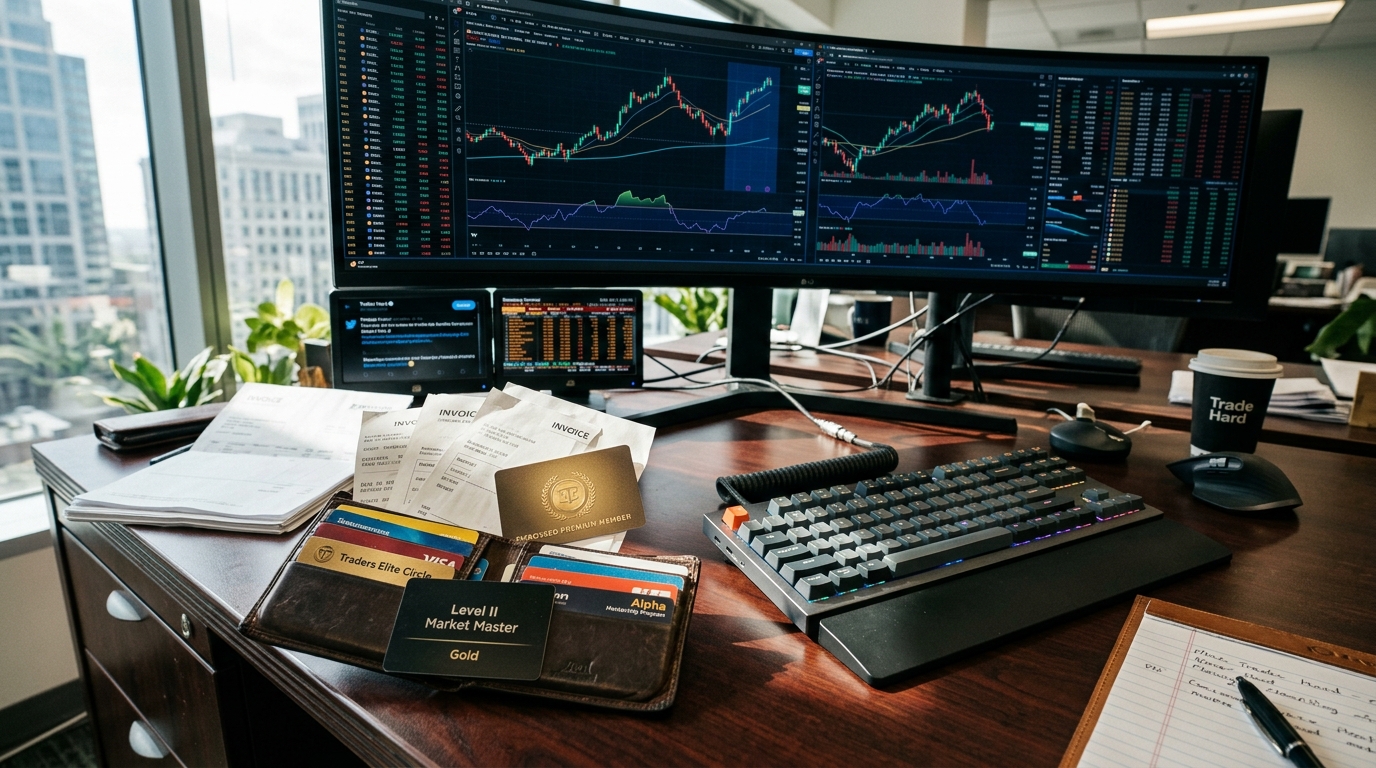
You might think that writing a four or five figure check for a premium trading mentorship covers your entire journey, but that is rarely the case in this industry. Most high end programs require you to keep your credit card handy for monthly community renewals or “inner circle” access fees that kick in after the initial period ends. These recurring costs can quickly add up to thousands of dollars per year on top of your original investment. You need to ask tough questions about whether the strategy you are buying actually works without a constant stream of paid alerts. If you aren’t careful, you might find yourself trapped in a subscription loop just to keep the lights on in your trading office.
Beyond the tuition, you have to account for the heavy technical toll required to execute a professional strategy effectively. You will likely face monthly bills for high speed data feeds, advanced charting software, and specialized scanning tools that the mentor uses to find setups. Many students forget that they also need a significant chunk of liquid capital to actually place trades once the training ends. If you spend your entire savings on the education itself, you will have nothing left to put into the market. A ten thousand dollar mentorship is useless if you do not have the bankroll to survive the natural learning curve of live trading.
The hidden reality of professional trading communities is that the “all in” price is often double what you see on the initial sales page. You should always look for transparency regarding platform commissions and the specific hardware requirements needed to run the recommended software. Some mentors also push proprietary indicators or third party tools that come with their own hefty price tags and licensing agreements. We want you to see through the marketing fluff and realize that professional growth is an ongoing financial commitment. Always calculate your total overhead before signing a contract to ensure you can actually afford to stay in the game for the long haul.
Evaluating ROI Against Mentorship Tuition Prices
Investing four or five figures into a trading mentorship can feel like a massive gamble before you even place your first trade. You have to look past the flashy sales pages and high-ticket price tags to see what you are actually buying, which is usually a shortcut through years of expensive trial and error. If a three thousand dollar program prevents you from blowing a ten thousand dollar account, the math already checks out in your favor. Weigh the tuition against your current “tuition to the market” to see if paying for expert guidance is cheaper than losing money on your own.
The real value of a professional program lies in the compression of time and the immediate correction of your worst habits. While you can find free videos online, they rarely offer the personalized feedback or the psychological coaching required to survive high-stakes crypto or forex markets. Think of the tuition as a specialized insurance policy against the common mistakes that wipe out most retail traders within their first year. When you calculate the ROI, factor in how much faster you will reach a state of consistent profitability compared to wandering through the woods alone for half a decade.
Serious growth requires serious capital, but you should never pay for a name without seeing a clear roadmap of the deliverables involved. Whether it is a live trading room or direct one on one reviews, the cost must align with the level of access you get to a proven strategy. High-end bootcamps are not just about learning charts, as they are about gaining the discipline that separates professionals from hobbyists. If the program offers a structured environment that keeps you accountable, the initial sticker shock becomes a small price to pay for a lifetime of financial independence.
The Real Cost of Trading Mastery
Investing in a professional mentorship is a major financial decision that requires you to look past the flashy marketing and focus on the bottom line. You should expect to pay anywhere from 3,000 to 15,000 dollars for high level, one on one guidance that actually moves the needle. While these prices might seem steep, they reflect the personal time and proven track record of a mentor who is actively trading the markets. If a program hides its pricing behind a high pressure sales call, take that as a sign to keep your guard up. You deserve transparency before you ever hand over your hard earned capital for an elite education.
Your goal is to become a profitable trader without draining your entire bank account before you even place your first live trade. It is vital to balance the cost of your education against the size of your actual trading bankroll so you are not left with zero liquidity. Spending 10,000 dollars on a course when you only have 2,000 dollars left to trade is a recipe for immediate failure. Many traders solve this capital gap by researching the best prop trading firms to leverage their skills with institutional backing. Look for programs that offer a clear path to a return on your investment rather than just selling you a dream. A smart trader treats their education as a business expense that must be justified by future performance and risk management.
If you are looking for a reliable way to start your journey, you can find proven resources on Clickbank that offer structured learning without the hidden fees. You can check out the latest tools and strategies by visiting httpsco to see which products fit your specific budget and trading style. These platforms allow you to vet the material and see what other real world users are saying before you commit your funds. You might also wonder if a trading newsletter cost is worth it compared to a full mentorship when you are just starting out. Remember that even the best mentorship is just a tool, and your success ultimately depends on your discipline and execution. Stop overpaying for mystery boxes and start sorting the real mentors from the noise to ensure you are investing in education that respects your intelligence and your wallet.
Frequently Asked Questions
1. What should I expect to pay for a basic trading course?
You should expect to pay between $200 and $1,000 for a foundational program. This price range typically gives you access to pre-recorded video lessons and a structured roadmap that teaches you how to read charts on your own.
2. Is group coaching worth the extra investment?
Group coaching usually costs between $500 and $3,000 and offers a great balance of community and expert insight. You get the benefit of live webinars and community access, which lets you see how pros handle real-time market volatility alongside other students.
3. Why do some private mentorships cost over five thousand dollars?
High-end mentorships command premium prices because you are paying for direct, one-on-one access to a professional’s time and specific strategy. These programs are designed for traders who want to treat the markets like a serious business and need personalized accountability to get there.
4. Do I need to pay for a mentor to start trading successfully?
You do not strictly need a mentor to start, but paying for one can significantly shorten your learning curve. A good program helps you avoid the expensive mistakes that most beginners make when they try to figure everything out through trial and error.
5. Are there hidden costs outside of the mentorship fee?
Yes, you need to account for your actual trading capital and any software or data subscriptions required by the strategy. Always make sure your mentorship cost does not eat up the money you actually need to place trades in the market.
6. How can I tell if a high-priced program is a scam?
Look past the flashy lifestyle ads and focus on whether they provide a clear, logical curriculum. If a mentor spends more time showing off supercars than explaining risk management and trade mechanics, your money is likely better spent elsewhere.