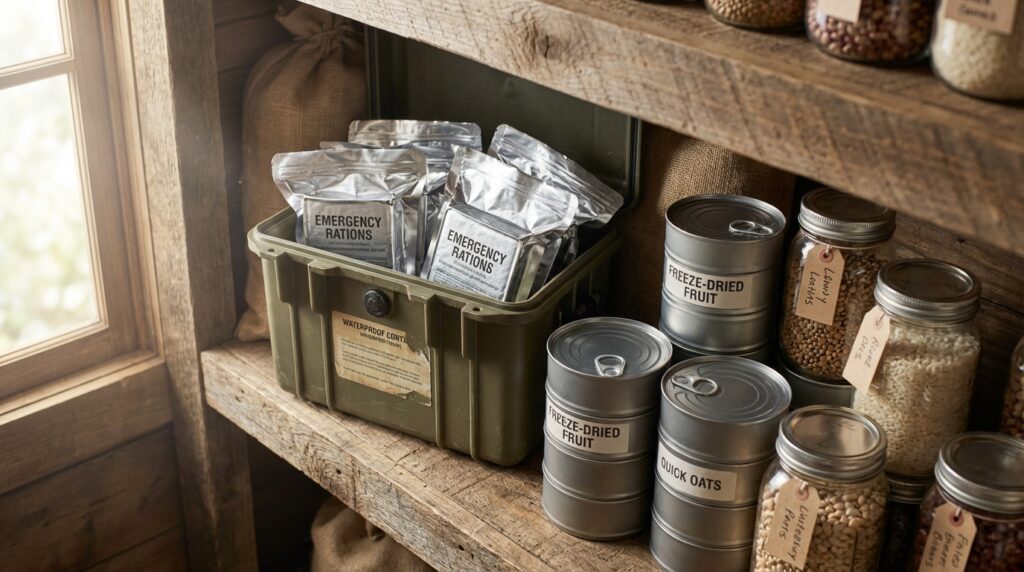
An emergency sanitation plan keeps waste contained, your hands clean, and your home protected when the toilet stops working. It’s more than a hunt for a stand-in toilet. Think of it as three jobs: seal the waste, keep your hands clean, and avoid stressing a sewer or septic system that may already be damaged. Start with the numbers. Oregon’s two-bucket planning guidance estimates about 5 gallons of waste per person each week, so a family of four should plan for roughly 20 gallons before anything breaks.
Hands are the other half of the job. The CDC recommends washing with soap and water for at least 20 seconds. When water isn’t available, use hand sanitizer with at least 60% alcohol as the fallback. Stock soap first, because sanitizer is the backup, not the main plan. Buy these supplies now, while the shelves are full, so you aren’t guessing when the power goes out.
Key Takeaways
- Plan for about 5 gallons of waste per person each week, so you’ll need roughly 20 gallons of bagging capacity for a family of four before anything breaks.
- Wash your hands with soap and water for at least 20 seconds, and reach for hand sanitizer with at least 60% alcohol only when the tap is dead.
- Never dig, burn, or bury your waste, and follow your city or county’s emergency instructions for pickup or drop-off.
- Stop flushing the moment a do-not-flush notice goes out, and never pump a flooded septic tank more than halfway.
- Fill your feces bucket no more than halfway, cover every deposit with absorbent material, and seal the bucket before it gets too heavy.
How Do You Build a Sanitation Plan Before Services Fail?
Treat sanitation as a containment and hand-hygiene plan, not a hunt for a stand-in toilet. A real plan does three jobs: it seals waste away from your living space, it keeps your hands clean, and it avoids piling extra load onto a sewer or septic system that may already be damaged.
Your setting decides the method. In an apartment, you’ll probably rely on a sealed bucket and bags because there’s no yard to work with. A house with a septic tank needs a plan to cut back on flushing, since a stressed system can’t handle much. A rural property has more room for options, but space alone doesn’t make a method safe or legal.
Seattle’s emergency guidance gives you a practical shopping list:
- A lidded bucket
- Heavy-duty bags and ties
- Absorbent material
- Soap, gloves, and toilet paper
- Hand sanitizer
Check your local emergency public information before you dig, burn, or bury anything. Seattle’s sanitation guidance rules out outdoor pit latrines and burial, and the rules change from city to county.
Budget for the stuff people forget. A basic 5-gallon portable toilet, the kind sold at outdoor retailers, typically runs about $23, but the waste bags cost extra. Buy twice as many bags as you think you need, and store them somewhere dry and away from food.
How Do You Set Up a Bucket Toilet That Actually Works?
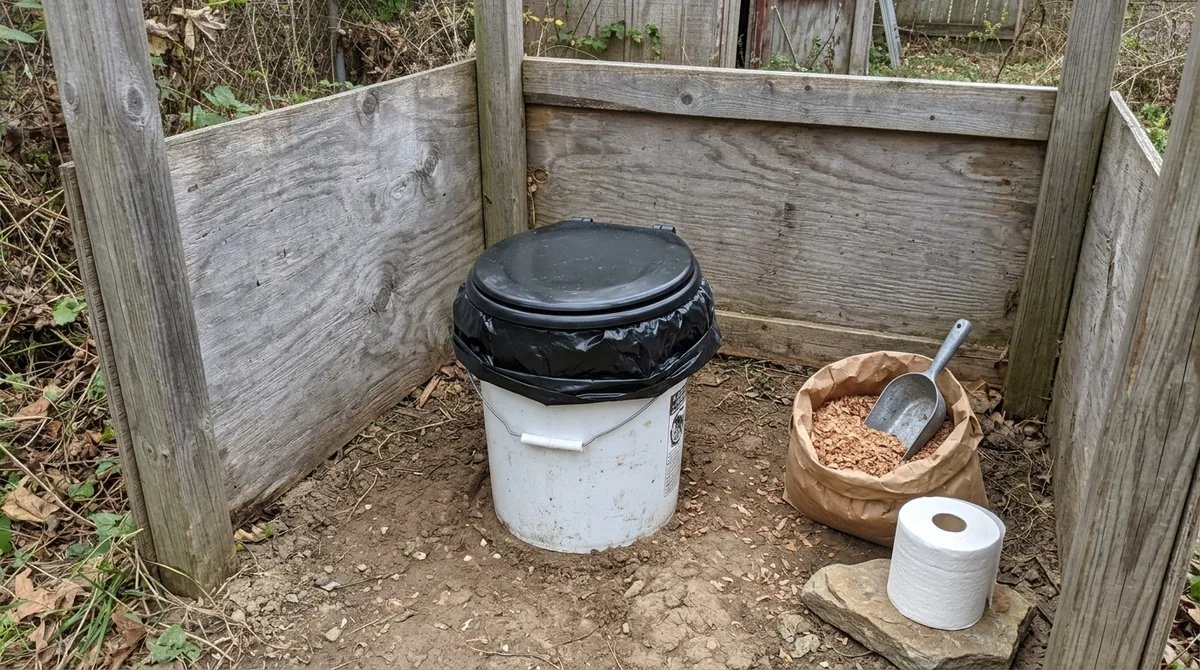
A two-bucket toilet works when you keep urine and feces in separate containers, cover every deposit, and seal the bucket before it gets too heavy or too full. Most failures come from skipped steps, not bad equipment. If a habit is too much work to repeat every time, it won’t last, so set everything up before you need it.
Set it up in this order so the bucket is ready before the first use.
- Label two buckets clearly, one “URINE” and one “FECES,” so nobody grabs the wrong one in the dark.
- Fit a lid or seat on the feces bucket, and keep the urine bucket covered as well.
- Put a layer of absorbent material, such as sawdust, shredded paper, or dry leaves, in the feces bucket before the first use.
- After every single use, cover the feces with a fresh handful of absorbent material. This is the habit that stops smell and flies from building up.
- Fill the feces bucket no more than halfway before you seal it. A half-full bucket is still manageable to carry and leaves room to close the lid tight.
- Double-bag the sealed waste in heavy-duty bags, and tie each bag shut before it leaves the bucket.
- Store the bagged waste away from food and water, in a spot you can ventilate and clean.
Placement matters as much as the steps. Pick a space with airflow, like a garage with the door cracked or a covered porch, and keep the lid on between uses. A closet or bathroom with no airflow turns a manageable setup into a problem within days.
Keep the urine bucket sealed too, since it can get strong fast. Wipe the bucket rims and lids with a bleach solution or soapy water on a regular schedule, and wash your hands with soap and water after every visit, not just after cleanup. Gloves help, but they don’t replace washing.
Should You Flush at All When the Sewer Is Down?
Not if you can avoid it. When a do-not-flush notice comes from your utility or local emergency managers, follow it without argument. Even without a notice, every flush draws on a system that may already be strained.
Septic owners face the sharpest risk. A tank that can’t drain has nowhere to send extra water, so flushing too much can back waste up into your home or overload the drain field. The septic guidance updated August 24, 2026 advises minimizing toilet flushing during emergencies for exactly that reason.
Flooded tanks are the big danger. Do not pump a flooded septic tank more than halfway, because a tank pumped too far can float out of the ground. Draining it dry feels like the fix, but it can wreck the whole system.
When flushing is restricted, make the bucket your default:
- Urine goes in the urine bucket, with the lid on.
- Solids go in the feces bucket, covered with absorbent material.
- Nothing else goes down the drain, including wipes and paper towels.
Where Does the Waste Go, and What Is Off-Limits?
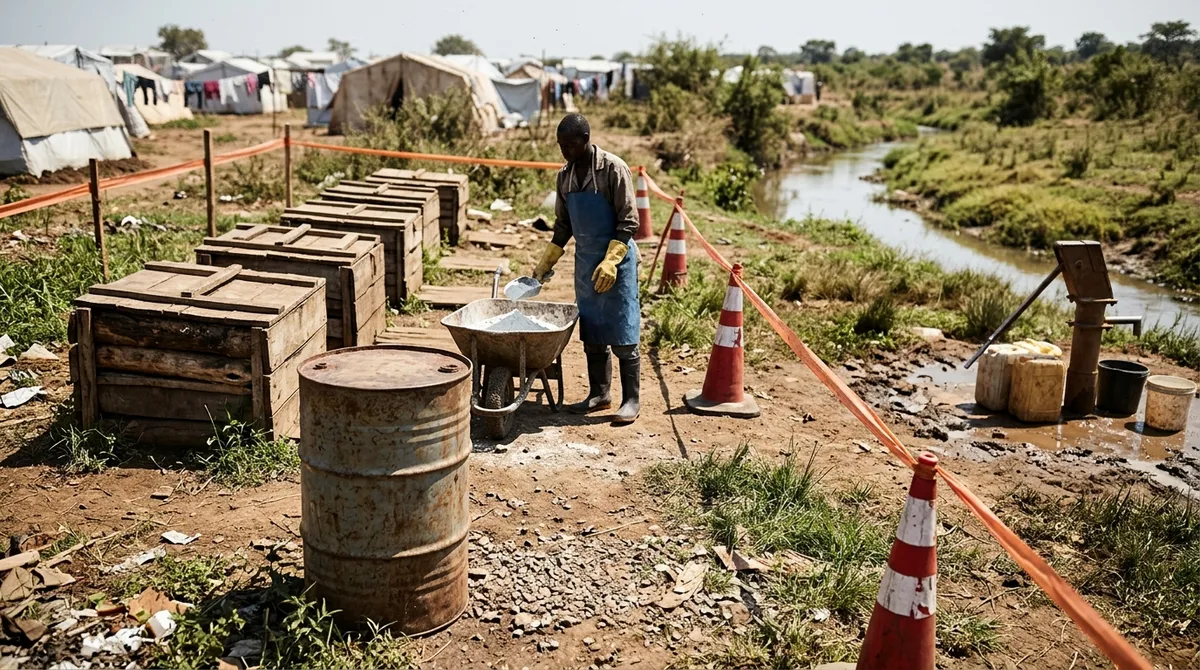
Your waste stays sealed, stored, and handed off through official channels. It never gets dug into the yard, burned, or buried.
Store sealed bags in a cool, covered spot away from food, drinking water, and anywhere people eat or sleep. A garage shelf, a covered corner of the patio, or a lidded bin in a shed works well. Keep the spot out of reach of kids and pets.
Follow the emergency public information from your local officials for pickup or drop-off instructions. Those instructions change from one event to the next, so don’t guess. Write down the phone number or web page your city or county posts before you need it, while the power and internet still work.
The city guidance is blunt about what’s off-limits. Outdoor pit latrines, waste incineration, and burial are not legal or recommended for most temporary toilet sites. That rules out the yard shortcuts that look clever at 2 a.m.:
- Digging a hole in the yard for waste
- Burning bagged or loose waste in a fire pit or burn barrel
- Burying bags anywhere on the property
- Building an outdoor pit latrine
Each of these puts waste where it can reach soil, water, and pests, and none of them solves the problem for long.
Keep a spare set of heavy-duty bags and ties on hand, stored apart from the set you’re using. Storage runs out faster than people expect. When the first box is empty, you don’t want to be tempted to skip double-bagging or stuff waste into a grocery sack that tears.
How Do You Wash Your Hands With No Running Water?
Soap and water come first. Wash for at least 20 seconds whenever you can, and scrub the backs of your hands, between your fingers, and under your nails. Skipping those spots is how germs hang around. When the tap is dead, hand sanitizer is your fallback, and it only works if you pick the right kind.
Sanitizer is not a magic wipe. It works poorly on hands that are visibly dirty or greasy, so grime has to come off first. Check the label before you buy and look for at least 60% alcohol. Then store the bottles in a cool place, away from heat and direct sun, because a hot garage can wreck a bottle’s usefulness.
When the water is out, follow these steps in order:
- Wipe any visible dirt or grease off your hands with a paper towel or wet wipe.
- Pour enough sanitizer into one palm to cover both hands.
- Rub it over your fingertips, between your fingers, and under your nails.
- Keep rubbing until your hands are completely dry, not just damp.
- Wash with soap and water as soon as the tap returns.
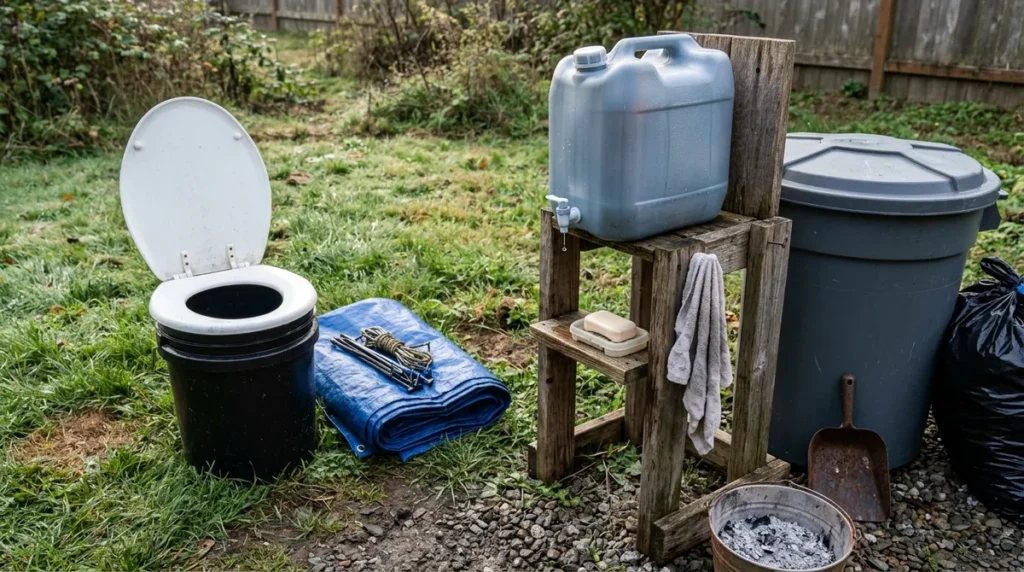
Handwashing stations belong at every sanitation facility, so don’t rely on one sink in the house. Set one up next to the toilet and another by the food area. A bucket with a spigot, a bar of soap, a paper towel roll, and a lidded trash can for used towels will do the job.
Keep the sanitizer at each station, not locked in a closet across the house. In the dark, people reach for whatever is closest, and that’s the bottle you want them to find.
Which Hygiene Kits Belong at Home and in the Car?
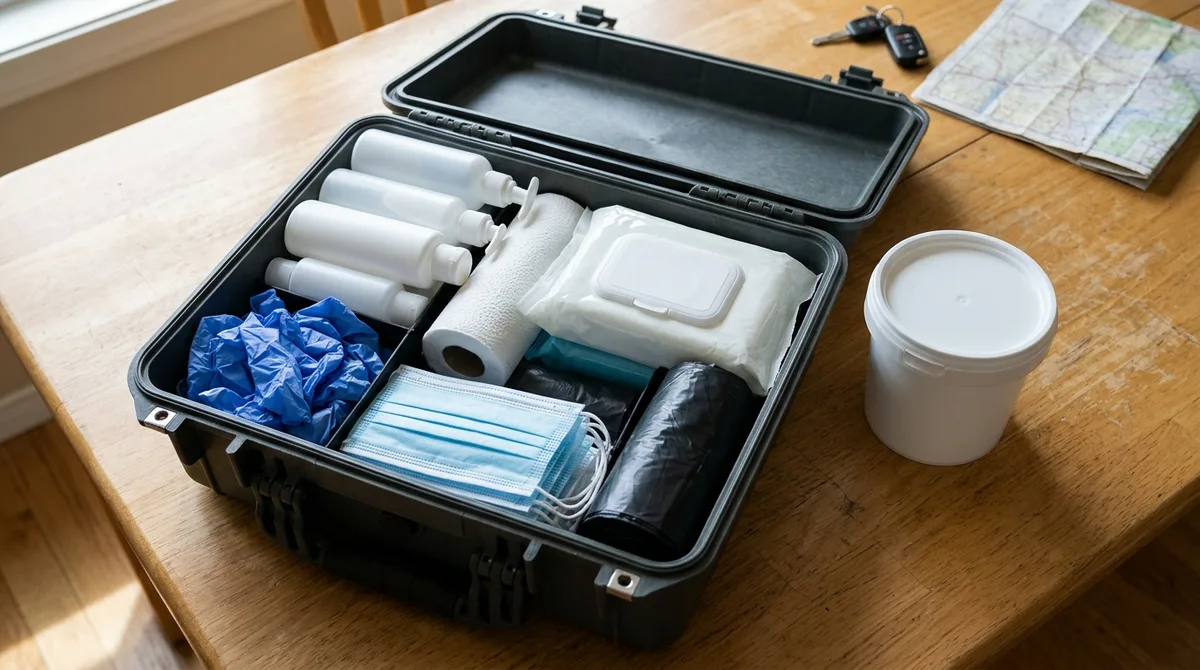
A home kit needs soap, hand sanitizer, gloves, toilet paper, heavy-duty bags, wipes, and a bucket with a tight lid. Keep the list short and make sure every item has a home on a shelf you can reach in the dark.
Period products and baby diapers are where plans usually fall apart. Count what each person in your house actually uses in a typical week, then add a cushion for days when a shortage would hit hardest. Store them in the same dry spot as your bags, and rotate packs so the oldest ones get used first.
When water is limited, bathing becomes a basin job. Fill a basin with a small amount of warm water, then wash with clean cloths in a set order. Start with hands, face, underarms, and genitals, since those areas collect the most sweat and germs. Use a fresh cloth for each area, or rinse and wring out your cloth between passes so you aren’t just smearing dirt around.
Household bleach can disinfect hard surfaces and treat water, but only when you follow the label exactly. Measure it carefully, and mark the bottle so nobody mistakes it for a cleaner. Never mix bleach with other cleaners, especially products containing ammonia or acids, because the fumes can make you seriously sick.
Your car kit doesn’t need to be big. It needs to cover the moments when you’re stuck and can’t get home to a bathroom:
– A small bottle of hand sanitizer with at least 60% alcohol – A pack of wet wipes – A few heavy-duty bags with ties – A pair of disposable gloves – A spare roll of toilet paper
Keep the kit in a sealed bin, not loose in the trunk. Heat and rough roads wreck wipes and sanitizer fast, so check the bin every few months and swap anything that has dried out or expired.
How Do You Clean Up Sewage Backflow and Keep Food Safe?
Clean up sewage backflow by protecting yourself first, removing the mess second, and disinfecting everything it touched last. Don’t start scrubbing until you’re covered and air is moving through the room.
Put on waterproof gloves and eye protection before you touch anything. Open windows and run a fan to push air out of the room. Keep kids and pets out of the area until the floor is clean and dry.
Never wade through standing sewage. Even shallow water can carry germs into a cut, and you can’t see what’s hiding underneath. If the water covers more than a small patch, stop and call your local emergency line or a licensed cleanup professional.
Pull out anything soaked that you can’t fully clean. Porous items soak up waste and hold it, so bag them in heavy-duty bags and tie them shut:
– Carpet and carpet padding – Cardboard boxes and paper goods – Upholstered furniture and mattresses – Drywall and insulation
Hard surfaces like sealed tile, metal, and concrete can be scrubbed with soap and water, then disinfected with a bleach solution. Mix it exactly as the label says, and never combine bleach with other cleaners.
Food is the next danger zone. Throw out any perishable food that sewage touched, including open containers and anything sitting in wet packaging. Toss meat, dairy, and leftovers that spent too long in warm temperatures, too, because you can’t tell by smell or looks whether they’re still safe.
During a long outage, the fridge and freezer are your coolers. Keep both doors shut as much as possible, since every peek lets cold air escape. A full freezer holds its cold longer than an empty one, so fill gaps with bags of ice or frozen water bottles if you have them.
Who Handles Sanitation When Whole Neighborhoods or Shelters Are Affected?
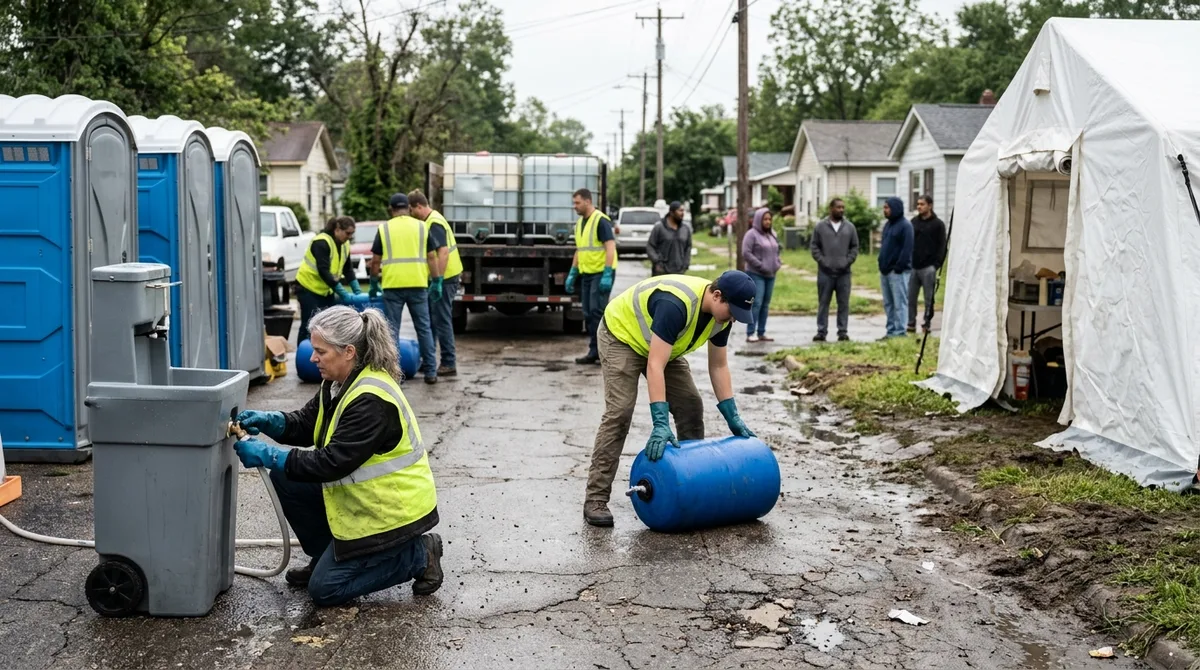
Shelters and shared sites are handled by emergency managers and the staff they put in charge, not by the households using them. Once dozens of people share a few toilets, the math changes fast, and the plan has to be built around the crowd.
Start with the ratio. CDC’s emergency response guidance says planners can start with 50 people per latrine right away, while aiming for the Sphere minimum of 20 people per latrine. Fifty sounds manageable on paper, but it means long lines and people skipping the trip, so the goal is to push numbers down as fast as you can.
The ground decides the latrine type. Elevated latrines suit sites with high water tables or flood risk, and their larger reservoirs need emptying less often than chemical toilets. Chemical units are easier to set up, but they fill fast, so the emptying schedule can make or break them.
Handwashing is never optional. Handwashing stations belong at every sanitation facility, regardless of the type. A toilet with no sink nearby is only half a setup.
Shared sites also need a written schedule, because nobody cleans a toilet they don’t own. Assign someone to each job and post the times where people can see them:
– Cleaning: scrub seats, rims, and floors on a fixed daily rotation – Emptying: track fill levels and schedule pickups before units overflow – Restocking: check soap, sanitizer, bags, and toilet paper at every shift change
For a household backup, a basic 5-gallon camp toilet typically runs around $23 in the general market, but the bags are a separate purchase. Multiply that cost by the number of people in your home, and you’ll see how quickly the bags add up.
Building Your Household Sanitation Kit This Week
Start tonight with a pen and a sheet of paper. Count everyone in your home, then multiply by 5 gallons for one week of waste. A family of four needs roughly 20 gallons of bagging capacity, and that number tells you how many bags and how much absorbent material to buy.
Make the shopping run before the weekend. Grab a lidded bucket, a second bucket for urine, a box of heavy-duty bags, a bag of sawdust or shredded paper, soap, gloves, toilet paper, and a bottle of hand sanitizer with at least 60% alcohol. Buy the bags first, because they run out fastest and cost the most over time.
Then do a dry run. Label both buckets, fit the lids, and practice the full routine with a little water in the bucket, so you know how the lid seals and how the bag ties before you need them in the dark. Time yourself scrubbing your hands for 20 seconds at the sink.
Finally, walk through the house with a flashlight. Check that sanitizer sits at the toilet and the kitchen sink, not locked in a closet. Open the car kit bin and swap anything dried out. Write down your city’s emergency phone line and the web page where it posts sanitation updates.
Do one task each day this week. By Sunday, you’ll have a kit that works, not a pile of good intentions.
Frequently Asked Questions
1. How many bags should I stockpile for a two-bucket toilet?
Start with about 5 gallons of waste per person each week, so a family of four needs roughly 20 gallons of bagging capacity per week. Divide that by the capacity printed on your bag box to get a rough count. Then buy extra, since the bags run out faster than most people expect.
2. Can I use a portable camp toilet indoors?
A sealed portable camp toilet can be used indoors only in a room with good airflow, such as a garage with the door cracked or a covered porch. A closet or windowless bathroom with no ventilation will turn into a smell and fly problem within days. Keep the lid on between uses and cover waste after every visit.
3. How can I tell if my septic tank is flooded?
Warning signs include standing water or soggy ground over the tank and drain field, slow drains, and sewage backing up into sinks or tubs. If you see any of these, stop flushing right away. Call a licensed septic professional, and do not pump a flooded tank yourself, because pumping it too far can make it float out of the ground.
4. Are flushable wipes safe to use during a sewer or septic outage?
No, flushable wipes should stay out of the toilet during an outage, even if the package says they are flushable. Wipes don’t break down the way toilet paper does, so they can clog pipes and stress a septic system that may already be damaged. Put them in a lined bin with your sealed bags instead.
5. Can I compost waste from a bucket toilet in my backyard?
No, backyard composting is not part of an emergency sanitation plan. Waste should stay sealed, stored, and handed off through official channels, and it should never be dug into the yard or buried. Follow your city or county’s emergency instructions for pickup or drop-off.
6. How should I store bleach and hand sanitizer so they last for years?
Keep both in a cool, dark place away from heat, direct sunlight, and freezing temperatures, such as a closet inside the house rather than a hot garage. Check the label for an expiration date and write the purchase date on the bottle. Store bleach apart from other cleaners, especially ammonia or acid products, so nobody mixes them by accident.