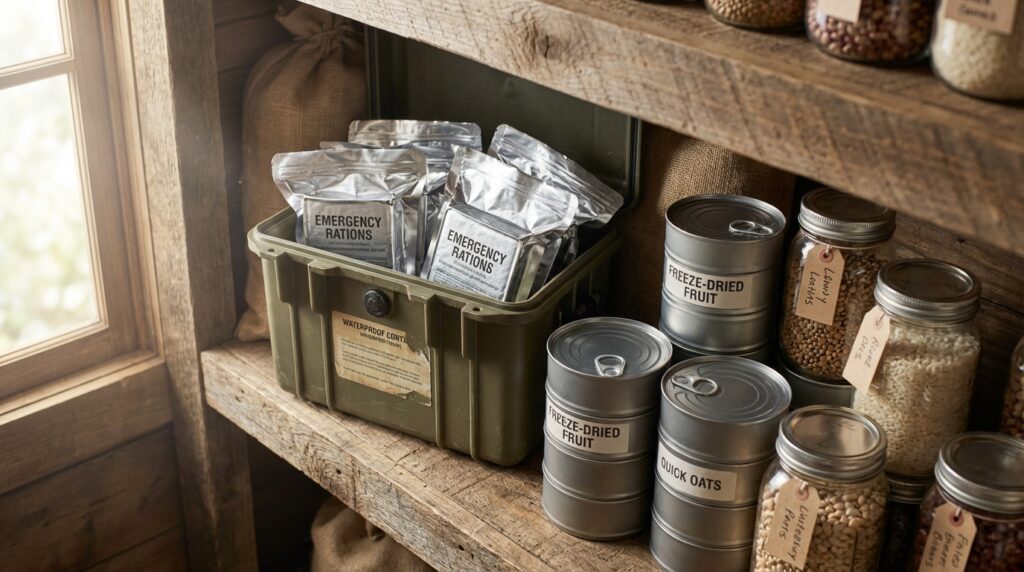
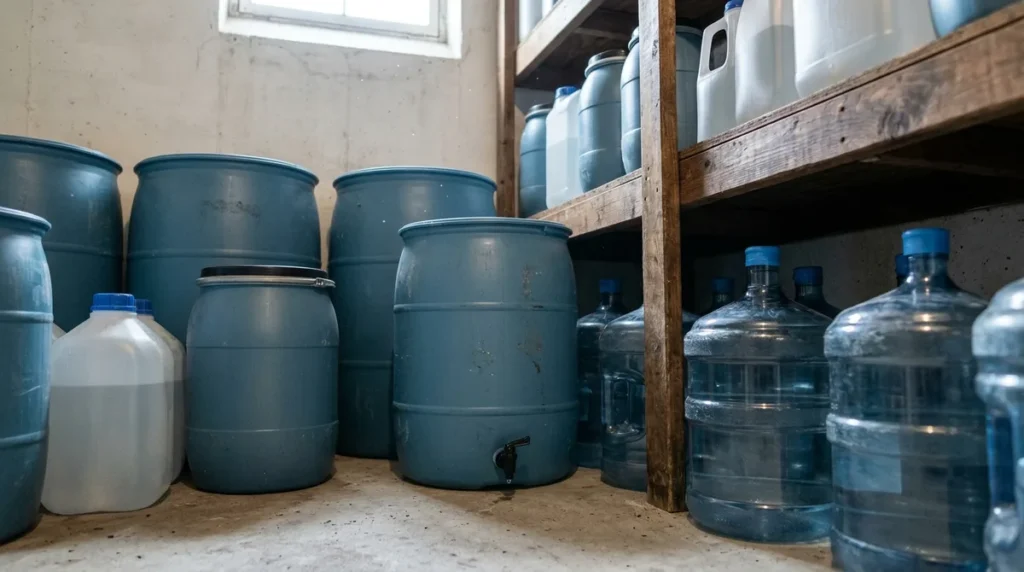
Emergency water storage comes down to one number you can’t skip: at least 1 gallon of water per person, per day, for a minimum of 3 days. That’s the floor, not the finish line. The CDC’s June 27, 2025 emergency-water guidance says to aim for a 2-week supply if you have the room, and to add extra for hot weather, pregnant people, anyone who’s sick, and pets.
Sounds simple? The hype machine wants you to buy a shiny tank and call it done. Here’s the catch. A full 55-gallon drum weighs over 400 pounds, so your floor has to hold it, and retailer examples run about $80 to $95 before you’ve filled them. Two weeks for a family of four means 56 gallons, which is more than most garages and apartments can handle. So let’s dissect your options, from containers to purification, and figure out where your money buys real safety and where it just buys weight.
Key Takeaways
- Every person in your household needs at least 1 gallon of water per day for a minimum of 3 days, and Ready.gov says that gallon has to cover drinking and sanitation.
- The CDC’s June 27, 2025 emergency-water guidance says to aim for a 2-week supply if you have the room, with extra water for hot weather, pregnant people, sick people, and pets.
- Food-grade handled jugs in 3-gallon and 5-gallon sizes are the practical choice for most homes, because you can carry, pour, and rotate them without a dolly, while a full 55-gallon drum weighs over 400 pounds.
- Your stored tap water needs a bleach-and-water sanitizing rinse before filling, a cool dark spot between 50°F and 70°F, a clear label with the fill date, and a full replacement every 6 months.
- Unopened commercial bottled water is the safest and most reliable emergency source you can keep, so your supply should be built on it as a strong foundation.
How Much Water Your Household Really Needs
The baseline is 1 gallon per person per day, and Ready.gov’s emergency checklist says that gallon has to cover both drinking and sanitation. That means washing hands and cleaning up count too. Plans that only budget for sips run out fast.
Run the numbers for your own house. A family of four on a 14-day plan needs 56 gallons at the baseline, before any extras. Write down every person and pet, multiply by the days you want covered, and total it. Your list is the real plan, not the number printed on the tank.
Now the extras. Hot climates push daily water use up, so if you live somewhere that bakes in summer, add a cushion. Pregnant people, anyone who is sick, and pets also need more water than the baseline gives them. Kids and nursing mothers belong on the list too.
Bottled water is the easiest win. Unopened commercial bottled water is the safest and most reliable emergency source you can keep, because the seal is intact and you know exactly what’s inside. Check the expiration date when you buy it, then check again every time you restock. An expired case is just heavy plastic.
Food-Grade Containers, Sizes, and Floor Space
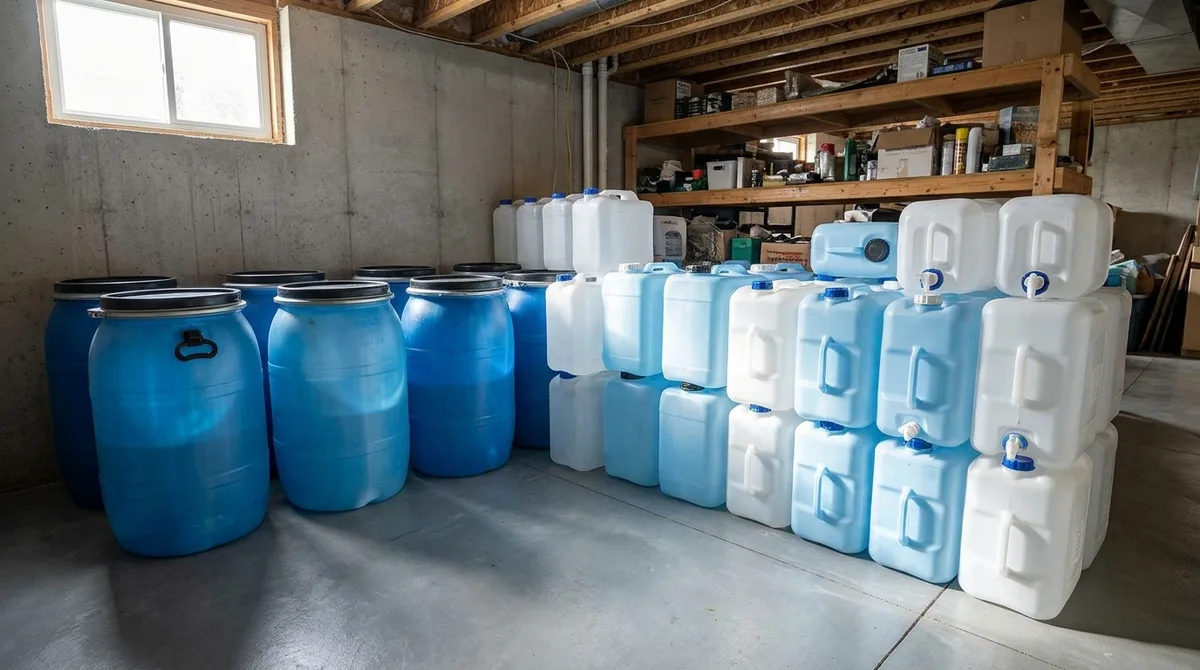
Food-grade is the phrase to hunt for. It means the material is made to hold food or drinking water without leaching unwanted chemicals into what’s inside. Look for containers approved by the FDA for food contact, with a tight-closing top, a durable build that won’t crack when knocked around, and preferably a narrow opening that’s easy to seal and clean. For a quick quality check, look for NSF/ANSI/CAN 61, a standard that sets minimum criteria for materials that touch drinking water.
Size decides whether you’ll actually use the water. The EPA’s emergency-planning guide lists handled water jugs in 3-gallon and 5-gallon sizes as practical storage options. That’s why they’re everywhere. You can carry one, pour one, and rotate one without a dolly.
A 55-gallon drum is a different animal. A full one weighs over 400 pounds, so check that your floor can carry it before the delivery truck shows up. A garage on a concrete slab usually handles it. An upstairs apartment probably won’t.
Money matters too. Listings for 55-gallon polypropylene drums have shown $79.99 at one retailer and $95.00 at another, and prices change by seller. Before you add a hand pump, a hand truck, and the trip to fill it, compare the total cost, not just the sticker price.
Stackable and collapsible containers save floor space. A flat-folding tank slides behind a couch, and stacked containers use wall height instead of floor space. But collapsible doesn’t mean food-grade. Check the label for a food-grade or drinking-water rating, because a flexible tank built for garden use is a different product.
Bathtub liners hold a big volume in one go, but they’re a one-time, space-specific option. Your tub is out of commission until you drain it, and the liner only fits the tub it was sized for.
Keeping Stored Water Safe for Months
Clean first, or don’t bother filling anything. Wash each container with soap and water, then sanitize it. Mix 1 teaspoon of unscented household bleach (5% to 9% sodium hypochlorite) into 1 quart of water, swish it around the inside, and let it sit for at least 30 seconds. Empty it, then let it air-dry. Scented bleach doesn’t belong in your water supply.
Your storage spot matters as much as the container. Pick a place where the temperature stays between 50°F and 70°F, out of direct sunlight. Keep stored water away from gasoline, pesticides, paint, and cleaning chemicals. Fumes and leaks can seep into plastic, and you won’t taste the difference until it’s too late.
Label every container with “DRINKING WATER” and the date you filled it. A marker on masking tape works fine. Without a date, you’re guessing, and guessing is how people end up drinking stale water during an emergency.
Rotation is the step everyone skips. Replace stored tap water every 6 months. Tie it to a date you’ll never forget, like New Year’s Day or your birthday. Pour the old water on plants or use it for cleaning, then refill and relabel.
Never reuse a container that held chemicals, pesticides, or non-food products. That old detergent jug or garden sprayer might look sturdy, but residue can linger. Food-grade means the container was made for contact with food or drink. Anything else stays out of your emergency plan.
Stored water isn’t the only source you’ll have to treat. Here are your main purification options:
– Boiling kills germs when water reaches a rolling boil. – Chlorination uses bleach to disinfect water, but the dose depends on the bleach strength, so check a trusted public health source before you measure. – Distillation boils water and collects the steam, leaving most contaminants behind.
Rain, snow, and ice need the same treatment. Collected rainwater can pick up dust, bird droppings, and debris from the roof and gutters. Melted snow and ice carry the same risks, so treat them before drinking.
VINGLI 50 Gallon Collapsible Rain Barrel: Cheap Storage, Not Drinking Water
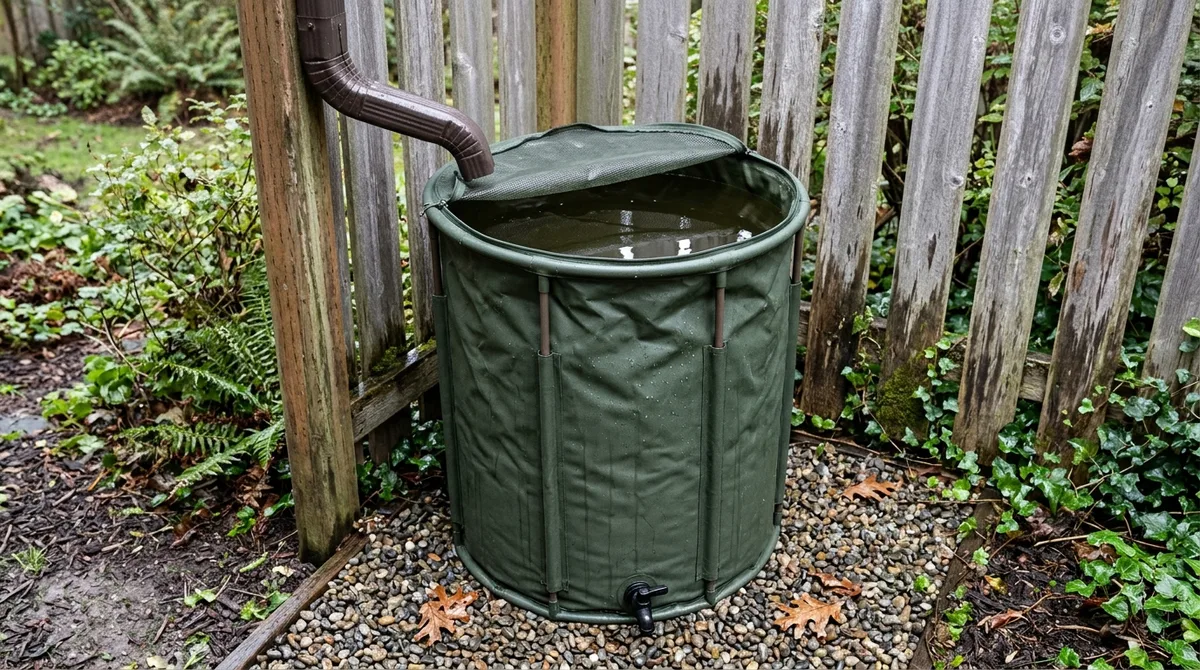
The VINGLI 50 Gallon Collapsible Rain Barrel sits under a downspout and catches rain as it runs off your roof. It holds up to 50 gallons, and its spigot and overflow kit let you draw water or link a second VINGLI barrel to add capacity. It’s built for the garden, not your kitchen tap.
If you want rain for thirsty tomato beds and the lawn, this is a cheap way to start. The foldable PVC-and-mesh body flattens for storage, and the mesh top keeps leaves and insects out of the water. VINGLI sells it as a watering tool, not an emergency supply. The CDC warns that rainwater can carry germs and chemicals, so it isn’t safe to drink without treatment.
Here’s the catch. Full, the water alone weighs about 417 pounds, so set the barrel on level ground and leave it there. The manual warns against moving it while full. There’s no pump and no solar power, so you’ll need gravity or buckets to get water out. The mesh is not a purifier, and the barrel won’t turn rain into drinking water.
At a glance
- Best for: Gardeners who want to collect rainwater for watering plants
- Price: Listed at $20.99 on the official VINGLI site when checked; prices change often
- Sizes or Specs: 50 gallons, 23.6 inches wide by 27.6 inches high, 4.4 pounds empty
- Warranty: 90-day limited warranty on the Target listing
- Where to Buy: VINGLI’s official site, Target, and The Home Depot
WaterBOB Bathtub Storage: The Bathtub Option for Tap Water
The waterBOB is a temporary bathtub liner built for one job: holding tap water before trouble hits. You place it in the tub, fill it through a sleeve on the faucet, then use the included siphon pump to move water into jugs or pitchers. The maker claims it holds up to 100 gallons, but most standard tubs hold about 60 to 70 gallons, and the maker warns against filling above the tub’s edge. Plan around the smaller number.
The warning window is the whole game. Filling usually takes 20 to 30 minutes, and it has to happen while the faucet still runs. If the water is already off when the news breaks, the liner is just an empty plastic sheet. Cover it to keep direct sunlight off the stored water. It suits households with a bathtub and a little advance notice, especially if they don’t have another large container.
The drawbacks are real. The liner is meant for one-time use and recycling, not as a long-term tank. It collects no rainwater and nothing from other sources, so it holds only what came out of your tap. The maker says stored water can stay fresh for up to 16 weeks, depending on conditions. Still, CDC guidance says water that may be unsafe should be boiled, treated, or replaced with bottled water before you drink it. Stored tub water is not a shortcut around that step.
At a glance
- Best for: Households with a bathtub and advance warning of an outage
- Price: $39 on the official order page, which currently marks it out of stock
- Sizes or Specs: Up to 100 gallons per the maker; most standard tubs hold about 60 to 70 gallons
- Warranty: 30-day money-back guarantee
- Where to Buy: Official order page only, U.S. shipping
Good Ideas Rain Wizard 50 Gallon Plastic Rain Barrel: Rigid and Garden-Ready
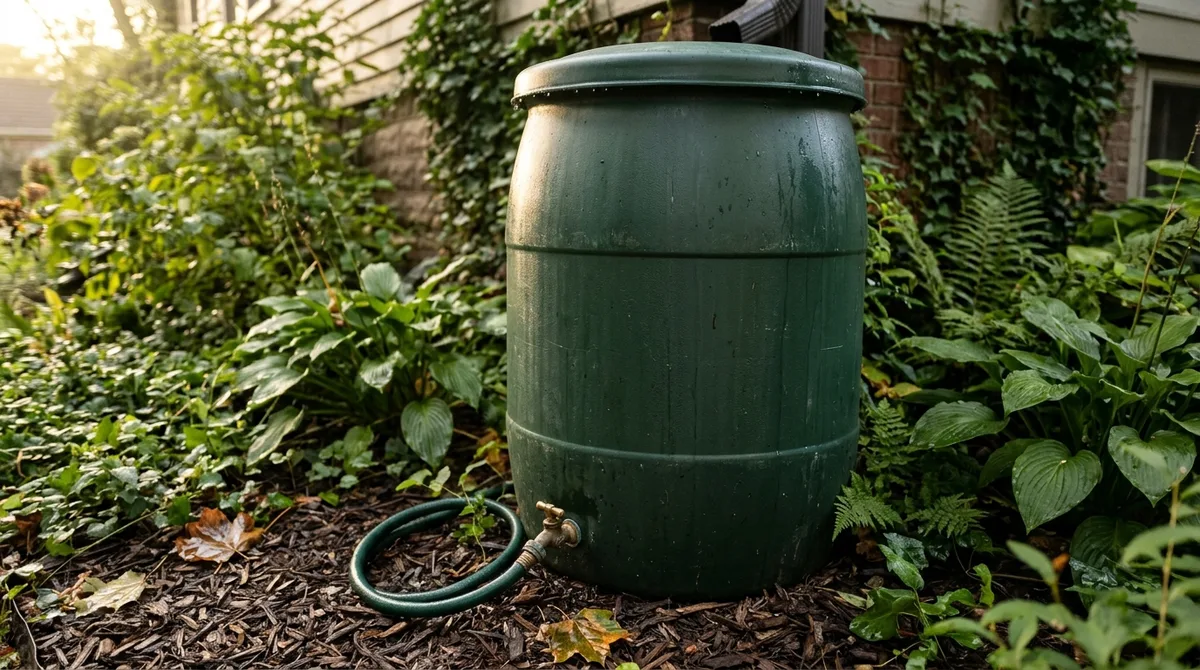
The Good Ideas Rain Wizard 50 is a 50-gallon barrel with a faux-oak finish, built to catch roof runoff and hold it for the yard. A fine-mesh inlet screen keeps leaves and grit out, and a front-facing overflow sends extra water away once it’s full. The flat back lets it sit snug against a wall, and a 3/4-inch brass spigot does the pouring. Need more capacity? Barrels can be linked with a separately sold kit.
This one suits gardeners and homeowners who want a sturdy wall-side tank for outdoor water. It is not an emergency drinking supply. The maker’s instructions say collected water is not potable without proper sanitation, and CDC notes that rainwater can carry germs and chemicals. There’s no pump, either. Flow weakens as the barrel empties, and a pump attachment is an optional add-on.
Plan the base before you fill it. The barrel weighs 20 pounds empty but about 417 pounds at full capacity, so the ground under it has to be stable and strong. Clear debris from the screen, rinse the barrel before and after storage, and drain it completely before freezing weather. It comes in black, green, khaki, oak, and terra cotta, and the one-year limited warranty covers parts and labor for the original purchaser.
At a glance
- Best for: Garden watering and outdoor rain collection
- Price: Listed at $174.99 on the official site, which may change
- Sizes or Specs: 50 gallons; 30 × 23 × 22 inches; 20 pounds empty, about 417 pounds full
- Warranty: One-year limited warranty on parts and labor for the original purchaser
FCMP Outdoor RC4000-BRN 50-Gallon Rain Catcher: Garden Water Only
The FCMP Outdoor RC4000-BRN is a 50-gallon rain barrel that catches water from your downspout and holds it for the garden. It holds 50 US gallons and measures 24 × 24 × 32 inches, and its flat back lets it sit close to your house wall. The kit includes an aluminum debris screen, an overflow hose, a gravity-fed outlet hose with a shut-off thumb valve, and a linking kit for chaining more barrels together.
This one is for gardeners, not your emergency drinking supply. The FCMP instructions say to use the collected water only for garden watering, not for people or animals to drink. The debris screen keeps out leaves and grit, but it does not treat water to make it safe to drink. Keep it out of your drinking-water plan.
Here’s the catch. There’s no pump, so the gravity outlet only gives you what the barrel’s height allows. A full barrel weighs more than 400 pounds, so set it on a flat, level base that won’t shift or tip. In freezing weather, drain it and flip it, or ice can damage it. Skip that winter step and the one-year limited warranty is void.
The Home Depot listed the brown model at $197.99 when checked, well above the $79.99 to $95 retailer examples cited earlier. FCMP’s own rain-barrel page marks the Raincatcher 4000 as sold out.
At a glance
- Best for: gardeners who want a flat-back barrel beside the house, not an emergency drinking supply
- Price: $197.99 at The Home Depot at the time checked
- Sizes or Specs: 50 US gallons (189 liters), 24 × 24 × 32 inches, no pump
- Warranty: one-year limited replacement for manufacturing defects
- Where to Buy: The Home Depot lists the brown model; FCMP’s collection page marks the Raincatcher 4000 sold out
Simmons 1160/PM500 No.2 Pitcher Pump: Manual Access to Well Water
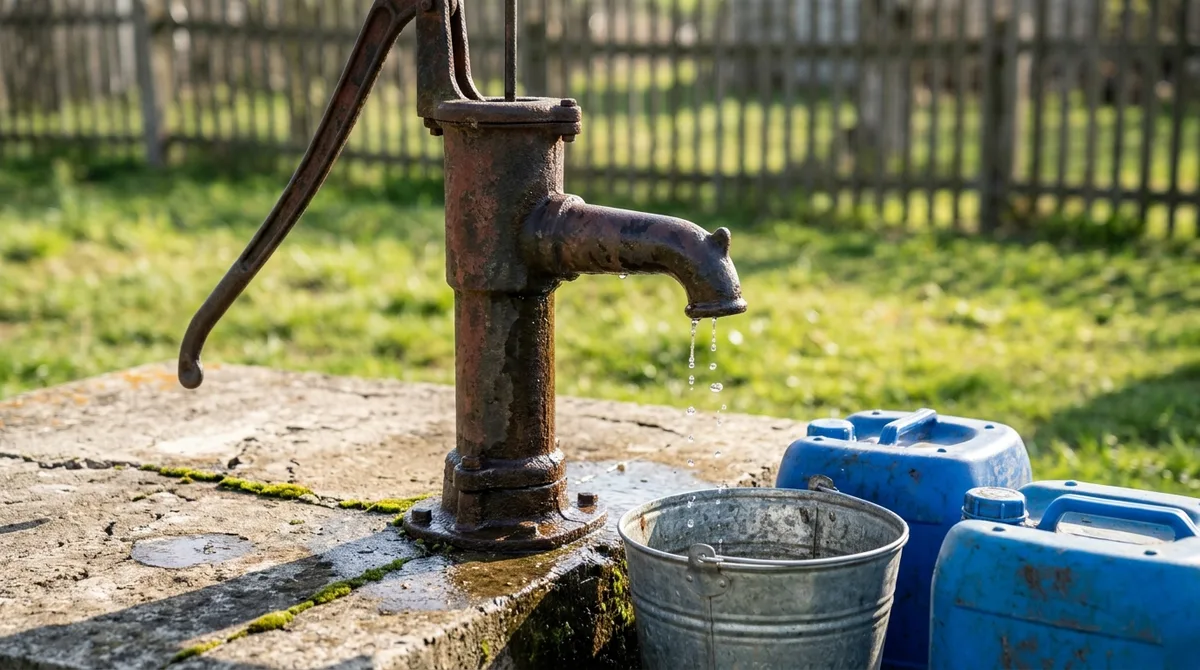
The Simmons 1160/PM500 No. 2 is not a tank. It’s a hand-operated cast-iron pitcher pump that pulls groundwater up from a shallow well when the power goes out. The maker, Simmons Manufacturing, describes it as a pump meant to move water, not hold it, and its product page lists no storage capacity. You won’t store a single gallon in it.
It suits a household that already has a shallow well in good shape and wants a manual way to reach that water without electricity. The maximum suction lift is 25 feet, so the water level has to sit within that reach. Grainger describes it as a lever pump for extracting groundwater from shallow wells, and it needs no power to run.
The build is simple. The pump weighs 15.2 pounds, stands 15 inches tall, and connects through a 1 1/4-inch NPT pipe fitting. Simmons lists replacement plungers, cylinders, handles, and leather seals, so a worn part doesn’t mean scrapping the whole pump. Its limited warranty on imported products covers replacement or refund for defects, up to one year from purchase.
Pumping is not purifying. The pump has no filter or treatment built in, and emergency guidance says unsafe water must be boiled or otherwise treated before drinking, since portable filters don’t remove every germ. Test your well water before you rely on it for drinking. Then pair the pump with your own food-grade containers, because it only moves water into them.
At a glance
- Best for: Households with a suitable shallow well who want a manual way to reach groundwater
- Price: $114.99 at Grainger when its product page was accessed; prices change often
- Sizes or Specs: 15 inches tall, 15.2 pounds, 25-foot maximum suction lift, 1 1/4-inch NPT connection
- Warranty: Up to one year on imported products, replacement or refund for defects
ECO-WORTHY 3.2GPM Solar Well Pump Kit: Power Without the Grid
The ECO-WORTHY 3.2GPM Solar Well Pump Kit is not a water container. It’s a solar-powered submersible pump that lifts water out of a well and pushes it into a separate tank or another destination. Think of it as the muscle between your well and your storage. The pump is rated at 3.2 gallons per minute, and the ECO-WORTHY instruction manual lists a 230-foot maximum lift and a 100-foot maximum submersion depth.
The big selling point is power. The 12V version described on listings comes with two 100W solar panels and a 20A charge controller, so the pump can run without grid electricity during an outage. But the package lists no water tank and no storage capacity. You still need a food-grade container, and you need a plan for where the pumped water goes.
Here’s the catch. The 3.2 GPM title is tied to the 12V kit, so confirm the voltage matches your setup before you buy, or you could end up with a pump that doesn’t fit. ECO-WORTHY’s warranty table gives one year for panels and charge controllers, but it states no warranty term for the pump itself.
The kit also has no water-treatment step. CDC says well water that may contain harmful germs or chemicals should not be drunk until it’s treated, and testing is the only way to know what’s in yours. It makes sense for a household with a well, a plan for outage pumping, and a tank already in place.
At a glance
- Best for: Households with a well that want solar pumping during outages or for irrigation
- Price: Check the official site for current pricing
- Sizes or Specs: 3.2 GPM pump, 230-foot maximum lift, 100-foot maximum submersion, 50-mesh stainless-steel inlet screen, two 100W panels, 20A controller (12V version)
- Warranty: One year on PV modules and charge controllers; no stated term for the pump
Building Your Water Supply Without Overspending
Start small, and start this weekend. Grab a notepad and list every person and pet in your home. Multiply each one by three days, and you have your first target. For a family of four, that’s 12 gallons.
Two 5-gallon handled jugs and one 3-gallon jug give you 13 gallons, which covers that three-day floor with a little cushion. Each one is light enough to carry, and you can rotate them without help. Buy them, clean them with the bleach mix, and label each one with the date you filled it.
Then set your rotation reminder before you forget. Put a calendar alert six months out, and write that same date on the masking tape.
Only after that should you think about bigger storage. Before you buy a 55-gallon drum, confirm your floor can hold more than 400 pounds, and add up the real cost: the drum, a hand pump, a hand truck, and the trip to fill it. If you’re eyeing a rain barrel or a pump, ask one question first: is this for drinking, or for the garden? If the answer is the garden, keep it out of your emergency plan.
Frequently Asked Questions
1. Is the ECO-WORTHY solar well pump worth it if outages usually last only a few days?
For short outages, the ECO-WORTHY 3.2GPM kit is hard to justify. It only moves water out of a well, so you still need a food-grade tank, a working well, and a plan for where the pumped water goes. A 3-day supply at 1 gallon per person per day covers a few-day outage far more cheaply.
2. Can I combine a WaterBOB with a rain barrel to cover two weeks of water for four people?
Not for drinking water. A standard tub holds about 60 to 70 gallons, which is enough for the 56 gallons a family of four needs for two weeks, but only if you fill it from the tap while the water is still running. Rain barrel water is meant for the garden and isn’t safe to drink without treatment, so it can’t count toward your drinking supply.
3. What should I use for drinking water instead of a rain barrel?
Use food-grade handled jugs filled with tap water, plus unopened commercial bottled water. CDC names unopened bottled water as the safest and most reliable emergency source, so it makes a strong backbone for your supply. Keep the rain barrel for watering plants and store it separately from your drinking water.
4. How many 5-gallon jugs does a family of four need for two weeks of water?
A family of four needs 56 gallons for two weeks at the baseline, before any extras. Eleven 5-gallon jugs plus one 3-gallon jug total 58 gallons, which covers that baseline with a small cushion. Add more jugs if you live in a hot climate or someone in the house is pregnant, sick, or has pets to care for.
5. Should I boil or use bleach to treat stored water?
Boiling is the more dependable choice when you have a stove, fuel, and time, because germs are killed once water reaches a rolling boil. Bleach works when you can’t boil, but the dose depends on the bleach strength, so check a trusted public health source before you measure. Pick the method you can actually carry out during an outage and practice it before you need it.