

Tinnitus device reviews point to a cautious verdict: sound generators may mask or distract you from tinnitus, but a Cochrane review of eight trials involving 590 participants found no established advantage over placebo, education, or waiting-list controls.
Lenire shows why usability and return terms matter. Its manufacturer says treatment involves two 30-minute sessions a day and is non-refundable. Compare the evidence with the daily routine and written terms, not just the sales pitch. Check Lenire’s treatment details before weighing it against simpler sound devices.
Key Takeaways
- Tinnitus sound devices may mask or distract you from the noise, but a Cochrane review of eight trials involving 590 people found low-quality evidence and no proven advantage over placebo, education, or waiting-list controls.
- In the 2024 TENT-A3 study, 70.5% of participants with moderate-or-worse tinnitus who had not meaningfully improved after six weeks of sound-only treatment met the study’s threshold for significant improvement after six more weeks of sound plus tongue stimulation, but that result applies only to this subgroup. The TENT-A3 study
- Lenire is an FDA-authorized prescription device for adults 18 and older with at least moderate tinnitus. The FDA’s De Novo decision
The manufacturer says treatment takes two 30-minute sessions daily and is non-refundable, so get the clinician-set total price and written terms before committing. Lenire’s treatment details
- Before buying any tinnitus device, check research on the exact model, whether its daily routine fits your life, and the full cost; treat promises of a cure or guaranteed improvement as warning signs.
Do Tinnitus Devices Really Work?
Some tinnitus devices may mask or distract you from the sound, or help you grow accustomed to it, but benefits vary and no device is a proven cure. Tinnitus means hearing sound without an outside source. The National Institute on Deafness and Other Communication Disorders (NIDCD) estimates that 10% to 25% of adults have it and defines chronic tinnitus as lasting three months or longer. Sound therapy may help with relaxation, sleep, or coping, but NIDCD says there is no cure for tinnitus. Managing the impact is not the same as removing the sound.
A 2018 Cochrane review covered eight randomized trials involving 590 people. It found low-quality evidence and no demonstrated advantage for sound therapy devices over a waiting list, placebo, or education without a device. A buyer’s story about a sound machine helping them sleep can be useful, but it is a personal report, not proof that the device caused lasting relief or will work for you. Strong reviews separate personal experiences from controlled research and state clearly what the evidence does and does not establish.
Compare The Main Device Types
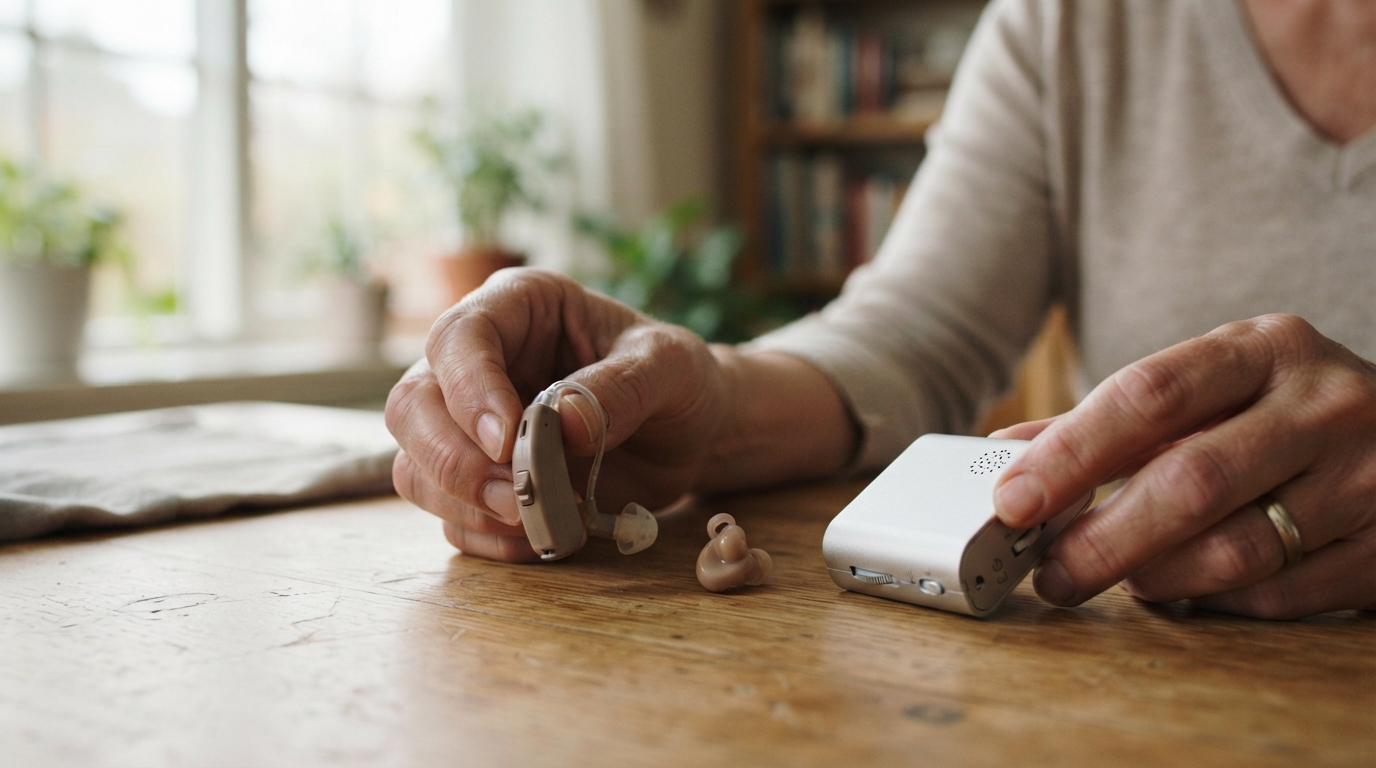
Tabletop sound generators stay by your bed or chair, while smartphone sound generators travel with you. NIDCD says people commonly use both for relaxation or sleep, so they may fit into a routine built around winding down or bedtime. A tabletop unit means carrying a separate device, while a phone-based option is more portable. NIDCD’s device overview
Wearable sound generators are designed to be worn, making them easier to use while moving around than a tabletop unit. Your routine may involve wearing the device during selected parts of the day, and the total cost may include the device plus any fitting or professional support.
Hearing aids with sound features can address hearing loss while adding sound options for tinnitus. NIDCD identifies hearing aids as a main option when tinnitus occurs with hearing loss. The cost may include hearing-aid fitting and follow-up, not just the device.
Clinician-supervised bimodal devices pair sound with another type of stimulation and require professional involvement. Lenire, for example, is an FDA-authorized prescription device. When comparing costs, account for the device and clinician-led care. FDA’s De Novo decision
What Does Lenire’s Evidence Show?
Lenire’s evidence supports a clinician-supervised option for temporary symptom relief in a defined group of adults, not guaranteed relief for everyone. The FDA classified Lenire as a Class II prescription device for adults 18 and older with at least moderate tinnitus, as measured by the Tinnitus Handicap Inventory. That authorization describes who the device is intended for and its permitted use. It is not a promise of results. The FDA’s De Novo decision.
In the 2024 TENT-A3 study, 112 participants first received six weeks of sound-only treatment, then six weeks of sound plus tongue stimulation. Among participants with moderate-or-worse tinnitus who had not meaningfully improved during the sound-only stage, 70.5% met the study’s threshold for clinically significant improvement after the bimodal stage. That percentage applies to this specific subgroup, not to everyone with tinnitus. The TENT-A3 study
The manufacturer says treatment involves two 30-minute sessions each day, with a clinician setting the overall treatment timeline. A study result can help you decide whether to discuss Lenire with a clinician, but it cannot predict your personal outcome. Lenire’s treatment FAQ
What Should A Device Review Examine?

Start by checking whether the offer clearly explains what the device does, who it is intended for, and whether you need a clinician to assess, prescribe, fit, or supervise its use. If the page avoids those basics, the sales pitch is doing more work than the product details. Compare the device’s everyday demands, not just its headline features:
- Does it fit comfortably, and can you adjust its controls?
- What sound options does it offer?
- Does it need charging, batteries, or a power outlet?
- Can you carry it easily, and how often must you use it?
For evidence, look for published research on the exact device and its intended use. A study of another model or treatment does not establish that this one works. Keep testimonials, broad expert claims, and promises of a cure separate from research. Personal stories may describe someone’s experience, but they do not prove results. Ruckus Reviews informs readers. We do not sell, install, or provide tinnitus devices.
Are The Price And Return Terms Clear?
Not always. A useful review should show the full cost and written return terms, especially when a clinician is involved. Lenire’s manufacturer says the prescribing clinician sets the price and treatment is non-refundable, so get the total before committing. Don’t assume the price includes clinician care. Lenire’s pricing and refund terms
Check whether clinician fees, follow-up visits, warranties, and shipping are included or charged separately. Save the seller’s written terms before paying. For U.S. over-the-counter hearing aids, FDA rules require the outside-package labeling to show the manufacturer’s return policy or state that there is no return policy. FDA guidance on OTC hearing aid labeling
Spot Claims That Outrun The Evidence

“Cure,” “permanent results,” or guaranteed improvement? Treat that language as a warning sign. A device may offer temporary symptom relief or coping support, but that is not the same as eliminating tinnitus. NIDCD describes sound therapy as a way to mask, distract from, or help you grow accustomed to tinnitus.
Your choice depends on your symptoms, hearing, and whether the device’s routine is realistic for you. If you have hearing concerns, consider whether a hearing evaluation or professional guidance makes sense before choosing a device.
Your Next Step Before Buying
If bedtime noise is your priority, compare a sound system’s 288 sounds, Bluetooth, and shutoff timer with your routine, and check whether its listed $199.99 price works for you. Review the product’s features.
Then read the manufacturer’s written return terms. The linked return page says website purchases can be returned for a full refund within 30 days, with proof of purchase. Check the return terms before ordering.
If you suspect hearing loss, compare hearing aids with sound features and check the package’s return-policy statement. The FDA says adults 18 and older with perceived mild-to-moderate hearing loss may buy OTC hearing aids without an exam. Read FDA guidance.
Considering Lenire? Ask the prescribing clinician for the total cost, treatment timeline, and written terms before agreeing. Its manufacturer describes two 30-minute sessions daily and says treatment is non-refundable. Review Lenire’s treatment details.
Frequently Asked Questions
1. Can tinnitus devices make the sound seem louder at first?
The evidence cited here does not establish whether tinnitus may seem louder when someone starts using a device or how often that happens. If the sound becomes uncomfortable, pause use and ask a clinician whether to adjust the device or your routine.
2. Does insurance cover tinnitus devices?
There is no single answer for tinnitus device coverage. It depends on your plan and the specific device and care involved. Before committing, ask your insurer what it covers and get a written breakdown of device, fitting, and clinician fees.
3. Can you use a tinnitus device alongside hearing aids?
You may be able to use tinnitus sound features with hearing aids, but a separate device is not automatically compatible with every hearing aid or fitting. Ask an audiologist to check your hearing needs and setup. NIDCD notes that hearing aids are a main option when tinnitus occurs with hearing loss.